


Characterisation of faecal protease activity in irritable bowel syndrome with diarrhoea: origin and effect of gut transit
- PMID: 23911555
- PMCID: PMC3995279
- DOI: 10.1136/gutjnl-2012-304042
Characterisation of faecal protease activity in irritable bowel syndrome with diarrhoea: origin and effect of gut transit
Abstract
Objectives: Faecal serine proteases (FSPs) may play a role in irritable bowel syndrome with diarrhoea (IBS-D), but their origin is unclear. We aimed to structurally characterise them and define the impact of colonic cleansing and transit time.
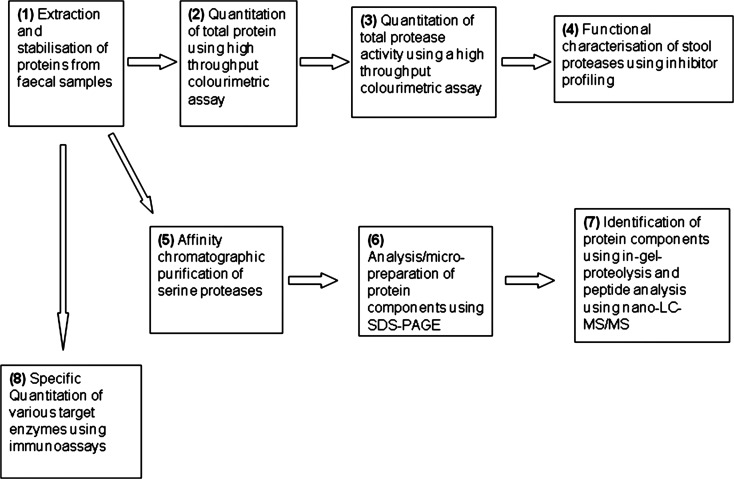
Design: Faecal samples were obtained from 30 healthy volunteers (HV) and 79 patients with IBS-D participating in a trial of ondansetron versus placebo. Colonic transit was measured using radio-opaque markers. Samples were also obtained from 24 HV before and after colonic cleansing with the osmotic laxative MoviPrep. FSPs were purified from faecal extracts using benzamidine-Sepharose affinity chromatography. SDS-PAGE profiled components were identified using trypsinolysis and tandem mass spectrometry. Functional protease activity in faecal extracts was measured using a colorimetric assay based on the proteolysis of azo-casein.
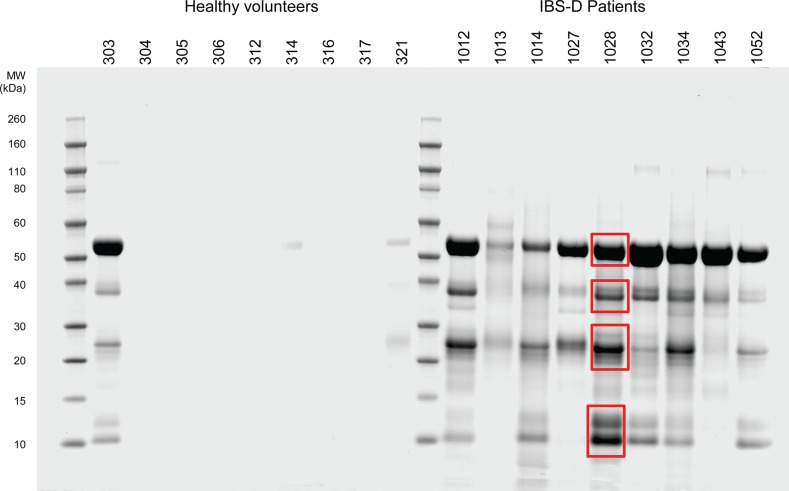
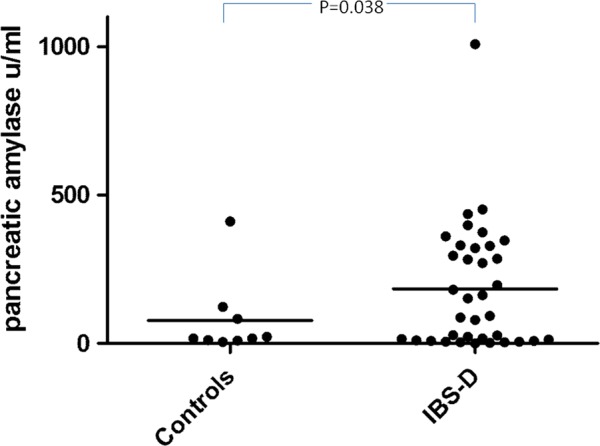
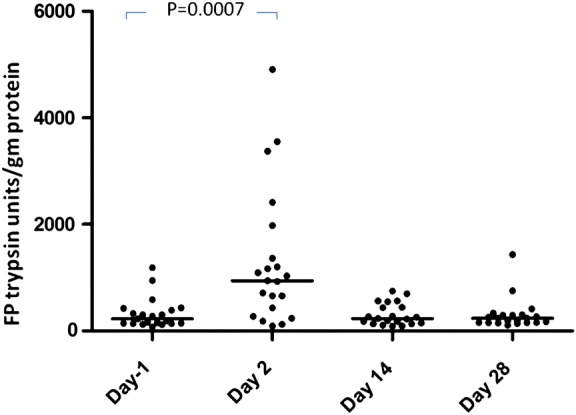
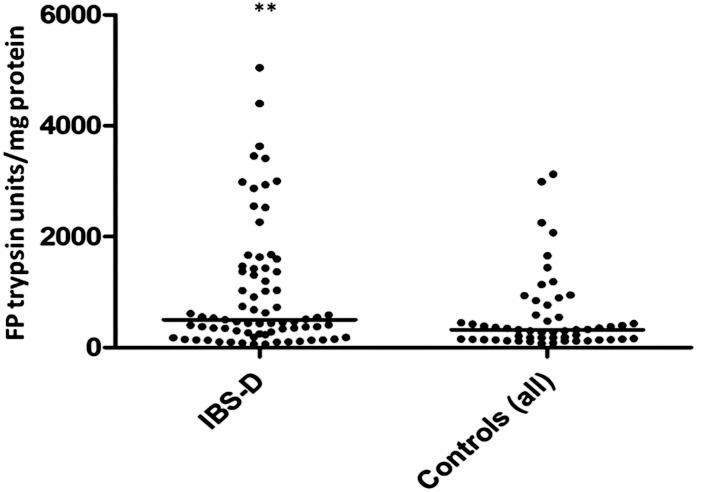
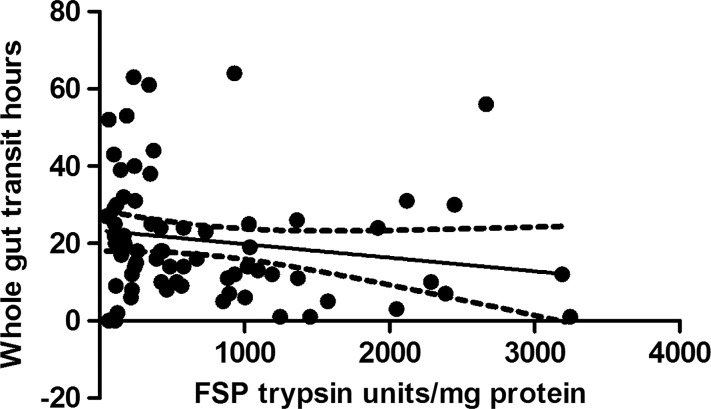
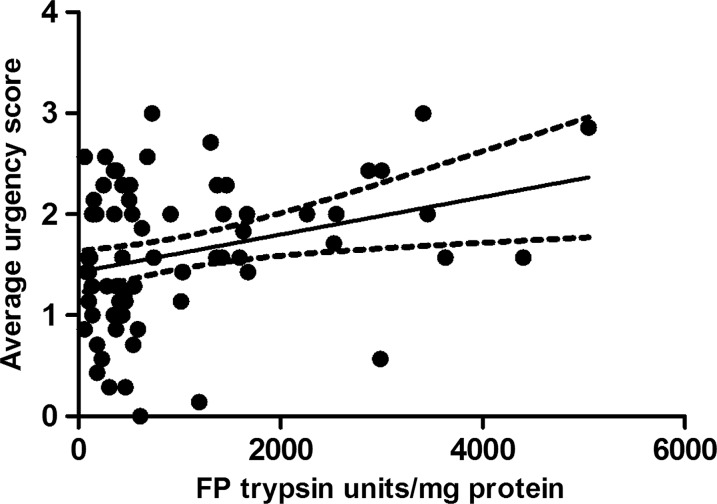
Results: Protein analysis identified the most abundant FSPs as being of human origin and probably derived from pancreatic juice. Functional assays showed increased faecal protease (FP) and amylase in patients with IBS-D compared with HV. Those with higher amylase had significantly higher FP and greater anxiety. FP activity correlated negatively with whole gut transit in patients with IBS-D (Spearman r=-0.32, p=0.005) and HV (r=-0.55, p=0.014). Colon cleansing caused a significant rise in FP activity in HV from a baseline of median (IQR) 253 (140-426) to 1031 (435-2296), levels similar to those seen in patients with IBS-D. FSP activity correlated positively with days/week with urgency.
Conclusions: The most abundant FSPs are of human origin. Rapid transit through the colon and/or decreased (possibly bacterial) proteolytic degradation increases their faecal concentration and could contribute to visceral hypersensitivity in patients with IBS-D.
Clinicaltrialsgov: NCT00745004.
Keywords: DIARRHOEA; IRRITABLE BOWEL SYNDROME.
Figures
References
-
- Gecse K, Roka R, Ferrier L, et al. Increased faecal serine protease activity in diarrhoeic IBS patients: a colonic lumenal factor impairing colonic permeability and sensitivity. Gut 2008;57:591–9 - PubMed
-
- Mertz H, Naliboff B, Munakata J, et al. Altered rectal perception is a biological marker of patients with irritable bowel syndrome. Gastroenterology 1995;109: 40–52 - PubMed
-
- Roka R, Rosztoczy A, Leveque M, et al. A pilot study of fecal serine-protease activity: a pathophysiologic factor in diarrhea-predominant irritable bowel syndrome. Clin Gastroenterol Hepatol 2007;5:550–5 - PubMed
-
- Otten CM, Kok L, Witteman BJ, et al. Diagnostic performance of rapid tests for detection of fecal calprotectin and lactoferrin and their ability to discriminate inflammatory from irritable bowel syndrome. Clin Chem Lab Med 2008;46:1275–80 - PubMed
Publication types
MeSH terms
Substances
Associated data
Grants and funding
LinkOut - more resources
Full Text Sources
Other Literature Sources
Medical
