


Bath salts and synthetic cathinones: an emerging designer drug phenomenon
- PMID: 23911668
- PMCID: PMC3909723
- DOI: 10.1016/j.lfs.2013.07.023
Bath salts and synthetic cathinones: an emerging designer drug phenomenon
Abstract
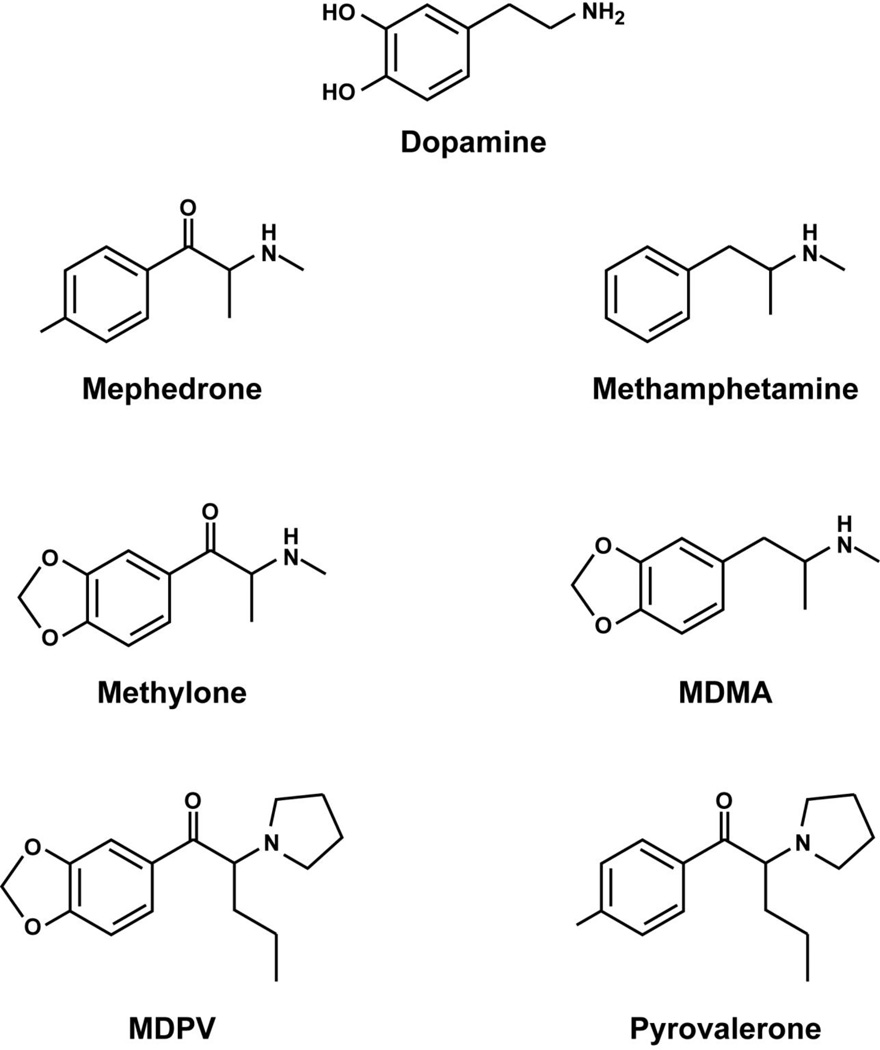
Synthetic cathinones are an emerging class of designer drugs abused for psychostimulant and hallucinogenic effects similar to cocaine, methylenedioxymethamphetamine (MDMA), or other amphetamines. Abuse of synthetic cathinones, frequently included in products sold as 'bath salts', became prevalent in early 2009, leading to legislative classification throughout Europe in 2010 and schedule I classification within the United States in 2011. Recent pre-clinical and clinical studies indicate that dysregulation of central monoamine systems is a principal mechanism of synthetic cathinone action and presumably underlie the behavioral effects and abuse liability associated with these drugs. This review provides insight into the development of synthetic cathinones as substances of abuse, current patterns of their abuse, known mechanisms of their action and toxicology, and the benefits and drawbacks of their classification.
Keywords: Bath salts; Designer drugs; MDPV; Mephedrone; Methylone; Stimulants; Synthetic cathinone.
© 2013.
Conflict of interest statement
All authors declare no conflicts of interest
Figures
References
-
- Anti-Drug Abuse Act of 1986. United States of America. 1986
-
- Addiction EMCfDaD. Report on the risk assessment of mephedrone in the framework of the Council Decision on new psychoactive substances. Luxembourg: The Publications Office of the European Union. 2011:193.
-
- Adebamiro A, Perazella MA. Recurrent acute kidney injury following bath salts intoxication. American journal of kidney diseases : the official journal of the National Kidney Foundation. 2012;59:273–275. - PubMed
Publication types
MeSH terms
Substances
Grants and funding
- R01 DA011389/DA/NIDA NIH HHS/United States
- K05 DA000378/DA/NIDA NIH HHS/United States
- DA00869/DA/NIDA NIH HHS/United States
- P01 DA013367/DA/NIDA NIH HHS/United States
- DA00378/DA/NIDA NIH HHS/United States
- DA31883/DA/NIDA NIH HHS/United States
- DA19447/DA/NIDA NIH HHS/United States
- DA13367/DA/NIDA NIH HHS/United States
- DA11389/DA/NIDA NIH HHS/United States
- R29 DA011389/DA/NIDA NIH HHS/United States
- R01 DA031883/DA/NIDA NIH HHS/United States
- K02 DA019447/DA/NIDA NIH HHS/United States
- R01 DA000869/DA/NIDA NIH HHS/United States
LinkOut - more resources
Full Text Sources
Other Literature Sources
Medical
