


Tuning the magnetic properties of nanoparticles
- PMID: 23912237
- PMCID: PMC3759896
- DOI: 10.3390/ijms140815977
Tuning the magnetic properties of nanoparticles
Abstract
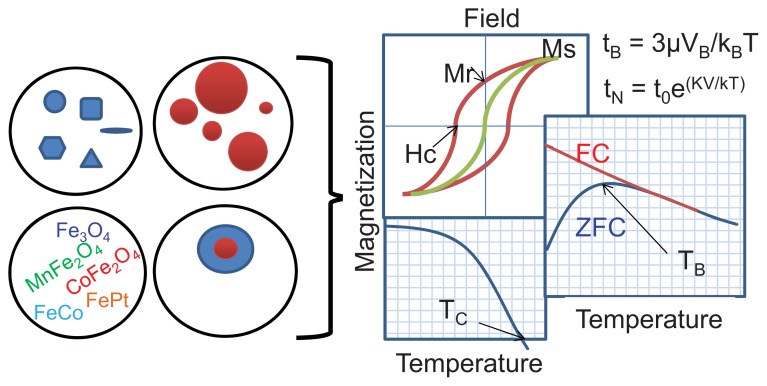
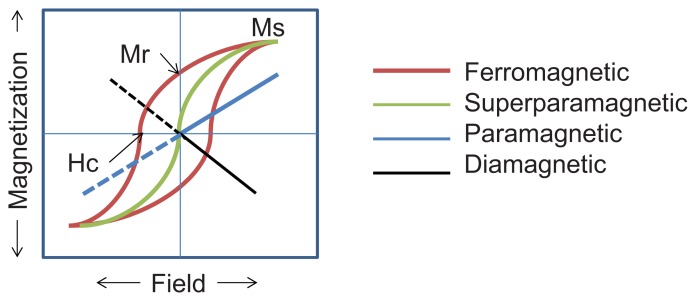
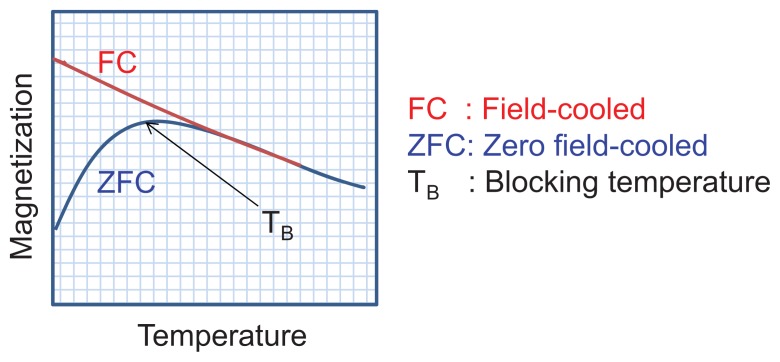
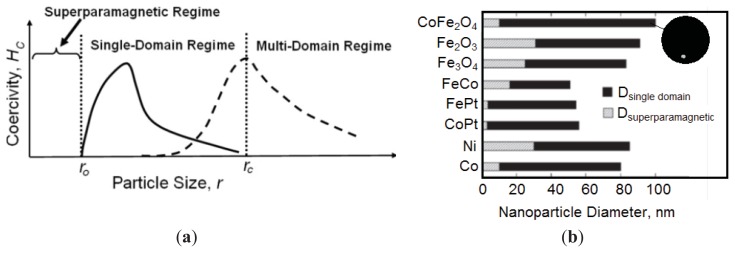
The tremendous interest in magnetic nanoparticles (MNPs) is reflected in published research that ranges from novel methods of synthesis of unique nanoparticle shapes and composite structures to a large number of MNP characterization techniques, and finally to their use in many biomedical and nanotechnology-based applications. The knowledge gained from this vast body of research can be made more useful if we organize the associated results to correlate key magnetic properties with the parameters that influence them. Tuning these properties of MNPs will allow us to tailor nanoparticles for specific applications, thus increasing their effectiveness. The complex magnetic behavior exhibited by MNPs is governed by many factors; these factors can either improve or adversely affect the desired magnetic properties. In this report, we have outlined a matrix of parameters that can be varied to tune the magnetic properties of nanoparticles. For practical utility, this review focuses on the effect of size, shape, composition, and shell-core structure on saturation magnetization, coercivity, blocking temperature, and relaxation time.
Figures

References
-
- Colombo M., Carregal-Romero S., Casula M.F., Gutierez L., Morales M.P., Bohm I.B., Heverhagen J.T., Prosperi D., Parak W.J. Biological applications of magnetic nanoparticles. Chem. Soc. Rev. 2012;41:4306–4334. - PubMed
-
- Singamaneni S., Bliznyuk V.N., Binek C., Tsymbal E.Y. Magnetic nanoparticles: Recent advances in synthesis, self-assembly and applications. J. Mater. Chem. 2011;21:16819–16845.
-
- Lu A.H., Salabas E.L., Schuth F. Magnetic nanoparticles: Synthesis, protection, functionalization, and application. Angew. Chem. Int. Ed. 2007;46:1222–1244. - PubMed
Publication types
MeSH terms
Substances
Grants and funding
LinkOut - more resources
Full Text Sources
Other Literature Sources
