


Cognition, behavior and social competence of preterm low birth weight children at school age
- PMID: 23917653
- PMCID: PMC3714779
- DOI: 10.6061/clinics/2013(07)05
Cognition, behavior and social competence of preterm low birth weight children at school age
Abstract
Objective: The aim of this study was to assess the cognitive and behavioral development of preterm and low birth weight newborns living in a disadvantageous socioeconomic environment at school age.
Methods: This cross-sectional study included children aged 6-7 from a historical birth cohort of preterm (gestational age <37 weeks) and low birth weight (<2,500 g) infants. The Wechsler Intelligence Scale for Children III (WISC-III) was administered by a psychologist while the parents completed the Child Behavior Checklist. The results were compared to the test's reference. The perinatal information and follow-up data were collected from the hospital files. The demographic data were collected from the parents. The current performance was compared with the results from the Denver II and Bayley II tests, which were administered during the first years of life.
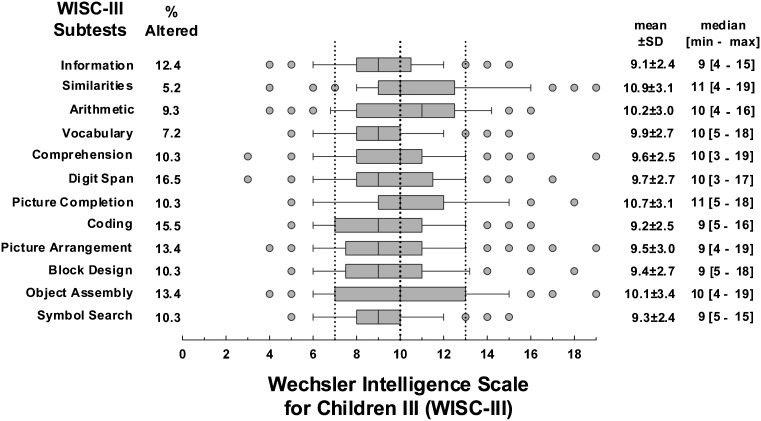
Results: The total intelligence quotient varied from 70 to 140 (mean 98.7±15.8). The borderline intelligence quotient was observed in 9.3% of the children. The Child Behavior Checklist indicated a predominance of social competence problems (27.8%, CI 19.2 to 37.9) compared with behavioral problems (15.5%, CI 8.9 to 24.2). Both the Child Behavior Checklist domains, such as schooling, social and attention problems, and the cognitive scores were significantly associated with maternal education and family income. The results of the Denver and Bayley tests were associated with the cognitive performance (p<0.001) and the Child Behavior Checklist social profile, including aggressive and externalizing behavior (p<0.001).
Conclusions: Our data suggest that even low-risk preterm newborns are at risk for developing disturbances in early school age, such as mild cognitive deficits and behavioral disorders. This risk might increase under unfavorable socioeconomic conditions.
Conflict of interest statement
No potential conflict of interest was reported.
Figures
References
-
- Allen MC. Neurodevelopmental outcomes of preterm infants. Curr Opin Neurol. 2008;21(2):123–8. - PubMed
-
- Larroque B, Ancel PY, Marret S, Marchand L, André M, Arnauld C, et al. Neurodevelopmental disabilities and special care of 5-year-old children born before 33 weeks of gestation (the EPIPAGE study): a longitudinal cohort study. Lancet. 2008;371(9615):813–20. - PubMed
-
- Lundequist A, Böhm B, Smedler AC. Individual neuropsychological profiles at age 51\2 years born preterm in relation to medical risk factors. Child Neuropsychol. 2013;19(3):313–31. - PubMed
-
- Jongbloed –Pereboom M, Janssen AJ, Steenbergen B, Nijhuis-van der Sander MW. Motor learning and working memory in children born preterm: a systematic review. Neurosci Biobehav Rev. 2012;36(4):1314–30. - PubMed
MeSH terms
LinkOut - more resources
Full Text Sources
Other Literature Sources
