


Newborn chickens generate invariant object representations at the onset of visual object experience
- PMID: 23918372
- PMCID: PMC3752245
- DOI: 10.1073/pnas.1308246110
Newborn chickens generate invariant object representations at the onset of visual object experience
Abstract
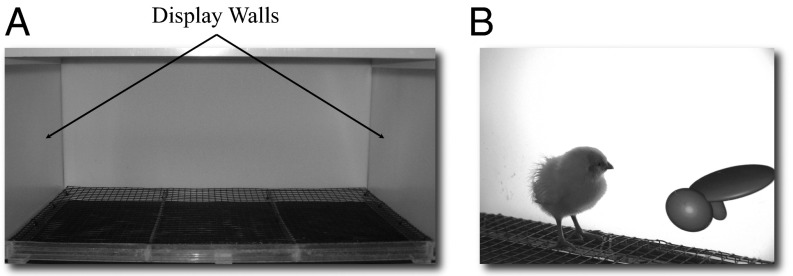
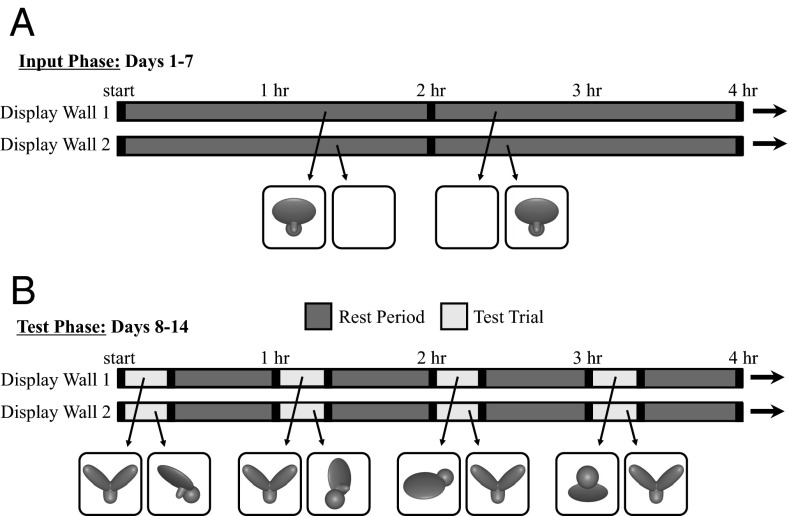
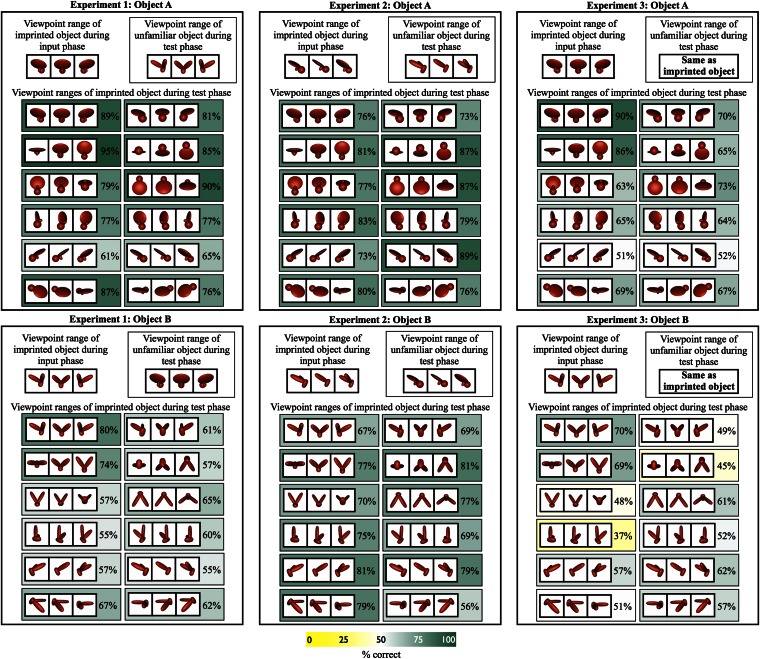
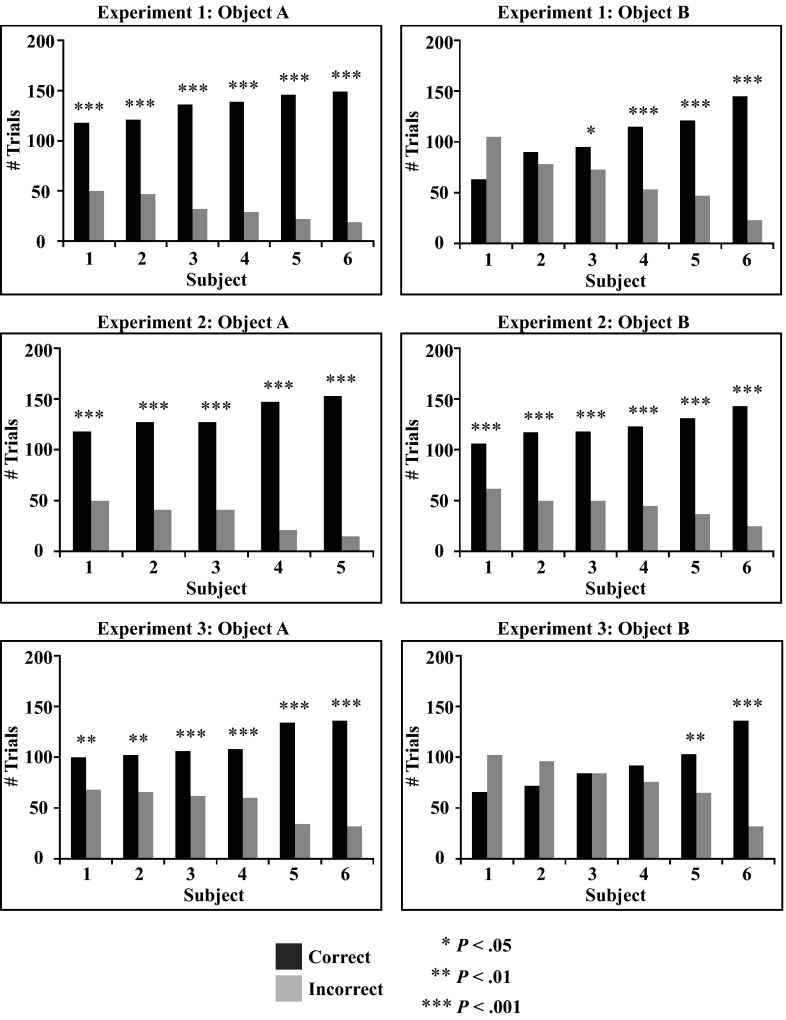
To recognize objects quickly and accurately, mature visual systems build invariant object representations that generalize across a range of novel viewing conditions (e.g., changes in viewpoint). To date, however, the origins of this core cognitive ability have not yet been established. To examine how invariant object recognition develops in a newborn visual system, I raised chickens from birth for 2 weeks within controlled-rearing chambers. These chambers provided complete control over all visual object experiences. In the first week of life, subjects' visual object experience was limited to a single virtual object rotating through a 60° viewpoint range. In the second week of life, I examined whether subjects could recognize that virtual object from novel viewpoints. Newborn chickens were able to generate viewpoint-invariant representations that supported object recognition across large, novel, and complex changes in the object's appearance. Thus, newborn visual systems can begin building invariant object representations at the onset of visual object experience. These abstract representations can be generated from sparse data, in this case from a visual world containing a single virtual object seen from a limited range of viewpoints. This study shows that powerful, robust, and invariant object recognition machinery is an inherent feature of the newborn brain.
Keywords: animal cognition; avian cognition; imprinting; newborn cognition.
Conflict of interest statement
The author declares no conflict of interest.
Figures
References
-
- Grill-Spector K, Malach R. The human visual cortex. Annu Rev Neurosci. 2004;27:649–677. - PubMed
-
- Wang G, Obama S, Yamashita W, Sugihara T, Tanaka K. Prior experience of rotation is not required for recognizing objects seen from different angles. Nat Neurosci. 2005;8(12):1768–1775. - PubMed
-
- Biederman I, Bar M. One-shot viewpoint invariance in matching novel objects. Vision Res. 1999;39(17):2885–2899. - PubMed
-
- Field DJ. What is the goal of sensory coding. Neural Comput. 1994;6(4):559–601.
Publication types
MeSH terms
LinkOut - more resources
Full Text Sources
Other Literature Sources
