


Inbreeding reveals mode of past selection on male reproductive characters in Drosophila melanogaster
- PMID: 23919154
- PMCID: PMC3728949
- DOI: 10.1002/ece3.625
Inbreeding reveals mode of past selection on male reproductive characters in Drosophila melanogaster
Abstract
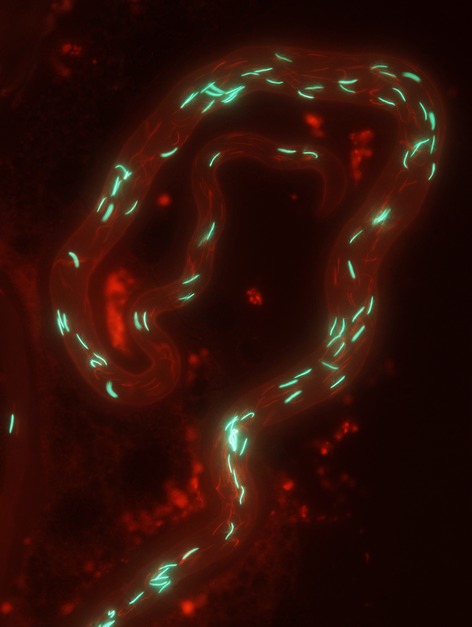
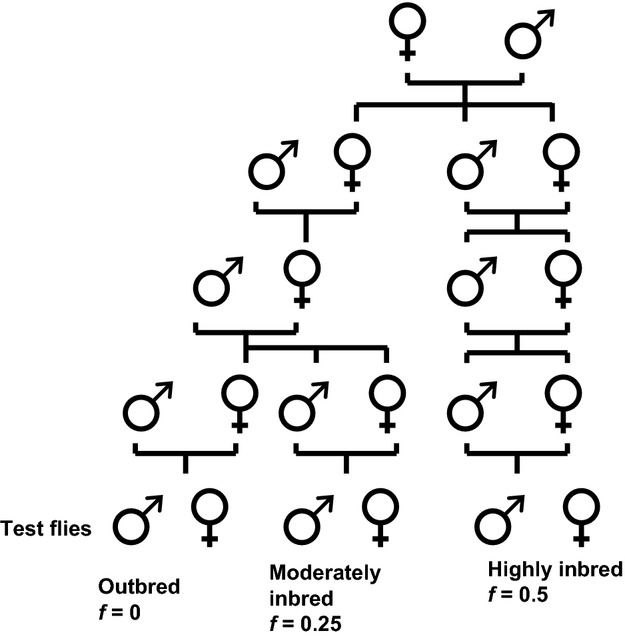
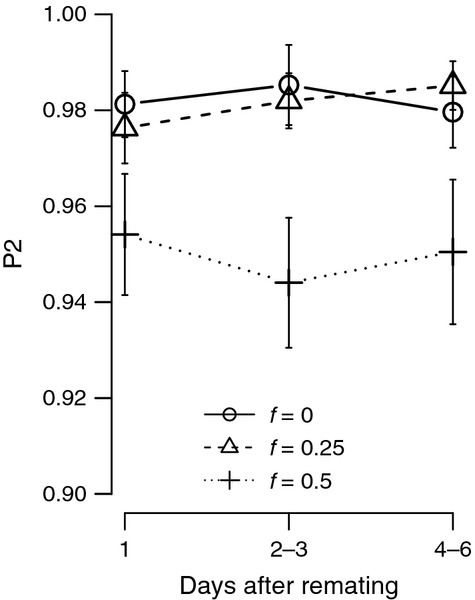
Directional dominance is a prerequisite of inbreeding depression. Directionality arises when selection drives alleles that increase fitness to fixation and eliminates dominant deleterious alleles, while deleterious recessives are hidden from it and maintained at low frequencies. Traits under directional selection (i.e., fitness traits) are expected to show directional dominance and therefore an increased susceptibility to inbreeding depression. In contrast, traits under stabilizing selection or weakly linked to fitness are predicted to exhibit little-to-no inbreeding depression. Here, we quantify the extent of inbreeding depression in a range of male reproductive characters and then infer the mode of past selection on them. The use of transgenic populations of Drosophila melanogaster with red or green fluorescent-tagged sperm heads permitted in vivo discrimination of sperm from competing males and quantification of characteristics of ejaculate composition, performance, and fate. We found that male attractiveness (mating latency) and competitive fertilization success (P2) both show some inbreeding depression, suggesting they may have been under directional selection, whereas sperm length showed no inbreeding depression suggesting a history of stabilizing selection. However, despite having measured several sperm quality and quantity traits, our data did not allow us to discern the mechanism underlying the lowered competitive fertilization success of inbred (f = 0.50) males.
Keywords: Attractiveness; Drosophila melanogaster; inbreeding depression; past selection; sperm competition; sperm length.
Figures
References
-
- Ala-Honkola O, Uddström A, Diaz Pauli B, Lindström K. Strong inbreeding depression in male mating behaviour in a poeciliid fish. J. Evol. Biol. 2009;22:1396–1406. - PubMed
-
- Ala-Honkola O, Manier MK, Lüpold S, Pitnick S. No evidence for postcopulatory inbreeding avoidance in Drosophila melanogaster. Evolution. 2011;65:2699–2705. - PubMed
-
- Barth M, Hirsch H, Heisenberg M. Rearing in different light regimes affects courtship behaviour in Drosophila melanogaster. Anim. Behav. 1997;53:25–38.
-
- Birkhead TR. Cryptic female choice: criteria for establishing female sperm choice. Evolution. 1998;52:1212–1218. - PubMed
-
- Birkhead TR, Chaline N, Biggins JD, Burke T, Pizzari T. Nontransitivity of paternity in a bird. Evolution. 2004;58:416–420. - PubMed
LinkOut - more resources
Full Text Sources
Other Literature Sources
Molecular Biology Databases
Miscellaneous
