


Inspiratory muscle training protocol for patients with chronic obstructive pulmonary disease (IMTCO study): a multicentre randomised controlled trial
- PMID: 23921069
- PMCID: PMC3740252
- DOI: 10.1136/bmjopen-2013-003101
Inspiratory muscle training protocol for patients with chronic obstructive pulmonary disease (IMTCO study): a multicentre randomised controlled trial
Abstract
Introduction: Inspiratory muscle training (IMT) has been applied during pulmonary rehabilitation in patients with chronic obstructive pulmonary disease (COPD). However, it remains unclear if the addition of IMT to a general exercise training programme leads to additional clinically relevant improvements in patients with COPD. In this study, we will investigate whether the addition of IMT to a general exercise training programme improves 6 min walking distance, health-related quality of life, daily physical activity and inspiratory muscle function in patients with COPD with inspiratory muscle weakness.
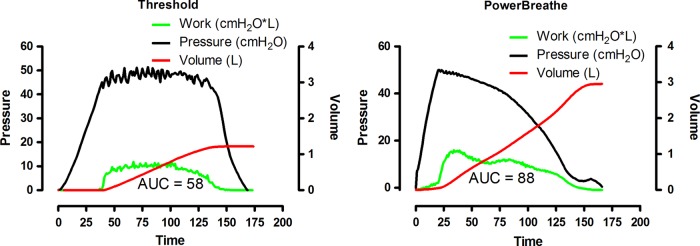
Methods and analysis: Patients with COPD (n=170) with inspiratory muscle weakness (Pi,max <60 cm H2O or <50%pred) will be recruited to a multicentre randomised placebo controlled trial of IMT and allocated into one of the two groups. Patients in both groups will follow a 3 month general exercise training programme, in combination with home-based IMT. IMT will be performed with a recently developed device (POWERbreathe KH1). This device applies an inspiratory load that is provided by an electronically controlled valve (variable flow resistive load). The intervention group (n=85) will undertake an IMT programme at a high intensity (≥50% of their Pi,max), whereas the placebo group (n=85) will undertake IMT at a low training intensity (≤10% of Pi,max). Total daily IMT time for both groups will be 21 min (6 cycles of 30 breaths). Improvement in the 6 min walking distance will be the primary outcome. Inspiratory muscle function, health-related quality of life and daily physical activity will be assessed as secondary outcomes.
Ethics and dissemination: Ethics approval has been obtained from relevant centre committees and the study has been registered in a publicly accessible clinical trial database. The results will be easily interpretable and should immediately be communicated to healthcare providers, patients and the general public.
Results: This can be incorporated into evidence-based treatment recommendations for clinical practice.
Clinicaltrialsgov: NCT01397396.
Figures
References
-
- Mannino DM, Buist AS. Global burden of COPD: risk factors, prevalence, and future trends. Lancet 2007;370:765–73 - PubMed
-
- Rabe KF, Hurd S, Anzueto A, et al. Global strategy for the diagnosis, management, and prevention of chronic obstructive pulmonary disease: GOLD executive summary. Am J Respir Crit Care Med 2007;176:532–55 - PubMed
-
- Global Initiative for Chronic Obstructive Lung Disease (GOLD) 2011 Global Strategy for the Diagnosis, Management and Prevention of COPD. http://www.goldcopd.org/.Ref Type: Internet Communication.
-
- O'Donnell DE, Travers J, Webb KA, et al. Reliability of ventilatory parameters during cycle ergometry in multicentre trials in COPD. Eur Respir J 2009;34:866–74 - PubMed
-
- Hamilton N, Killian KJ, Summers E, et al. Muscle strength, symptom intensity, and exercise capacity in patients with cardiorespiratory disorders. Am J Respir Crit Care Med 1995;152:2021–31 - PubMed
Associated data
LinkOut - more resources
Full Text Sources
Other Literature Sources
Medical
Research Materials
Miscellaneous
