


Nutritional aspect of tryptophan metabolism
- PMID: 23922498
- PMCID: PMC3729278
- DOI: 10.4137/IJTR.S11588
Nutritional aspect of tryptophan metabolism
Abstract
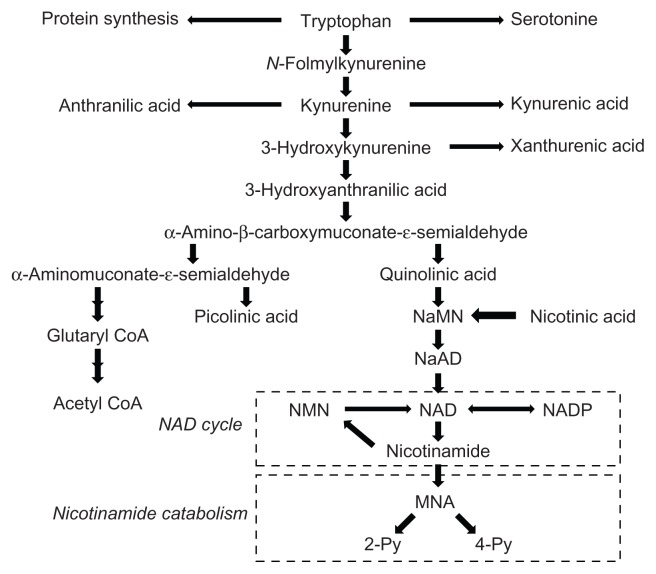
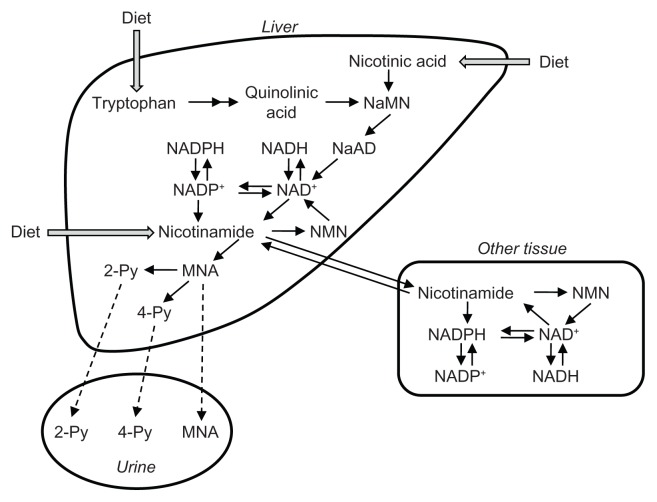
Mammals, including humans, can synthesize the vitamin nicotinamide from tryptophan in the liver. The resultant nicotinamide is distributed to non-hepatic tissues. We have studied the effects of changes in tryptophan-nicotinamide metabolism on niacin nutritional status. The liver plays a critical role in nicotinamide supply. Animal studies showed that the tryptophan-nicotinamide pathway is affected by physiological conditions, the presence of disease, nutrients, hormones, and chemicals. Human studies have shown that 1 mg of nicotinamide is produced from 67 mg of tryptophan intake, and that the conversion ratio of tryptophan to nicotinamide is enhanced from mid to late pregnancy. These findings have contributed to the determination of dietary reference intakes for niacin recommended in the Dietary Reference Intakes for Japanese 2010. Our findings suggest that the conversion of nicotinamide from tryptophan is important in maintaining niacin nutrition.
Keywords: nicotinamide; nutrition; tryptophan.
Figures
References
-
- Institute of Medicine (US) Standing Committee on the Scientific Evaluation of Dietary Reference Intakes and its Panel on Folate, Other B Vitamins, and Choline. Dietary Reference Intakes for Thiamin, Riboflavin, Niacin, Vitamin B6, Folate, Vitamin B12, Pantothenic Acid, Biotin, and Choline. Washington (DC): National Academies Press (US); 1998. - PubMed
-
- Seal AJ, Creeke PI, Dibari F, et al. Low and deficient niacin status and pellagra are endemic in postwar Angola. Am J Clin Nutr. 2007;85(1):218–24. - PubMed
-
- Ministry of Health, Labor, and Welfare of Japan. Dietary reference Intakes for Japanese, 2010. Tokyo: 2009.
-
- Ministry of Health, Labor, and Welfare of Japan. The National Health and Nutrition Survey, 2010. Tokyo: 2012.
LinkOut - more resources
Full Text Sources
Other Literature Sources
