


Selective hepatitis B virus vaccination has reduced hepatitis B virus transmission in the Netherlands
- PMID: 23922651
- PMCID: PMC3726692
- DOI: 10.1371/journal.pone.0067866
Selective hepatitis B virus vaccination has reduced hepatitis B virus transmission in the Netherlands
Abstract
Background & aims: In the Netherlands, a selective hepatitis B virus (HBV) vaccination programme started in 2002 for men having sex with men, drug users, commercial sex workers and heterosexuals with frequent partner changes. We assessed the programme's effectiveness to guide policy on HBV prevention.
Methods: We analysed reports of acute HBV infection in the Netherlands between 2004 and 2010 requesting serum from patients for HBV-genome S- and C-region sequencing. We used coalescence analyses to assess genetic diversity of nonimported genotype-A cases over time.
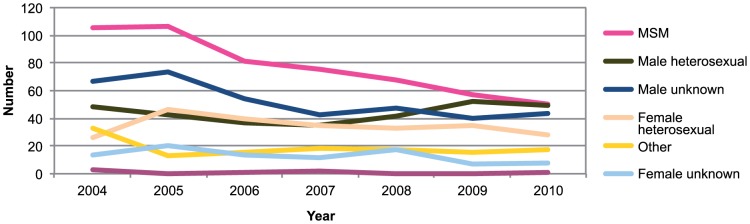
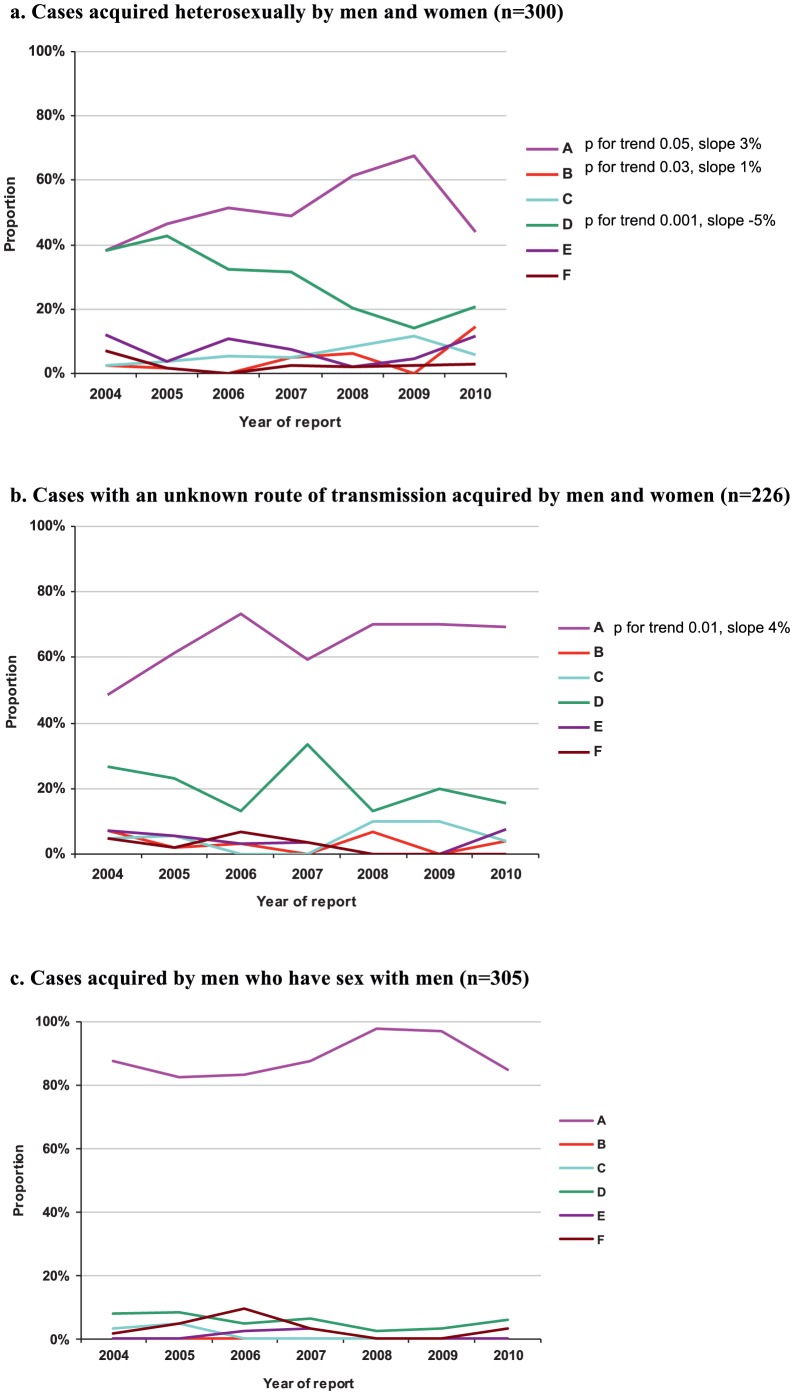
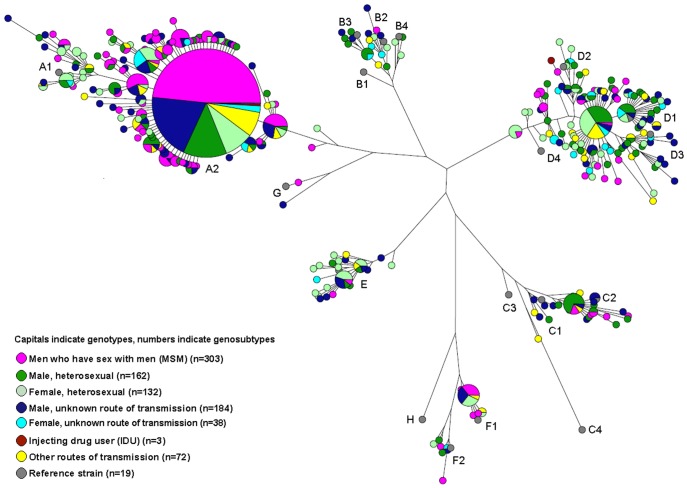
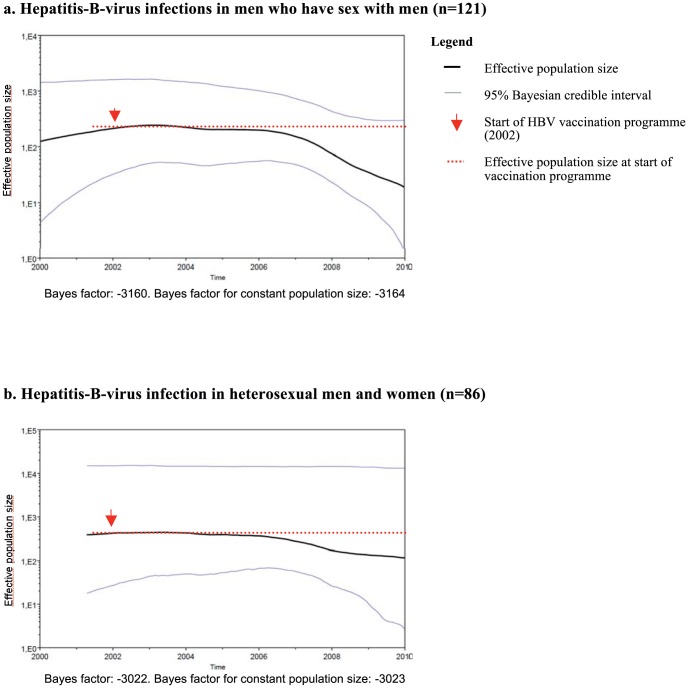
Results: 1687 patients with acute HBV infection were reported between 2004 and 2010. The incidence of reported acute HBV infection decreased from 1.8 to 1.2 per 100,000 inhabitants, mostly due to a reduction in the number of cases in men who have sex with men. Men were overrepresented among cases with an unknown route of transmission, especially among genotype A2 cases mainly associated with transmission through male homosexual contact. The genetic diversity of nonimported genotype-A strains obtained from men who have sex with men decreased from 2006 onwards, suggesting HBV incidence in this group decreased.
Conclusions: The selective HBV-vaccination programme for behavioural high-risk groups very likely reduced the incidence of HBV infection in the Netherlands mainly by preventing HBV infections in men who have sex with men. A considerable proportion of cases in men who did not report risk behaviour was probably acquired through homosexual contact. Our findings support continuation of the programme, and adopting similar approaches in other countries where HBV transmission is focused in high-risk adults.
Conflict of interest statement
Figures
References
-
- Dienstag JL (2008) Hepatitis B virus infection. N Engl J Med 359: 1486–1500. - PubMed
-
- World Health Organization (2008) Hepatitis B Fact sheet. Available from http://www.who.int/mediacentre/factsheets/fs204/en/. Accessed 13 April 2012.
-
- World Health Organisation (2009) Hepatitis B vaccines. Position paper. Weekly Epidemiol Record 40: 405–420.
-
- Hahné SJ, Melker de HE, Kretzschmar M, Mollema L, van der Klis F, et al. (2012) Prevalence of hepatitis B virus infection in The Netherlands in 1996 and 2007. Epidemiol Infect 140: 1469–1480. - PubMed
-
- European Centre for Disease Prevention and Control (2010). Hepatitis B and C in the EU neighbourhood: prevalence, burden of disease and screening policies. Stockholm, Sweden: ECDC. Report No.: ISBN 978-92-9193-213-9.
Publication types
MeSH terms
Substances
LinkOut - more resources
Full Text Sources
Other Literature Sources
Medical
