


The effect of criticism on functional brain connectivity and associations with neuroticism
- PMID: 23922755
- PMCID: PMC3724923
- DOI: 10.1371/journal.pone.0069606
The effect of criticism on functional brain connectivity and associations with neuroticism
Abstract
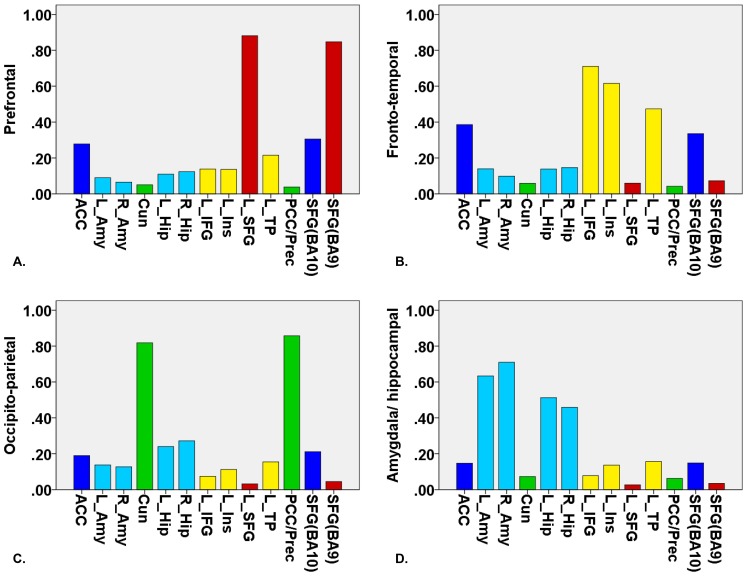
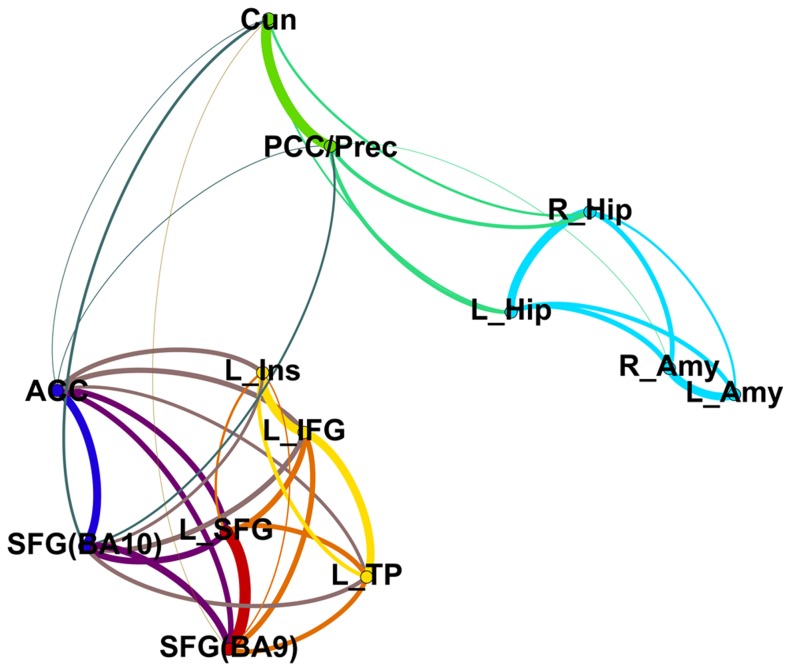
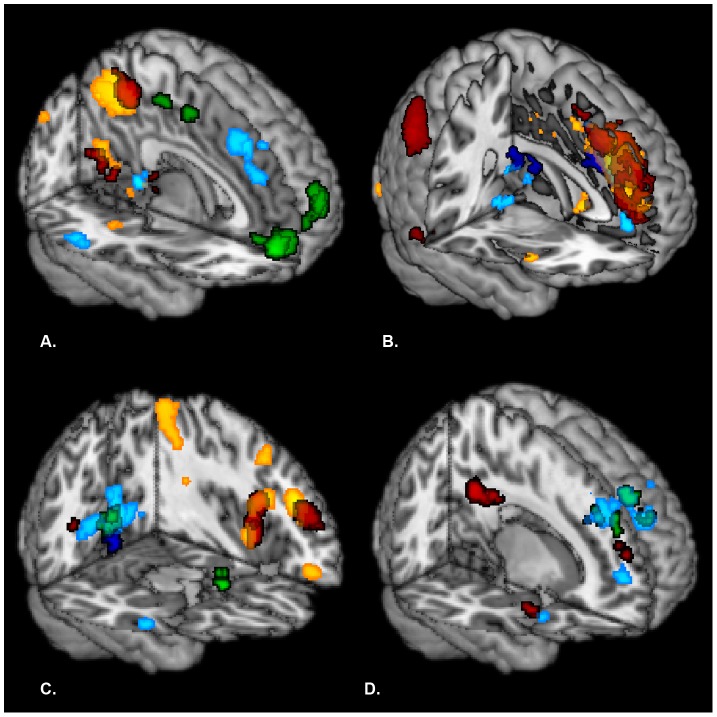
Neuroticism is a robust personality trait that constitutes a risk factor for psychopathology, especially anxiety disorders and depression. High neurotic individuals tend to be more self-critical and are overly sensitive to criticism by others. Hence, we used a novel resting-state paradigm to investigate the effect of criticism on functional brain connectivity and associations with neuroticism. Forty-eight participants completed the NEO Personality Inventory Revised (NEO-PI-R) to assess neuroticism. Next, we recorded resting state functional magnetic resonance imaging (rsfMRI) during two sessions. We manipulated the second session before scanning by presenting three standardized critical remarks through headphones, in which the subject was urged to please lie still in the scanner. A seed-based functional connectivity method and subsequent clustering were used to analyse the resting state data. Based on the reviewed literature related to criticism, we selected brain regions associated with self-reflective processing and stress-regulation as regions of interest. The findings showed enhanced functional connectivity between the clustered seed regions and brain areas involved in emotion processing and social cognition during the processing of criticism. Concurrently, functional connectivity was reduced between these clusters and brain structures related to the default mode network and higher-order cognitive control. Furthermore, individuals scoring higher on neuroticism showed altered functional connectivity between the clustered seed regions and brain areas involved in the appraisal, expression and regulation of negative emotions. These results may suggest that the criticized person is attempting to understand the beliefs, perceptions and feelings of the critic in order to facilitate flexible and adaptive social behavior. Furthermore, multiple aspects of emotion processing were found to be affected in individuals scoring higher on neuroticism during the processing of criticism, which may increase their sensitivity to negative social-evaluation.
Conflict of interest statement
Figures
References
-
- Dickerson SS, Kemeny ME (2004) Acute stressors and cortisol responses: A theoretical integration and synthesis of laboratory research. Psychol Bull 130: 355–391. - PubMed
-
- Costa PT, Mccrae RR (1992) The 5-factor model of personality and its relevance to personality-disorders. J Personal Disord 6: 343–359.
-
- Ormel J, Bastiaansen A, Riese H, Bos EH, Servaas M, et al. (2013) The biological and psychological basis of neuroticism: Current status and future directions. Neurosci Biobehav Rev 37: 59–72. - PubMed
-
- Suls J, Martin R (2005) The daily life of the garden-variety neurotic: Reactivity, stressor exposure, mood spillover, and maladaptive coping. J Pers 73: 1485–1510. - PubMed
-
- Watson D, Clark LA, Harkness AR (1994) Structures of personality and their relevance to psychopathology. J Abnorm Psychol 103: 18–31. - PubMed
Publication types
MeSH terms
LinkOut - more resources
Full Text Sources
Other Literature Sources
Medical
Research Materials
Miscellaneous
