


Nutritional status of orphaned and separated children and adolescents living in community and institutional environments in uasin gishu county, kenya
- PMID: 23922900
- PMCID: PMC3724723
- DOI: 10.1371/journal.pone.0070054
Nutritional status of orphaned and separated children and adolescents living in community and institutional environments in uasin gishu county, kenya
Abstract
Objective: To describe the nutritional status of orphaned and separated children and adolescents (OSCA) living in households in the community (HH), on the street, and those in institutional environments in western Kenya.
Methods: The study enrolled OSCA from 300 randomly selected households (HH), 19 Charitable Children's Institutions (CCIs), and 100 street-involved children. Measures of malnutrition were standardized with Z-scores using World Health Organization criteria; Z-scores ≤-2 standard deviations (sd) were moderate-severe malnutrition. Data were analyzed using multivariable logistic regression adjusting for child age, sex, HIV status, whether the child had been hospitalized in the previous year, time living with current guardian, and intra-household clustering for adequacy of diet and moderate-severe malnutrition.
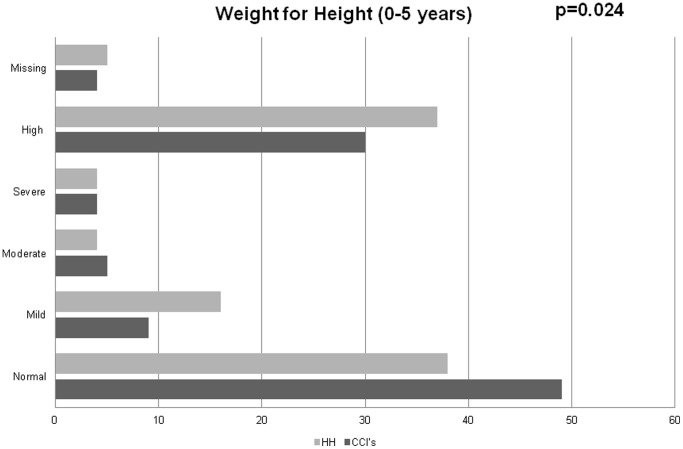
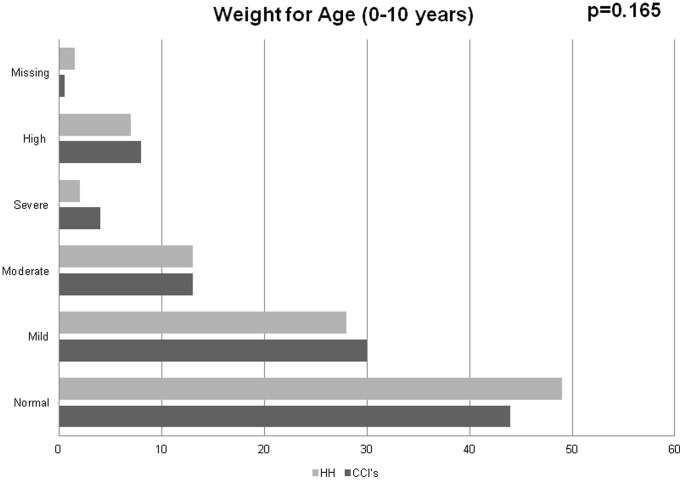
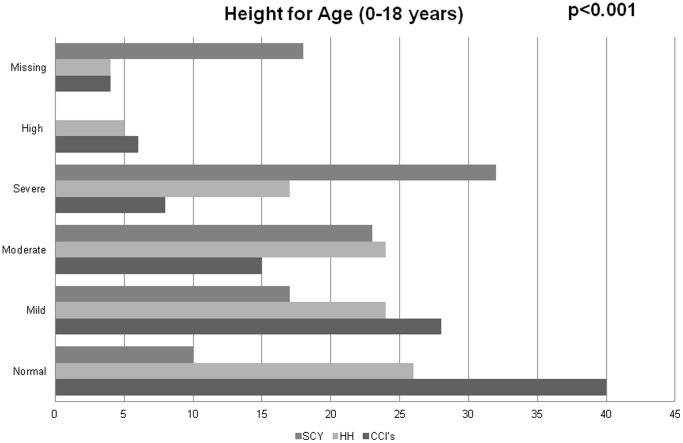
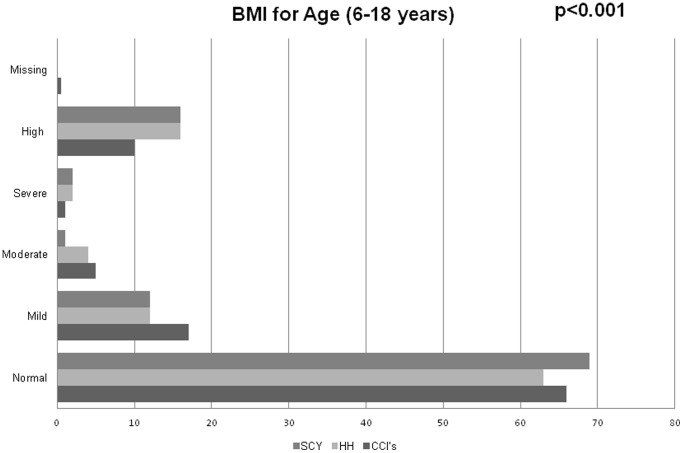
Results: Included are data from 2862 participants (1337 in CCI's, 1425 in HH's, and 100 street youth). The population was 46% female with median age at enrolment of 11.1 years. Only 4.4% of households and institutions reported household food security; 93% of children in HH reported an adequate diet vs. 95% in CCI's and 99% among street youth. After adjustment, OSCA in HH were less likely to have an adequate diet compared to those in CCI's (AOR 0.4, 95% CI 0.2-1.0). After adjustment, there were no differences between the categories of children on weight-for-age, weight-for-height, or BMI-for-age. Children living in HH (AOR 2.6, 95% CI: 2.0-3.4) and street youth (AOR: 5.9, 95% CI: 3.6-9.5) were more likely than children in CCI's to be low height-for-age.
Conclusion: OSCA in HH are less likely to have an adequate diet compared to children in CCI's. They and street children are more likely to be moderately-severely low height-for-age compared to children in CCI's, suggesting chronic malnutrition among them.
Conflict of interest statement
Figures
References
-
- UNICEF (2012) The State of the World's Children: Urbanization. Geneva: United Nations Children's Fund.
-
- World Health Organization (2011) Global HIV/AIDS Response: Epidemic update and health sector progress towards Universal Access Progress Report 2011.
-
- UNICEF (2006) Africa's Orphaned and Vulnerable Generations: Children Affected by HIV/AIDS. Geneva, CH; Washington, DC: UNICEF, UNAIDS, PEPFAR. 16 p.
-
- UNICEF (2012) Kenya at a Glance. In: UNICEF, editor. Geneva: UNICEF.
-
- Heymann J, Earle A, Rajaraman D, Miller C, Bogen K (2007) Extended family caring for children orphaned by AIDS: balancing essential work and caregiving in a high HIV prevalence nations. AIDS Care 19: 337–345. - PubMed
Publication types
MeSH terms
Grants and funding
LinkOut - more resources
Full Text Sources
Other Literature Sources
Medical
