


The incidence of first venous thromboembolism in and around pregnancy using linked primary and secondary care data: a population based cohort study from England and comparative meta-analysis
- PMID: 23922975
- PMCID: PMC3726432
- DOI: 10.1371/journal.pone.0070310
The incidence of first venous thromboembolism in and around pregnancy using linked primary and secondary care data: a population based cohort study from England and comparative meta-analysis
Abstract
Background: Recent linkage between primary and secondary care data has provided valuable information for studying heath outcomes that may initially present in different health care settings. The aim of this study was therefore, twofold: to use linked primary and secondary care data to determine an optimum definition for estimating the incidence of first VTE in and around pregnancy; and secondly to conduct a systematic literature review of studies on perinatal VTE incidence with the purpose of comparing our estimates.
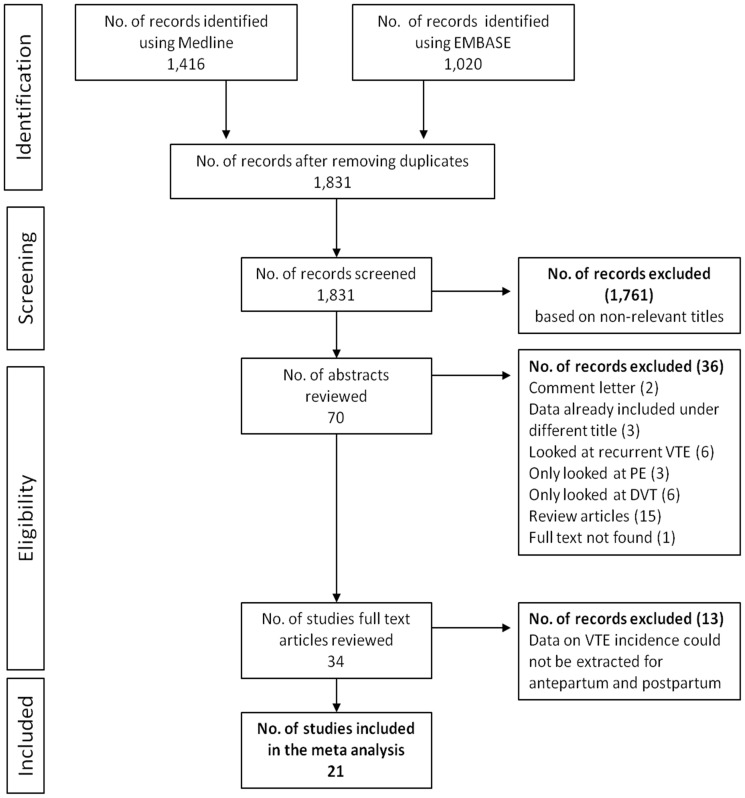
Methods: We used primary care data from the Clinical Practice Research Datalink (CPRD), which incorporates linkages to secondary care contained within Hospital Episode Statistics (HES) between 1997 and 2010 to estimate the incidence rate of VTE in the antepartum and postpartum period. We systematically searched the literature on the incidence of VTE during antepartum and postpartum periods and performed a meta-analysis to provide comparison.
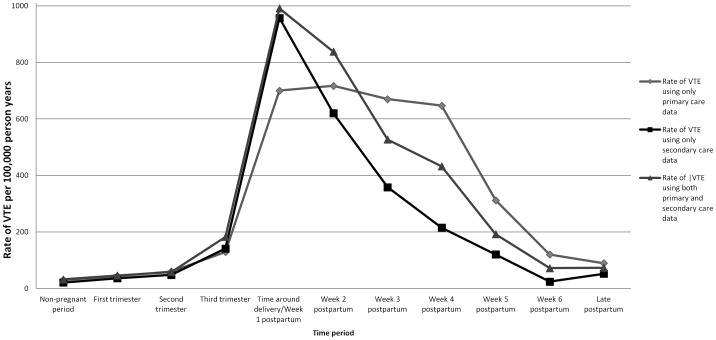
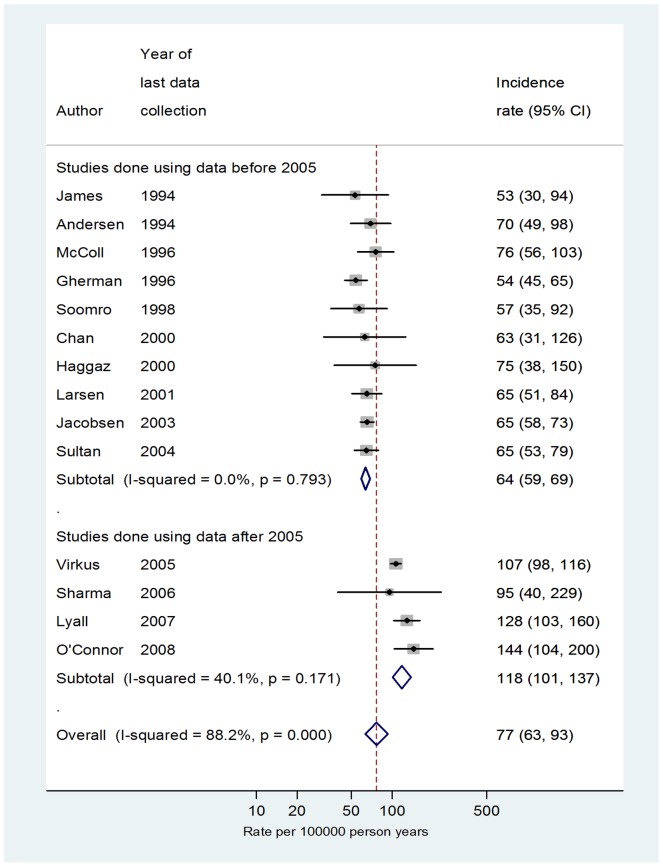
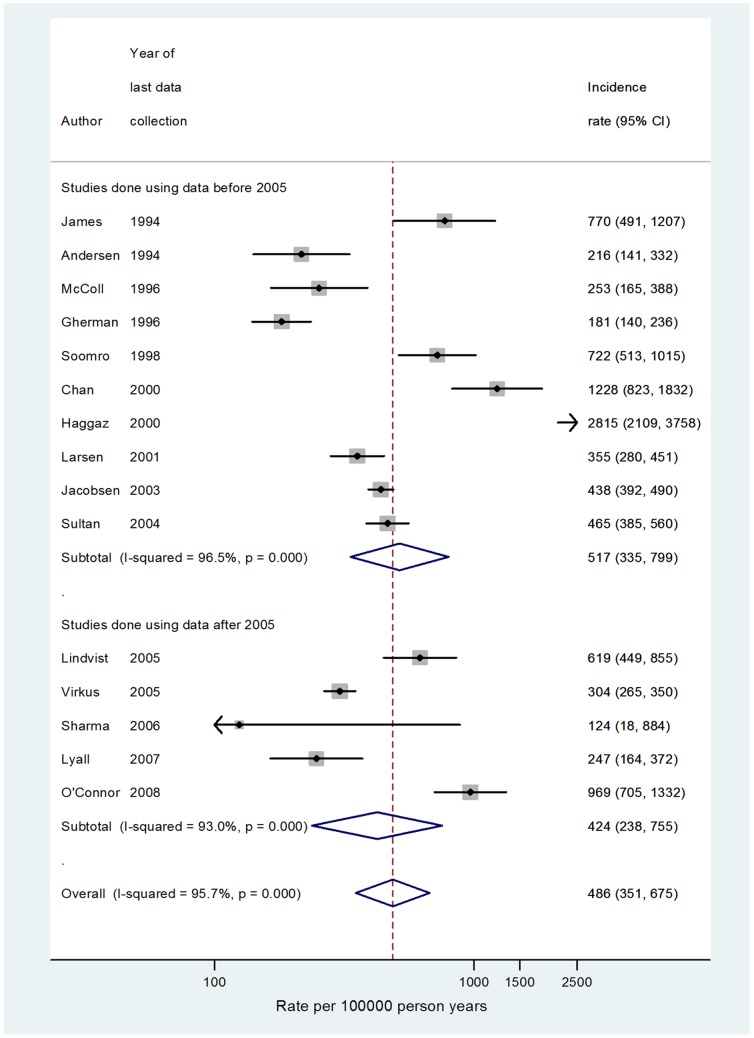
Findings: Using combined CPRD and HES data and a restrictive VTE definition, the absolute rate during the antepartum period and first six weeks postpartum (early postpartum) were 99 (95%CI 85-116) and 468 (95%CI 391-561) per 100,000 person-years respectively. These were comparable to the pooled estimates from our meta-analysis (using studies after 2005) during the antepartum period (118/100,000 person-years) and early postpartum (424/100,000 person-years). When we used only secondary care data to identify VTE events, incidence was lower during the early postpartum period (308/100,000 person-years), whereas relying only on primary care data lead to lower incidence during the time around delivery, but higher rates during the postpartum period (558/100,000 person-years).
Conclusion: Using combined CPRD and HES data gives estimates of the risk of VTE in and around pregnancy that are comparable to the existing literature. It also provides more accurate estimation of the date of VTE diagnosis which will allow risk stratification during specific pregnancy and postpartum periods.
Conflict of interest statement
Figures
References
-
- Ros SH, Lichtenstein P, Bellocco R, Petersson G, Cnattingius S (2001) Increased risks of circulatory diseases in late pregnancy and puerperium. Epidemiology 12: 456–460. - PubMed
-
- Virkus RA, Lokkegaard ECL, Bergholt T, Mogensen U, Langhoff-Roos J, et al. (2011) Venous thromboembolism in pregnant and puerperal women in Denmark 1995–2005. A national cohort study. Thrombosis and Haemostasis 106: 304–309. - PubMed
-
- Hospital Episode Statistics.
-
- Dattani N, Datta-Nemdharry P, Macfarlane A (2012) Linking maternity data for England 2007: methods and data quality. Health Statistics Quarterly 53. - PubMed
Publication types
MeSH terms
LinkOut - more resources
Full Text Sources
Other Literature Sources
