


Genetically Engineered Mouse Models Reveal the Importance of Proteases as Osteoarthritis Drug Targets
- PMID: 23926636
- PMCID: PMC4062186
- DOI: 10.1007/s11926-013-0350-2
Genetically Engineered Mouse Models Reveal the Importance of Proteases as Osteoarthritis Drug Targets
Abstract
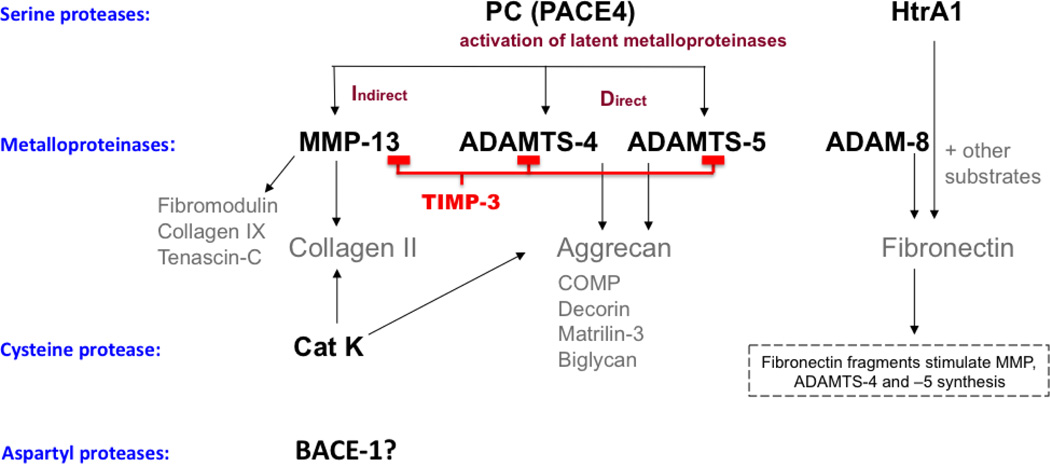
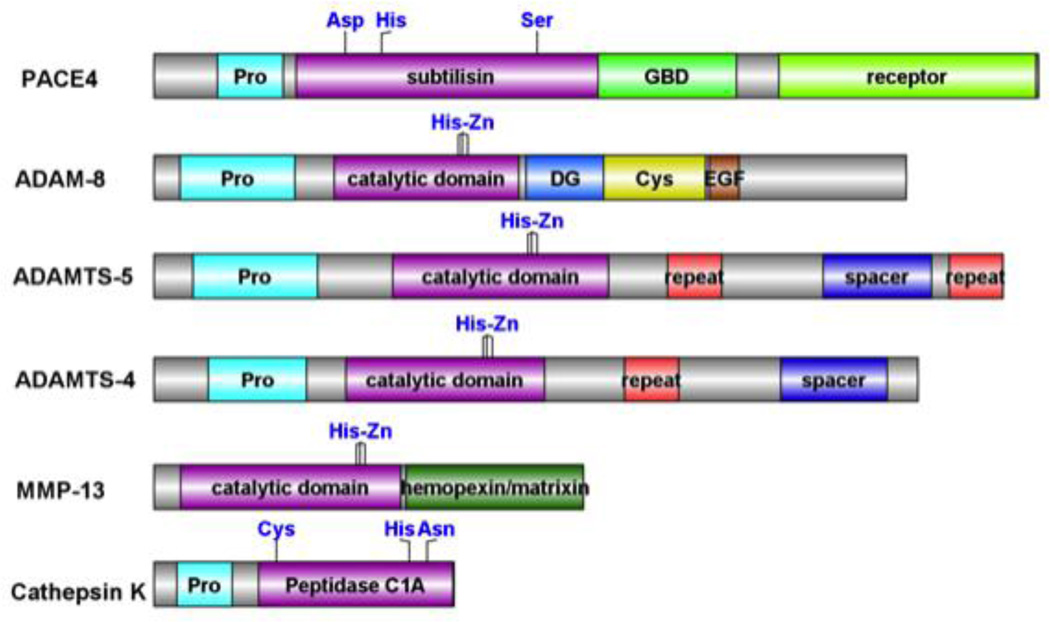
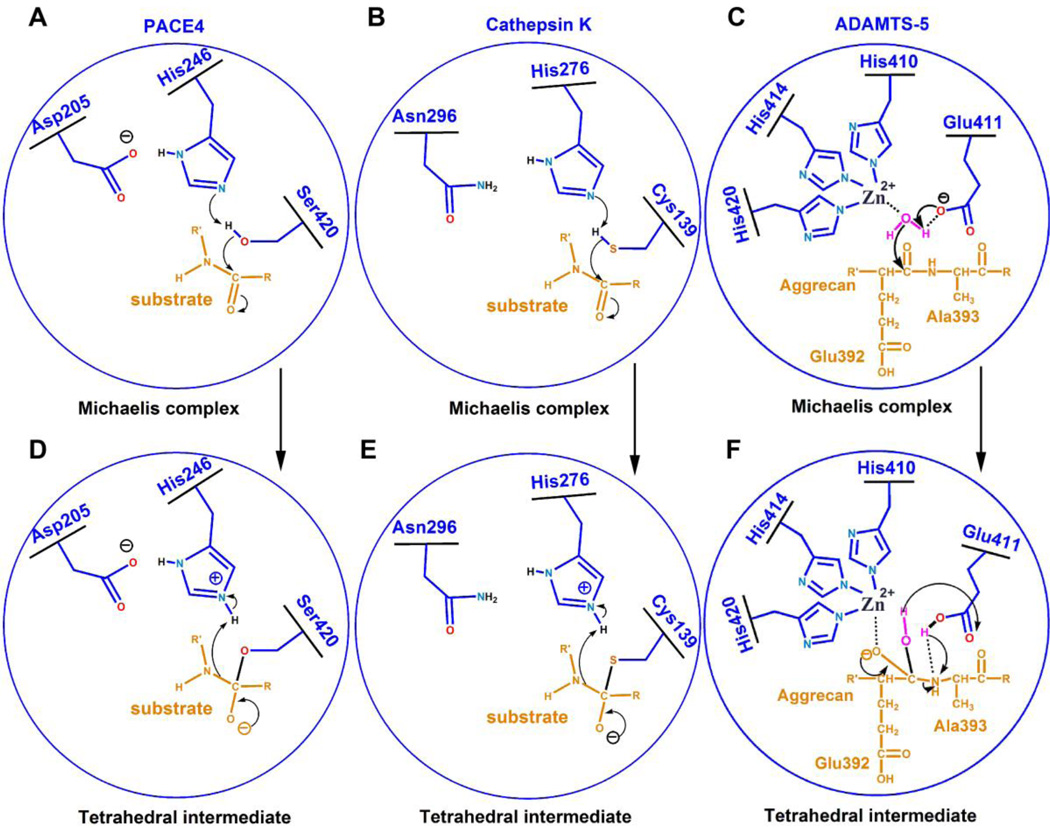
More than two decades of research has revealed a combination of proteases that determine cartilage degradation in osteoarthritis. These include metalloproteinases, which degrade the major macromolecules in cartilage, aggrecan and type II collagen, serine proteases, and cysteine proteases, for example cathepsin K. This review summarizes the function of proteases in osteoarthritis progression, as revealed by studies of genetically engineered mouse models. A brief overview of the biochemical characteristics and features of several important proteases is provided, with the objective of increasing understanding of their function. Published data reveal at least three enzymes to be major targets for osteoarthritis drug development: ADAMTS-5, MMP-13, and cathepsin K. In surgical models of osteoarthritis, mice lacking these enzymes are protected from cartilage damage and, to varying degrees, from bone changes. In-vivo studies targeting these proteases with selective small-molecule inhibitors have been performed for a variety of animal models. Mouse models will provide opportunities for future tests of the therapeutic effect of protease inhibitors, both on progression of structural damage to the joint and on associated pain.
Conflict of interest statement
Anne-Marie Malfait and Micky D. Tortorella were previously employed by Pfizer. Anne-Marie Malfait is an associate editor of
Rachel E. Miller and Yongzhi Lu declare that they have no conflict of interest.
Figures
References
-
- Lopez-Otin C, Overall CM. Protease degradomics: a new challenge for proteomics. Nat Rev Mol Cell Biol. 2002;3(7):509–519. - PubMed
Publication types
MeSH terms
Substances
Grants and funding
LinkOut - more resources
Full Text Sources
Other Literature Sources
Medical
