


Reinstatement of Dermacentor kamshadalus Neumann (Acari: Ixodidae) as a valid species parasitizing mountain goats and sheep in the United States, Canada, and Russia
- PMID: 23926766
- PMCID: PMC4807617
- DOI: 10.1603/me12278
Reinstatement of Dermacentor kamshadalus Neumann (Acari: Ixodidae) as a valid species parasitizing mountain goats and sheep in the United States, Canada, and Russia
Abstract
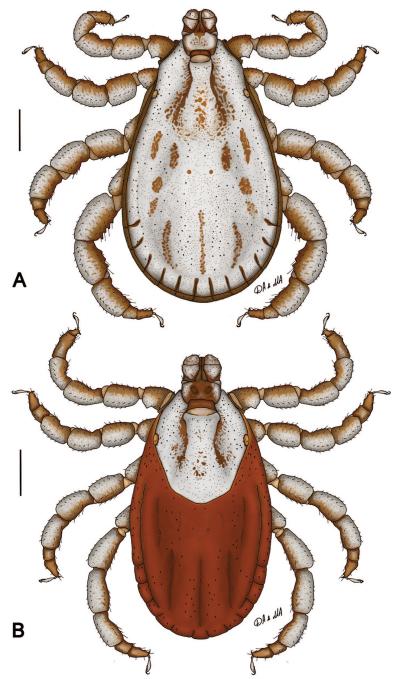
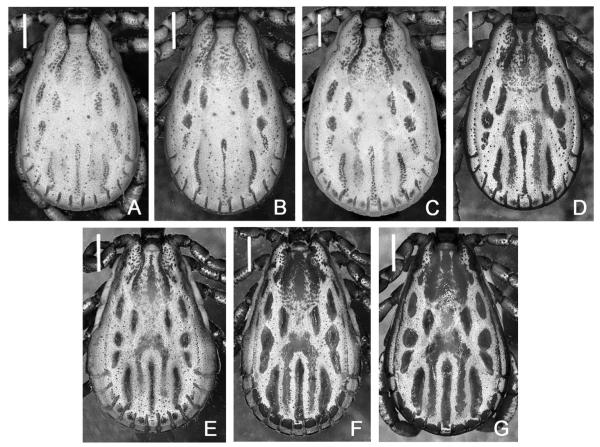
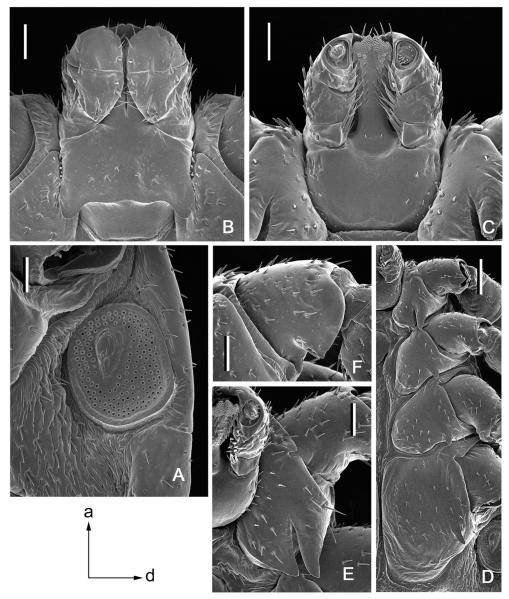
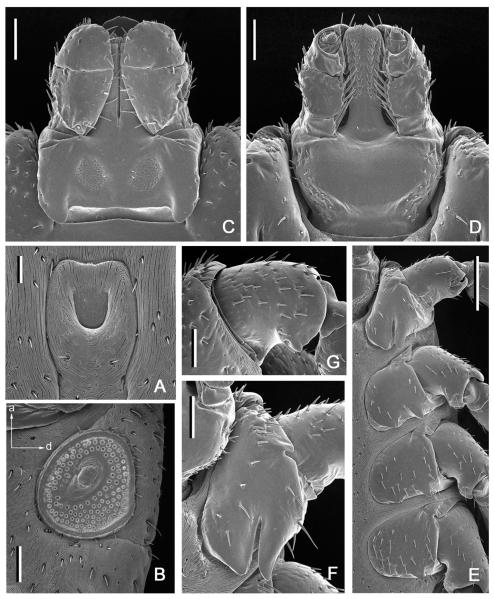
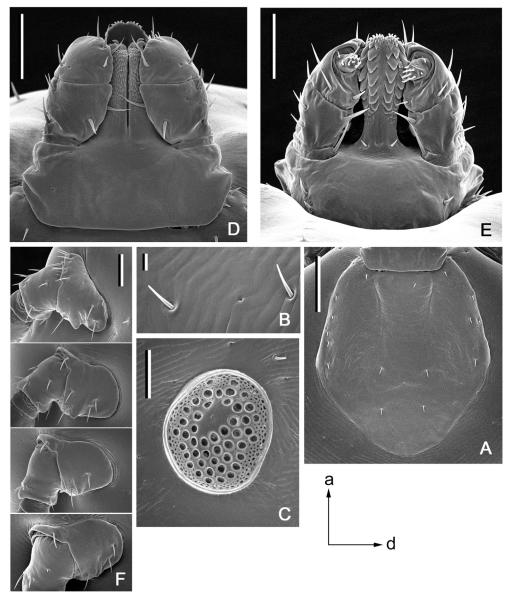
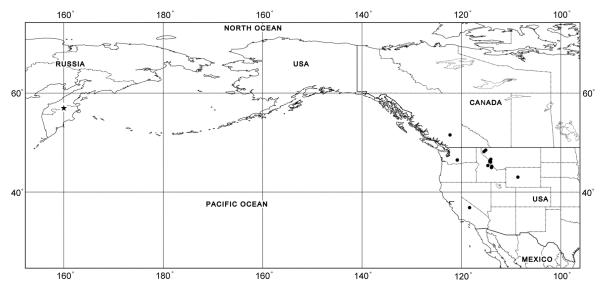
Reexamination of Dermacentor albipictus (Packard, 1869) holdings stored in the United States National Tick Collection revealed several collections of a morphologically distinct Dermacentor species. Comparison of these specimens with other Dermacentor taxa showed that they are identical to an old taxon originally described as Dermacentor variegatus kamshadalus Neumann, 1908. For more than a century, this taxon was known only from the male holotype specimen collected in Russia, and the name was considered a junior synonym of D. albipictus. D. kamshadalus is reinstated here to a full species rank, and its male is redescribed and its female and nymph are described for the first time. Adults of D. kamshadalus can be distinguished from those of D. albipictus by a short spur on trochanters I, shorter spurs on coxae I, shorter dorsal cornua, more numerous perforations on spiracular plates, less numerous and shorter setae on idiosoma, especially around spiracular plates, and considerably paler coloration of the conscutum and scutum. The nymph of D. kamshadalus can be differentiated from that of D. albipictus by shorter spurs on coxae I and the numerous perforations on the spiracular plates. Adults and nymphs ofD. kamshadalus are recorded from the United States, Canada, and Russia, where they have been collected from mountain goats, Oreamnos americanus (de Blainville), bighorn sheep, Ovis canadensis Shaw, and sheep, Ovis sp. of which the species was not stated.
Figures

References
-
- Arthur DR. On the genera Dermacentor, Anocentor, Cosmiomma, Boophilus and Margaropus. Cambridge at the University Press; Cambridge, United Kingdom: 1960. Ticks. A monograph of the Ixodoidea. Part V.
-
- Brinton EP, Beck DE, Allred DM. Identification of the adults, nymphs and larvae of ticks of the genus Dermacentor Koch (Ixodidae) in the western United States. Vol. 5. Brigham Young University Science Bulletin; Provo, Utah: 1965. pp. 1–44. (Biological Series).
-
- Camicas JL, Hervy JP, Adam F, Morel PC. Nomenclature, described stages, hosts, distribution. Orstom éditions; Paris, France: 1998. The ticks of the world (Acarida, Ixodida)
-
- Cooley RA. The genera Dermacentor and Otocentor (Ixodidae) in the United States, with studies in variation. Natl. Inst. Health Bull. 1938;171:1–89.
-
- Crosbie PR, Boyce WM, Rodwell TC. DNA sequence variation in Dermacentor hunteri and estimated phylogenies of Dermacentor spp. (Acari: Ixodidae) in the New World. J. Med. Entomol. 1998;35:277–288. - PubMed
Publication types
MeSH terms
Grants and funding
LinkOut - more resources
Full Text Sources
Other Literature Sources
