. 2013 Oct;127(1):91-100.
doi: 10.1111/jnc.12394. Epub 2013 Aug 26.

Lactate administration reproduces specific brain and liver exercise-related changes

Affiliations

Lactate administration reproduces specific brain and liver exercise-related changes

Lezi E et al. J Neurochem. 2013 Oct.

Abstract

The effects of exercise are not limited to muscle, and its ability to mitigate some chronic diseases is under study. A more complete understanding of how exercise impacts non-muscle tissues might facilitate design of clinical trials and exercise mimetics. Here, we focused on lactate's ability to mediate changes in liver and brain bioenergetic-associated parameters. In one group of experiments, C57BL/6 mice underwent 7 weeks of treadmill exercise sessions at intensities intended to exceed the lactate threshold. Over time, the mice dramatically increased their lactate threshold. To ensure that plasma lactate accumulated during the final week, the mice were run to exhaustion. In the liver, mRNA levels of gluconeogenesis-promoting genes increased. While peroxisome proliferator-activated receptor-gamma co-activator 1 alpha (PGC-1α) expression increased, there was a decrease in PGC-1β expression, and overall gene expression changes favored respiratory chain down-regulation. In the brain, PGC-1α and PGC-1β were unchanged, but PGC-1-related co-activator expression and mitochondrial DNA copy number increased. Brain tumor necrosis factor alpha expression fell, whereas vascular endothelial growth factor A expression rose. In another group of experiments, exogenously administered lactate was found to reproduce some but not all of these observed liver and brain changes. Our data suggest that lactate, an exercise byproduct, could mediate some of the effects exercise has on the liver and the brain, and that lactate itself can act as a partial exercise mimetic.

Keywords: brain; exercise; lactate; liver.


Conflict of interest statement

No conflicts of interest, financial or otherwise, are declared by the authors.

Figures
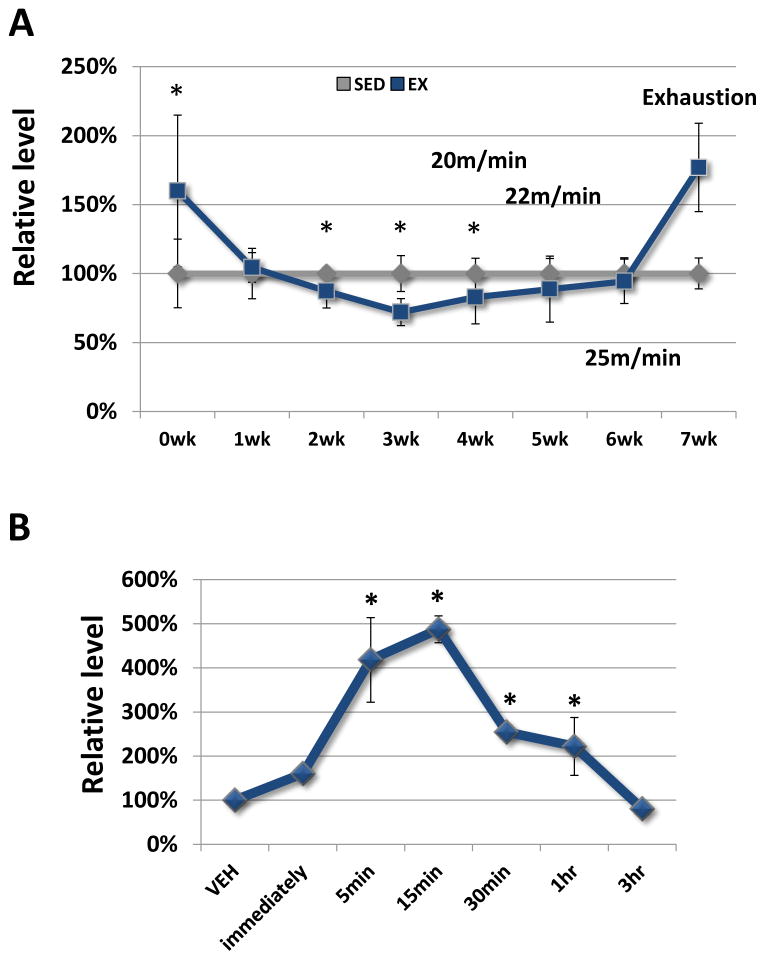
Figure 1
Figure 1. Plasma lactate levels
A, Treadmill exercise at 18 m/min initially elevated plasma lactate levels, but over time the exercise intensity needed to boost plasma lactate concentrations increased. Measurements were performed immediately after the completion of an exercise session. *P < 0.05 relative to the lactate levels of the SED mice. B, In LAC mice, plasma lactate levels peaked approximately 15 minutes after an intraperitoneal injection, remained significantly elevated for at least 1 hour, and returned to baseline by 3 hours. *P < 0.05 relative to the lactate levels of the VEH mice.
Figure 2
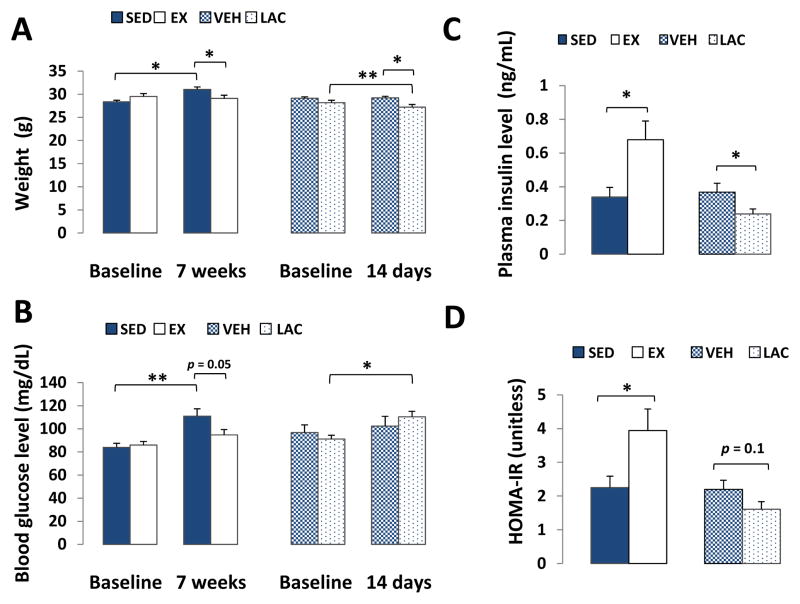
Figure 2. Effect of treadmill training and lactate injection on weight, fasting glucose, and fasting insulin
A, Over 7 weeks SED mice gained weight while EX mice did not. Over 2 weeks LAC mice lost ~4% of their starting body weight, while the VEH group maintained its weight. B, Over 7 weeks fasting blood glucose levels did not change in the EX mice but increased in the SED mice. After 2 weeks LAC mouse blood glucose levels were higher than at the start of the experiment. C, at the end of the 7-week training period, fasting plasma insulin levels were higher in the EX group than in the SED group; at the end of the 2-week injection period, fasting plasma insulin levels were lower in the LAC group than in the VEH group. D, The HOMA-IR value increased in the EX group. It was not significantly altered by lactate injection. *P < 0.05, **p < 0.001.
Figure 3
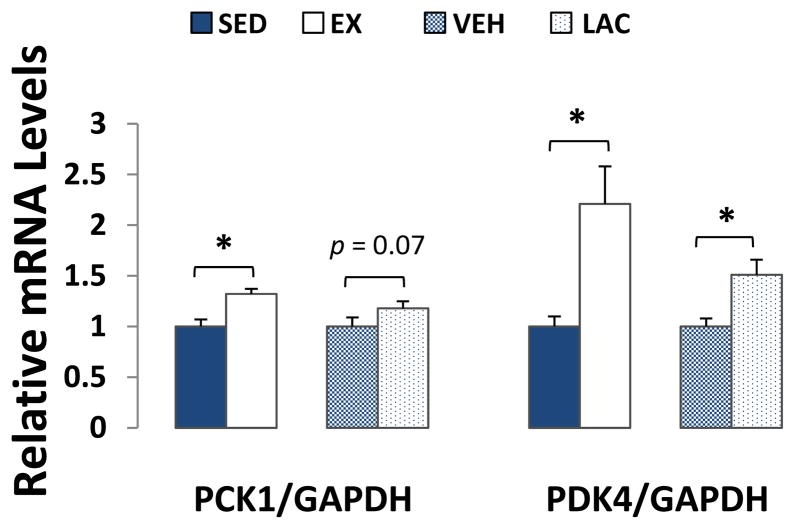
Figure 3. Effect of treadmill training and lactate injection on liver gluconeogenesis
Compared to the SED mice, PCK1 and PDK4 mRNA levels were higher in the EX mouse livers. Compared to the VEH mice, PCK1 expression trended higher in the LAC group livers, while PDK4 expression increased in the LAC group livers. *P < 0.05
Figure 4
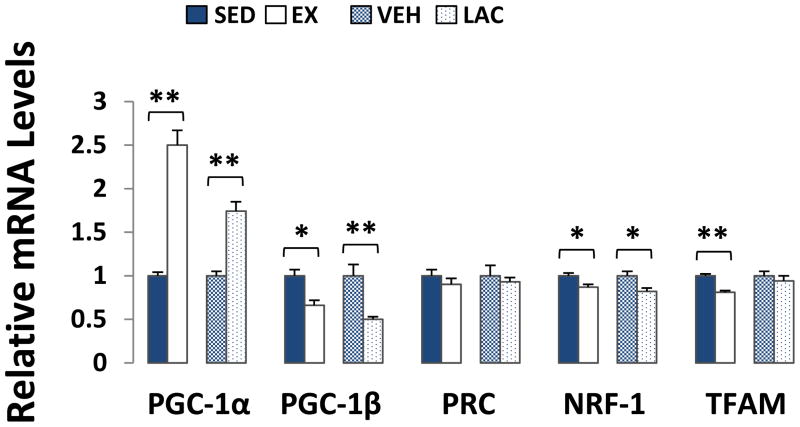
Figure 4. Effect of treadmill training and lactate injection on genes that regulate liver mitochondrial biogenesis
Relative to their respective control groups, EX and LAC group PGC- 1α mRNA levels increased whereas PGC-1β mRNA levels decreased. PRC mRNA levels remained comparable. NRF-1 mRNA levels were lower in EX and LAC group livers. TFAM mRNA levels were lower in the EX group than they were in the SED group, and comparable between the LAC and VEH groups. *P < 0.05, **p < 0.001.
Figure 5
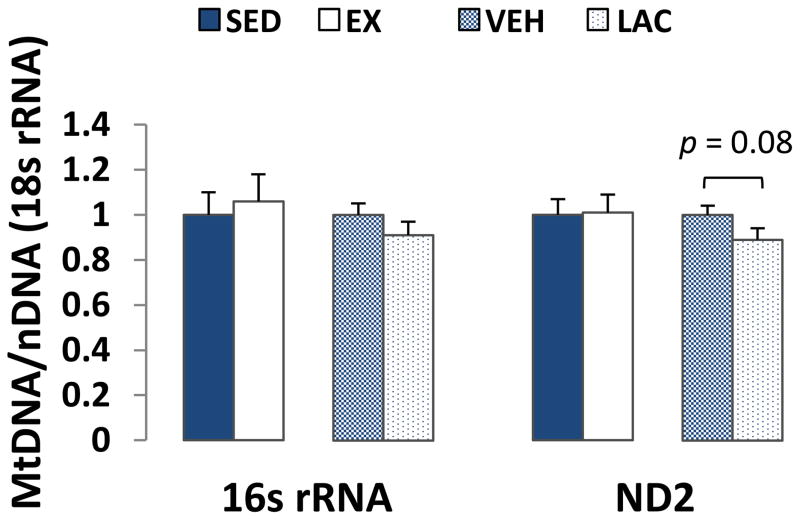
Figure 5. Effect of treadmill training and lactate injection on liver mtDNA copy number
In liver, 16s rRNA/18s rRNA and ND2/18s rRNA ratios were comparable between the EX and SED groups. The 16s rRNA/18s rRNA ratio was comparable between the VEH and LAC groups. Compared to the VEH group, the LAC group ND2/18s rRNA ratio trended lower but these values were not statistically different.
Figure 6
Figure 6. Effect of treadmill training and lactate injection on genes that regulate brain mitochondrial biogenesis
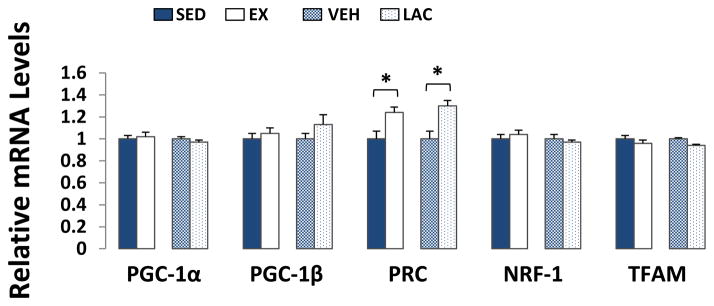
Compared to their respective control groups, brain PRC expression increased in the EX and LAC groups. Exercise and lactate injection did not alter brain PGC-1α, PGC-1β, NRF-1, or TFAM mRNA levels. *P < 0.05
Figure 7
Figure 7. Effect of treadmill training and lactate injection on brain mtDNA copy number
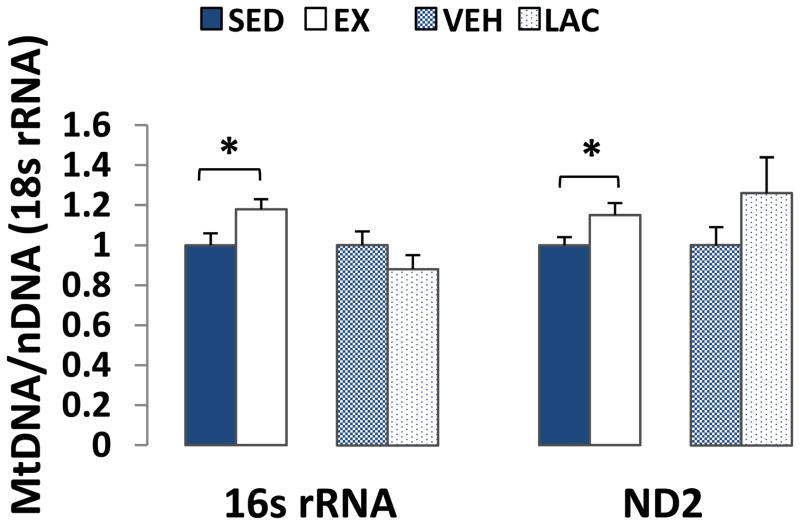
16s rRNA/18s rRNA and ND2/18s rRNA ratios were higher in EX brains than they were in SED brains. VEH and LAC brain mtDNA levels were comparable. *P < 0.05
Figure 8
Figure 8. Effect of treadmill training and lactate injection on brain TNF-α and VEGF-A expression
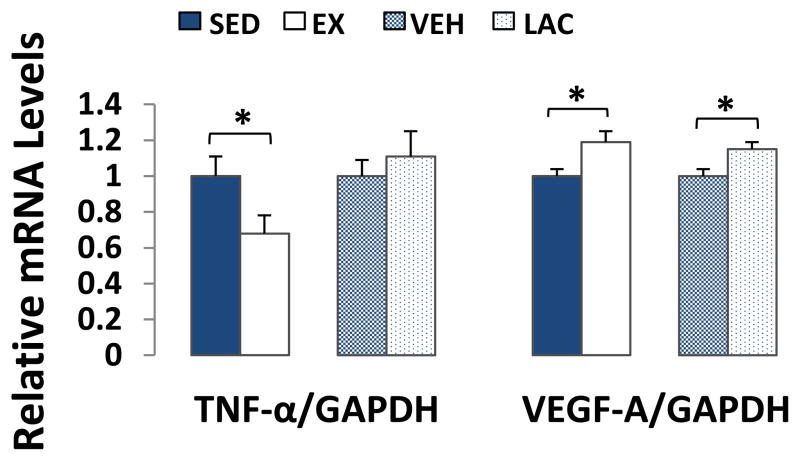
TNF-α mRNA levels were lower in EX brains than they were in SED brains, but were comparable between VEH and LAC brains. Brain VEGF-A expression was higher in EX brains than it was in SED brains, and was higher in LAC brains than it was in VEH brains. *P < 0.05
Figure 9
Figure 9. Relationship between brain VEGF-A and PRC mRNA levels
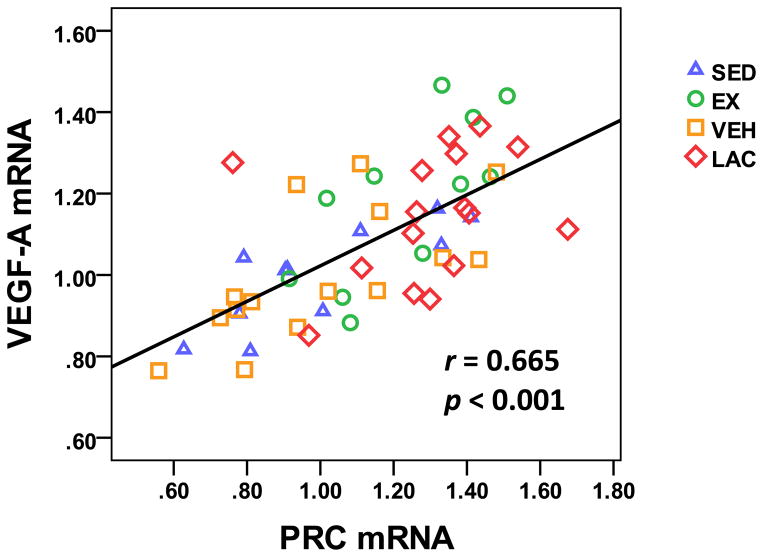
When data from all 4 groups were combined, a positive correlation between brain VEGF-A and PRC mRNA levels was observed.

References

    1. Arany Z, Foo SY, Ma Y, et al. HIF-independent regulation of VEGF and angiogenesis by the transcriptional coactivator PGC-1alpha. Nature. 2008;451:1008–1012. - PubMed
    1. Bayod S, Del Valle J, Canudas AM, Lalanza JF, Sanchez-Roige S, Camins A, Escorihuela RM, Pallas M. Long-term treadmill exercise induces neuroprotective molecular changes in rat brain. J Appl Physiol. 2011;111:1380–1390. - PubMed
    1. Bell JE, Hume R, Busuttil A, Burchell A. Immunocytochemical detection of the microsomal glucose-6-phosphatase in human brain astrocytes. Neuropathology and applied neurobiology. 1993;19:429–435. - PubMed
    1. Berthet C, Lei H, Thevenet J, Gruetter R, Magistretti PJ, Hirt L. Neuroprotective role of lactate after cerebral ischemia. J Cereb Blood Flow Metab. 2009;29:1780–1789. - PubMed
    1. Bhattacharya SB, Datta AG. Is brain a gluconeogenic organ? Molecular and cellular biochemistry. 1993;125:51–57. - PubMed

Publication types

MeSH terms

LinkOut - more resources