


Review
doi: 10.1053/j.ackd.2013.02.003.
New developments in the pathogenesis of preeclampsia
Affiliations
- PMID: 23928392
- PMCID: PMC4107338
- DOI: 10.1053/j.ackd.2013.02.003
Item in Clipboard
Review
New developments in the pathogenesis of preeclampsia
Adv Chronic Kidney Dis.
2013 May.
Abstract
Preeclampsia affects 3% to 5% of all pregnancies and is a major cause of maternal and perinatal morbidity and mortality worldwide. This disorder is characterized by a constellation of signs and symptoms, most notably new-onset hypertension and proteinuria during the last trimester of pregnancy. In this review, the molecular mechanisms of preeclampsia with an emphasis on the role of circulating antiangiogenic proteins in the pathogenesis of preeclampsia and its complications will be discussed.
Copyright © 2013 National Kidney Foundation, Inc. Published by Elsevier Inc. All rights reserved.
Figures
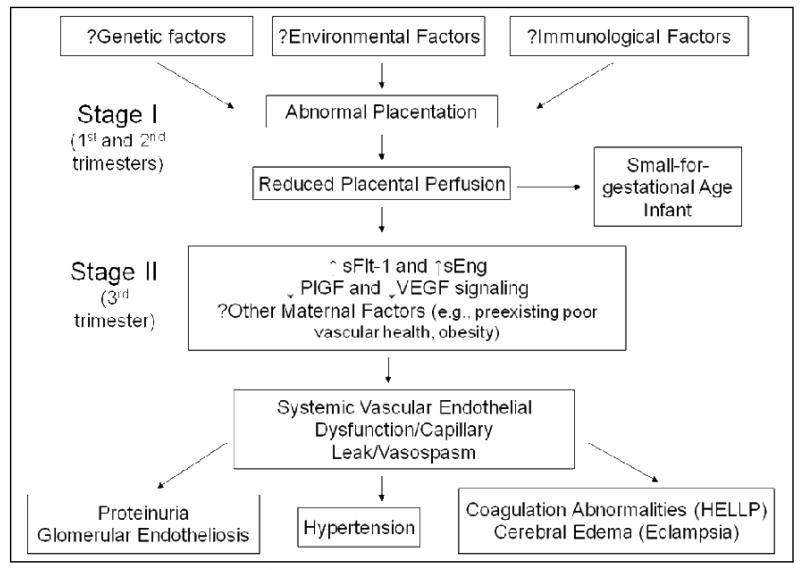
Summary of the Pathogenesis of Preeclampsia
References
-
- Sibai B, Dekker G, Kupferminc M. Pre-eclampsia. Lancet. 2005;365:785–99. - PubMed
-
- Report of the National High Blood Pressure Education Program Working Group on High Blood Pressure in Pregnancy. American journal of obstetrics and gynecology. 2000;183:S1–S22. - PubMed
-
- Young BC, Levine RJ, Karumanchi SA. Pathogenesis of preeclampsia. Annual review of pathology. 2010;5:173–92. - PubMed
-
- Mattar F, Sibai BM. Eclampsia. VIII. Risk factors for maternal morbidity. American journal of obstetrics and gynecology. 2000;182:307–12. - PubMed
-
- MacKay AP, Berg CJ, Atrash HK. Pregnancy-related mortality from preeclampsia and eclampsia. Obstetrics and gynecology. 2001;97:533–8. - PubMed
Publication types
MeSH terms
Substances
Grants and funding
LinkOut - more resources
Full Text Sources
Other Literature Sources
Medical
