


Autologous bone marrow mononuclear cells therapy attenuates activated microglial/macrophage response and improves spatial learning after traumatic brain injury
- PMID: 23928737
- PMCID: PMC4086922
- DOI: 10.1097/TA.0b013e31829617c6
Autologous bone marrow mononuclear cells therapy attenuates activated microglial/macrophage response and improves spatial learning after traumatic brain injury
Abstract
Background: Autologous bone marrow-derived mononuclear cells (AMNCs) have shown therapeutic promise for central nervous system insults such as stroke and traumatic brain injury (TBI). We hypothesized that intravenous injection of AMNC provides neuroprotection, which leads to cognitive improvement after TBI.
Methods: A controlled cortical impact (CCI) rodent TBI model was used to examine blood-brain barrier (BBB) permeability, neuronal and glial apoptosis, as well as cognitive behavior. Two groups of rats underwent CCI with AMNC treatment (CCI-autologous) or without AMNC treatment (CCI-alone), consisting of 2 million AMNC per kilogram body weight harvested from the tibia and intravenously injected 72 hours after injury. CCI-alone animals underwent sham harvests and received vehicle injections.
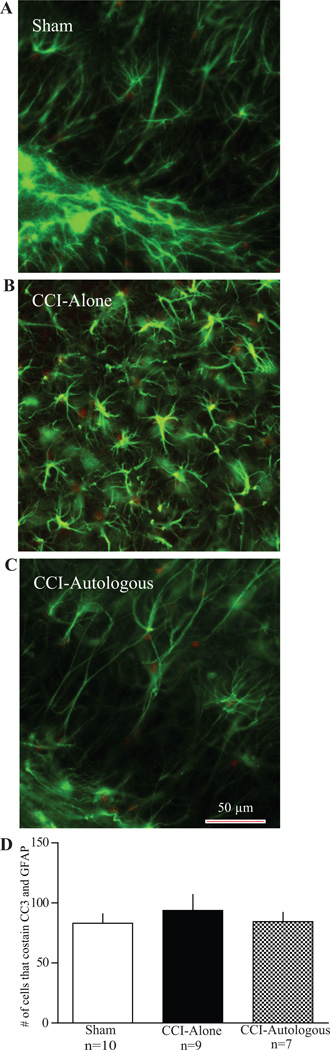
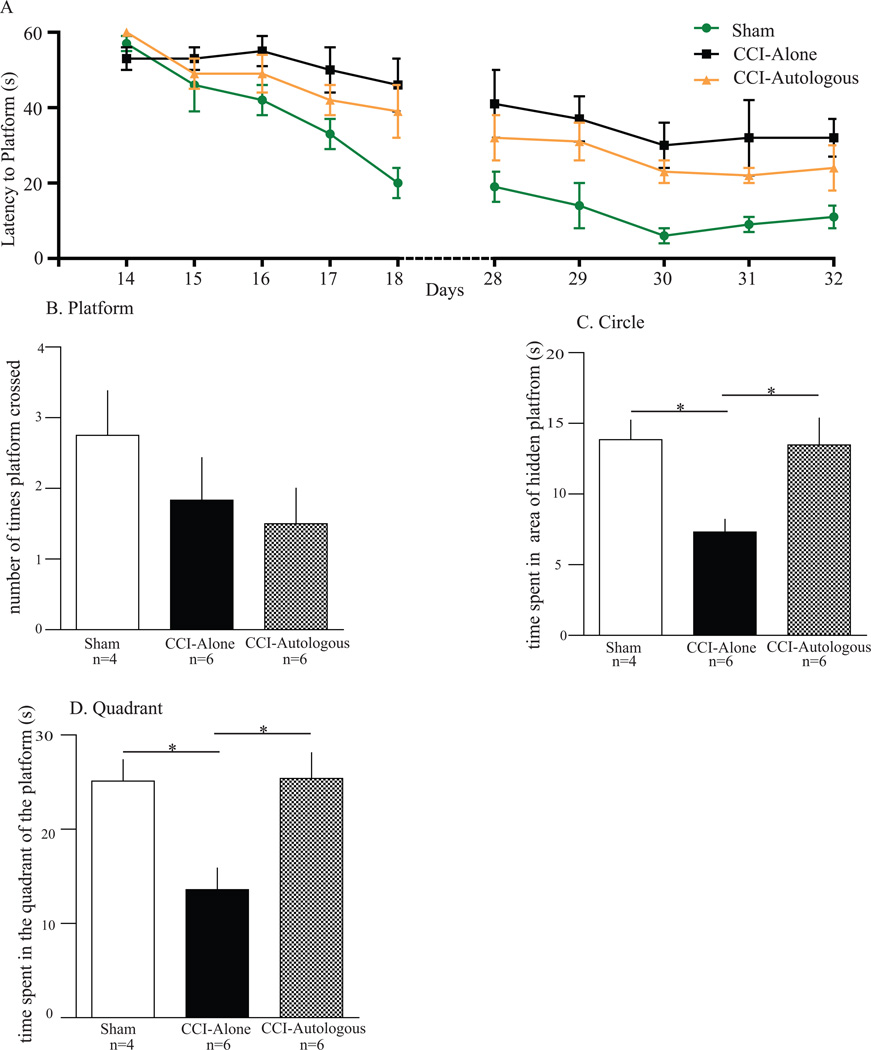
Results: Ninety-six hours after injury, AMNC significantly reduced the BBB permeability in injured animals, and there was an increase in apoptosis of proinflammatory activated microglia in the ipsilateral hippocampus. At 4 weeks after injury, we observed significant improvement in probe testing of CCI-Autologous group in comparison to CCI-Alone in the Morris Water Maze paradigm.
Conclusion: Our data demonstrate that the intravenous injection of AMNC after TBI leads to neuroprotection by preserving early BBB integrity, increasing activated microglial apoptosis and improving cognitive function.
Conflict of interest statement
There are no known conflicts between the authors and the information presented in this paper.
Figures


References
-
- Thurman DJ, Alverson C, Dunn KA, Guerrero J, Sniezek JE. Traumatic brain injury in the United States: A public health perspective. J Head Trauma Rehabil. 1999 Dec;14(6):602–615. - PubMed
-
- Faul M, Wald MM, Rutland-Brown W, Sullivent EE, Sattin RW. Using a cost-benefit analysis to estimate outcomes of a clinical treatment guideline: testing the Brain Trauma Foundation guidelines for the treatment of severe traumatic brain injury. J Trauma. 2007 Dec;63(6):1271–1278. - PubMed
-
- Savitz SI, Misra V, Kasam M, Juneja H, Cox CS, Jr, Alderman S, et al. Intravenous autologous bone marrow mononuclear cells for ischemic stroke. Ann Neurol. 2011 Jul;70(1):59–69. - PubMed
-
- Cox CS, Jr, Baumgartner JE, Harting MT, Worth LL, Walker PA, Shah SK, et al. Autologous bone marrow mononuclear cell therapy for severe traumatic brain injury in children. Neurosurgery. 2011 Mar;68(3):588–600. - PubMed
Publication types
MeSH terms
Grants and funding
LinkOut - more resources
Full Text Sources
Other Literature Sources
Medical
