


The metabolic syndrome and neuropathy: therapeutic challenges and opportunities
- PMID: 23929529
- PMCID: PMC3881591
- DOI: 10.1002/ana.23986
The metabolic syndrome and neuropathy: therapeutic challenges and opportunities
Abstract
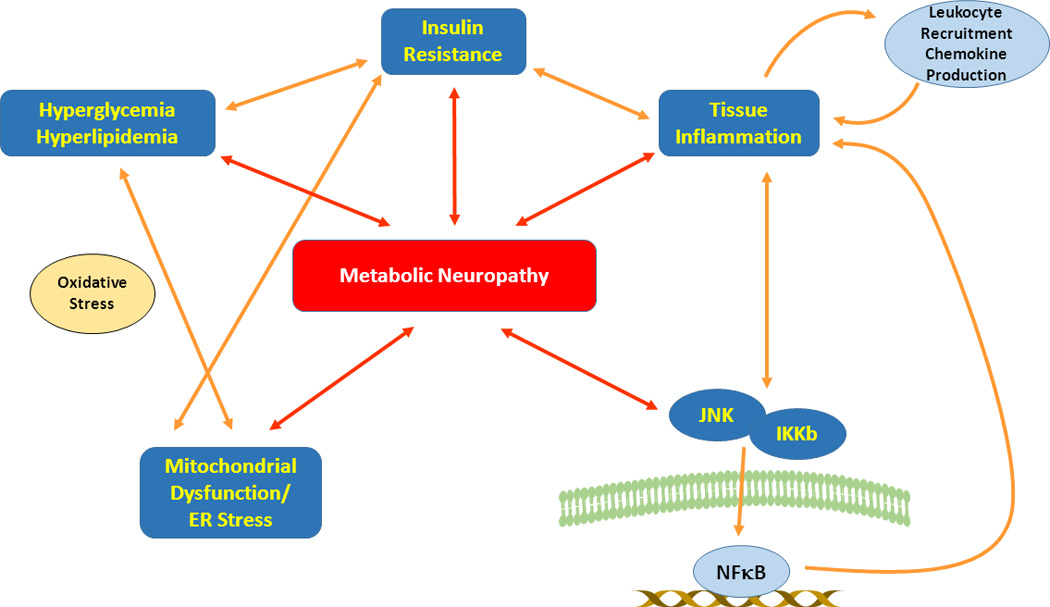
The metabolic syndrome and neuropathy are common conditions, especially in the elderly, that are associated with significant morbidity. Furthermore, the metabolic syndrome is reaching epidemic proportions across the world. Current evidence supports the association of the metabolic syndrome and its individual components with neuropathy. Several clinical trials have demonstrated that treating hyperglycemia, a component of the metabolic syndrome, has a significant effect on reducing the incidence of neuropathy in those with type 1 diabetes. However, glucose control has only a marginal effect on preventing neuropathy in those with type 2 diabetes, suggesting that other factors may be driving nerve injury in these patients. Emerging evidence supports the metabolic syndrome as including risk factors for neuropathy. Interventions exist for treatment of all of the metabolic syndrome components, but only glucose control has strong evidence to support its use and is widely employed. Our understanding of the biology of metabolic nerve injury has rapidly expanded over the past several years. Mechanisms of injury include fatty deposition in nerves, extracellular protein glycation, mitochondrial dysfunction, and oxidative stress. Additionally, the activation of counter-regulatory signaling pathways leads to chronic metabolic inflammation. Medications that target these signaling pathways are being used for a variety of diseases and are intriguing therapeutic agents for future neuropathy clinical trials. As we move forward, we need to expand our understanding of the association between the metabolic syndrome and neuropathy by addressing limitations of previous studies. Just as importantly, we must continue to investigate the pathophysiology of metabolically induced nerve injury.
Copyright © 2013 American Neurological Association.
Figures
References
-
- Adams KF, Schatzkin A, Harris TB, et al. Overweight, obesity, and mortality in a large prospective cohort of persons 50 to 71 years old. The New England journal of medicine. 2006 Aug 24;355(8):763–778. - PubMed
-
- Ford ES, Giles WH, Dietz WH. Prevalence of the metabolic syndrome among US adults: findings from the third National Health and Nutrition Examination Survey. JAMA. 2002 Jan 16;287(3):356–359. - PubMed
-
- Ford ES. Prevalence of the metabolic syndrome defined by the International Diabetes Federation among adults in the U.S. Diabetes Care. 2005 Nov;28(11):2745–2749. - PubMed
Publication types
MeSH terms
Grants and funding
LinkOut - more resources
Full Text Sources
Other Literature Sources
Medical
Research Materials
Miscellaneous
