


Regulatory T cells and the immune pathogenesis of prenatal infection
- PMID: 23929902
- PMCID: PMC3805746
- DOI: 10.1530/REP-13-0262
Regulatory T cells and the immune pathogenesis of prenatal infection
Abstract
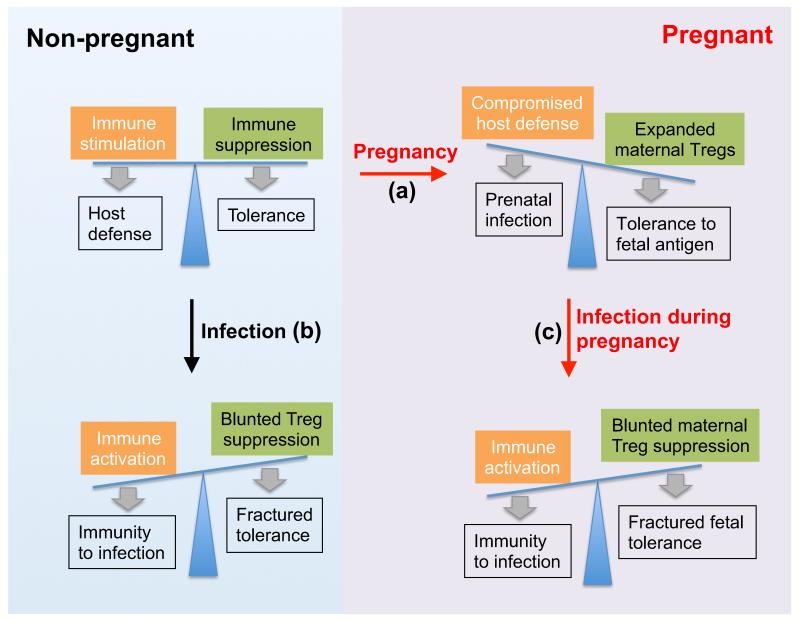
Pregnancy in placental mammals offers exceptional comprehensive benefits of in utero protection, nutrition, and metabolic waste elimination for the developing fetus. However, these benefits also require durable strategies to mitigate maternal rejection of fetal tissues expressing foreign paternal antigens. Since the initial postulate of expanded maternal immune tolerance by Sir Peter Medawar 60 years ago, an amazingly elaborate assortment of molecular and cellular modifications acting both locally at the maternal-placental interface and systemically have been shown to silence potentially detrimental maternal immune responses. In turn, simultaneously maintaining host defense against the infinite array of potential pathogens during pregnancy is equally important. Fortunately, resistance against most infections is preserved seamlessly throughout gestation. On the other hand, recent studies on pathogens with unique predisposition for prenatal infections have uncovered distinctive holes in host defense associated with the reproductive process. Using these infections to probe the response during pregnancy, the immune suppressive regulatory subset of maternal CD4 T cells has been increasingly shown to dictate the inter-workings between prenatal infection susceptibility and pathogenesis of ensuing pregnancy complications. Herein, the recent literature suggesting a necessity for maternal regulatory T cells (Tregs) in pregnancy-induced immunological shifts that sustain fetal tolerance is reviewed. Additional discussion is focused on how expansion of maternal Treg suppression may become exploited by pathogens that cause prenatal infections and the perilous potential of infection-induced immune activation that may mitigate fetal tolerance and inadvertently inject hostility into the protective in utero environment.
Figures

References
-
- Abrahams VM, Schaefer TM, Fahey JV, Visintin I, Wright JA, Aldo PB, Romero R, Wira CR, Mor G. Expression and secretion of antiviral factors by trophoblast cells following stimulation by the TLR-3 agonist, Poly(I : C) Hum Reprod. 2006;21:2432–2439. - PubMed
-
- Aluvihare VR, Kallikourdis M, Betz AG. Regulatory T cells mediate maternal tolerance to the fetus. Nat Immunol. 2004;5:266–271. - PubMed
-
- Andrews WW, Hauth JC, Goldenberg RL. Infection and preterm birth. Am J Perinatol. 2000;17:357–365. - PubMed
-
- Antczak DF. T-cell tolerance to the developing equine conceptus. Reprod Domest Anim. 2012;47(Suppl 4):376–383. - PubMed
Publication types
MeSH terms
Grants and funding
LinkOut - more resources
Full Text Sources
Other Literature Sources
Medical
Research Materials
