


Music, health, and well-being: a review
- PMID: 23930991
- PMCID: PMC3740599
- DOI: 10.3402/qhw.v8i0.20635
Music, health, and well-being: a review
Abstract
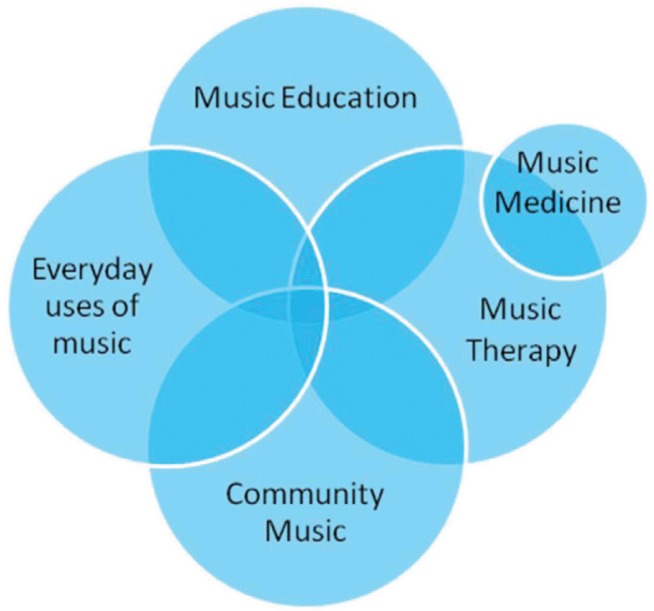
The relationship between arts participation and health is currently very topical. Motivated by a desire to investigate innovative, non-invasive, and economically viable interventions that embrace contemporary definitions of health, practitioners and researchers across the world have been developing and researching arts inventions. One of the key drivers in this vigorous research milieu is the growth of qualitative research within health care contexts and researchers interested in exploring the potential benefits of musical participation have fully embraced the advances that have taken place in health-related qualitative research. The following article presents a number of different types of qualitative research projects focused on exploring the process and outcomes of music interventions. It also presents a new conceptual model for music, health and well-being. This new model develops on a previous version of MacDonald, Kreutz, and Mitchell (2012b) by incorporating new elements and contextualization and providing detailed experimental examples to support the various components.
Keywords: Music health and well-being; music; psychology; therapy community.
Figures
References
-
- Ansdell G. Rethinking music & community: Theoretical perspectives in support of community music therapy. In: Pavlicevic M, Ansdell G, editors. Community music therapy. London: Jessica Kingsley; 2004.
-
- Ansdell G, Pavlicevic M. Responding to the challenge: Converting boundaries into borders? A response to Alison Barrington's article ‘Challenging the Profession’. British Journal of Music Therapy. 2008;22(2):73–77.
-
- Arnon S, Shapsa A, Forman L, Regev R, Bauer S, Litmanovitz I. Live music is beneficial to preterm infants in neonatal intensive care unit environment. Birth. 2006;32(2):131–136. - PubMed
-
- Baker F. A, Ballantyne J. “You've got to accentuate the positive”: Group songwriting to promote a life of enjoyment, engagement and meaning in aging Australians. Nordic Journal of Music Therapy. 2012;22(1):7–24.
-
- Baker F, MacDonald R. A. R. Musicae Scientae. Flow, identity, achievement, satisfaction and ownership during therapeutic song writing experiences with university students and retirees. in press.
Publication types
MeSH terms
LinkOut - more resources
Full Text Sources
Other Literature Sources
