


Colonoscopy quality: metrics and implementation
- PMID: 23931862
- PMCID: PMC3741615
- DOI: 10.1016/j.gtc.2013.05.005
Colonoscopy quality: metrics and implementation
Abstract
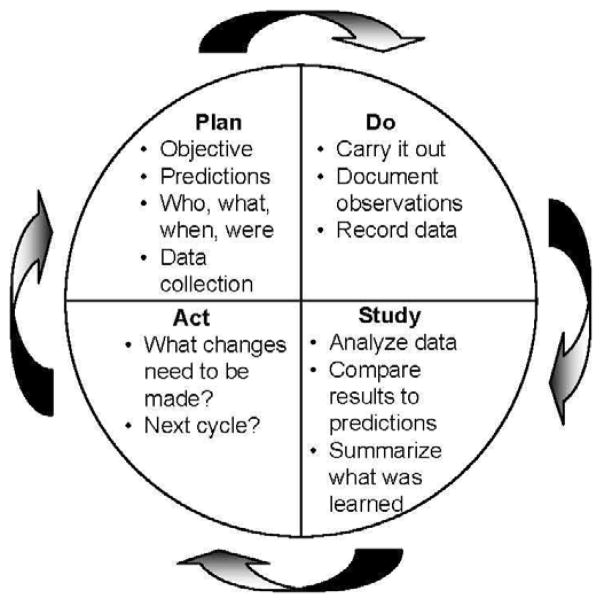
Colonoscopy is an excellent area for quality improvement because it is high volume, has significant associated risk and expense, and there is evidence that variability in its performance affects outcomes. The best end point for validation of quality metrics in colonoscopy is colorectal cancer incidence and mortality, but a more readily accessible metric is the adenoma detection rate. Fourteen quality metrics were proposed in 2006, and these are described in this article. Implementation of quality improvement initiatives involves rapid assessments and changes on an iterative basis, and can be done at the individual, group, or facility level.
Keywords: Colonoscopy; Metrics; Quality; Quality improvement.
Copyright © 2013 Elsevier Inc. All rights reserved.
Conflict of interest statement
The authors have no financial or other conflicts of interest to disclose.
Figures
References
-
- Dulai GS, Farmer MM, Ganz PA, et al. Primary care provider perceptions of barriers to and facilitators of colorectal cancer screening in a managed care setting. Cancer. 2004;100:1843–52. - PubMed
-
- America CoQoHCi, Medicine Io. To Err Is Human: Building a Safer Health System. The National Academies Press; 2000. - PubMed
-
- Everhart JE, Ruhl CE. Burden of digestive diseases in the United States part II: lower gastrointestinal diseases. Gastroenterology. 2009;136:741–54. - PubMed
-
- Seeff LC, Richards TB, Shapiro JA, et al. How many endoscopies are performed for colorectal cancer screening? Results from CDC’s survey of endoscopic capacity. Gastroenterology. 2004;127:1670–7. - PubMed
-
- Lieberman D, Nadel M, Smith RA, et al. Standardized colonoscopy reporting and data system: report of the Quality Assurance Task Group of the National Colorectal Cancer Roundtable. Gastrointest Endosc. 2007;65:757–66. - PubMed
Publication types
MeSH terms
Grants and funding
LinkOut - more resources
Full Text Sources
Other Literature Sources
Medical
