


Anti-nociceptive effect of a conjugate of substance P and light chain of botulinum neurotoxin type A
- PMID: 23933181
- PMCID: PMC3808523
- DOI: 10.1016/j.pain.2013.07.041
Anti-nociceptive effect of a conjugate of substance P and light chain of botulinum neurotoxin type A
Abstract
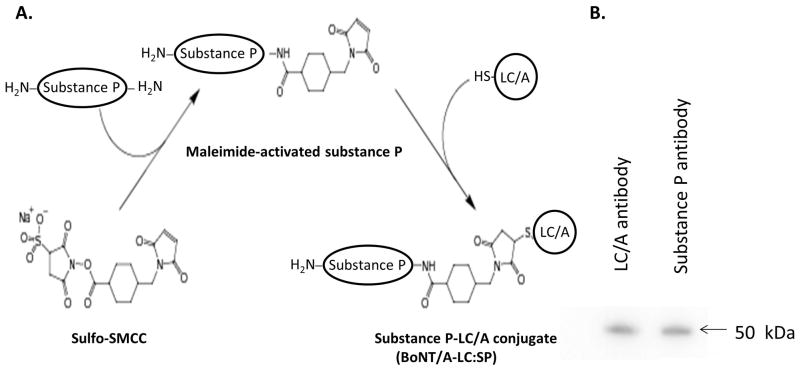
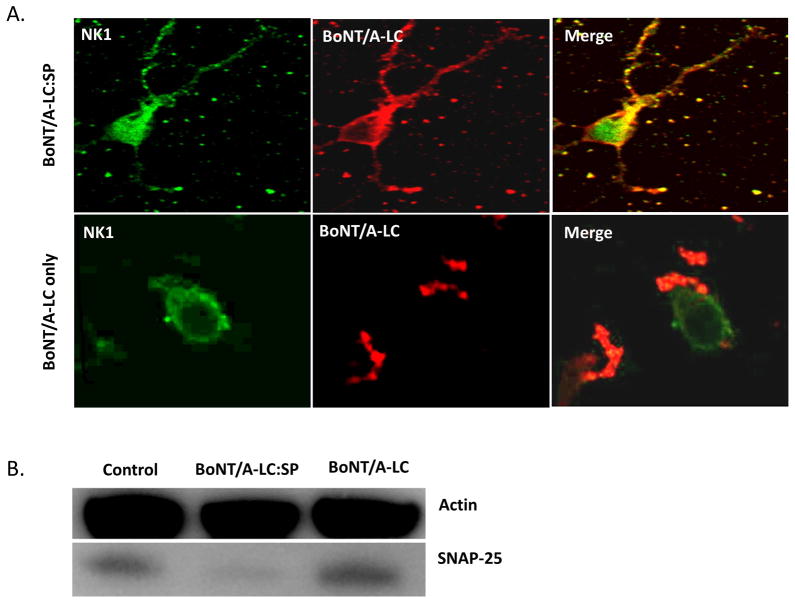
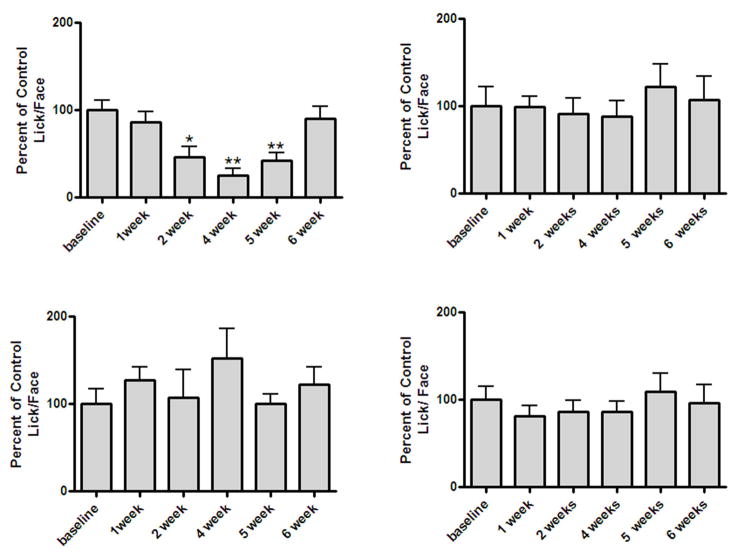
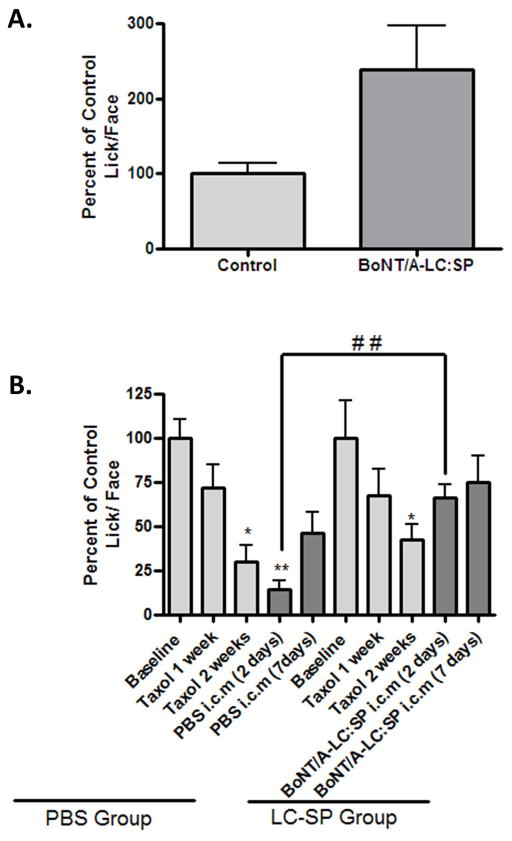
Neuropathic pain is a debilitating condition resulting from damage to sensory transmission pathways in the peripheral and central nervous system. A potential new way of treating chronic neuropathic pain is to target specific pain-processing neurons based on their expression of particular receptor molecules. We hypothesized that a toxin-neuropeptide conjugate would alter pain by first being taken up by specific receptors for the neuropeptide expressed on the neuronal cells. Then, once inside the cell the toxin would inhibit the neurons' activity without killing the neurons, thereby providing pain relief without lesioning the nervous system. In an effort to inactivate the nociceptive neurons in the trigeminal nucleus caudalis in mice, we targeted the NK1 receptor (NK1R) using substance P (SP). The catalytically active light chain of botulinum neurotoxin type A (LC/A) was conjugated with SP. Our results indicate that the conjugate BoNT/A-LC:SP is internalized in cultured NK1R-expressing neurons and also cleaves the target of botulinum toxin, a component-docking motif necessary for release of neurotransmitters called SNAP-25. The conjugate was next tested in a murine model of Taxol-induced neuropathic pain. An intracisternal injection of BoNT/A-LC:SP decreased thermal hyperalgesia as measured by the operant orofacial nociception assay. These findings indicate that conjugates of the light chain of botulinum toxin are extremely promising agents for use in suppressing neuronal activity for extended time periods, and that BoNT/A-LC:SP may be a useful agent for treating chronic pain.
Keywords: Botulinum neurotoxin; Neurokinin receptor; Neuropathic pain.
Copyright © 2013 International Association for the Study of Pain. Published by Elsevier B.V. All rights reserved.
Conflict of interest statement
All authors have no conflicts of interest to declare.
Figures
References
-
- Dray A. Neuropathic pain: emerging treatments. British Journal of Anaesthesia. 2008;101(1):48–58. - PubMed
-
- Zimmermann M. Pathobiology of neuropathic pain. Eur J Pharmacol. 2001;429(1–3):23–37. - PubMed
-
- Cahill CM, Coderre TJ. Attenuation of hyperalgesia in a rat model of neuropathic pain after intrathecal pre-or post –treatment with a neurokinin-1 antagonist. Pain. 2002;95 (3):277–285. - PubMed
-
- Mantyh PW, Rogers SD, Honore P, Allen BJ, Ghilardi JR, Li J, et al. Inhibition of hyperalgesia by ablation of lamina I spinal neurons expressing the substance P receptor. Science. 1997;278:275–279. - PubMed
Publication types
MeSH terms
Substances
Grants and funding
LinkOut - more resources
Full Text Sources
Other Literature Sources
Medical
Research Materials
