


Thigh muscle volume in relation to age, sex and femur volume
- PMID: 23934008
- PMCID: PMC3889894
- DOI: 10.1007/s11357-013-9571-6
Thigh muscle volume in relation to age, sex and femur volume
Abstract
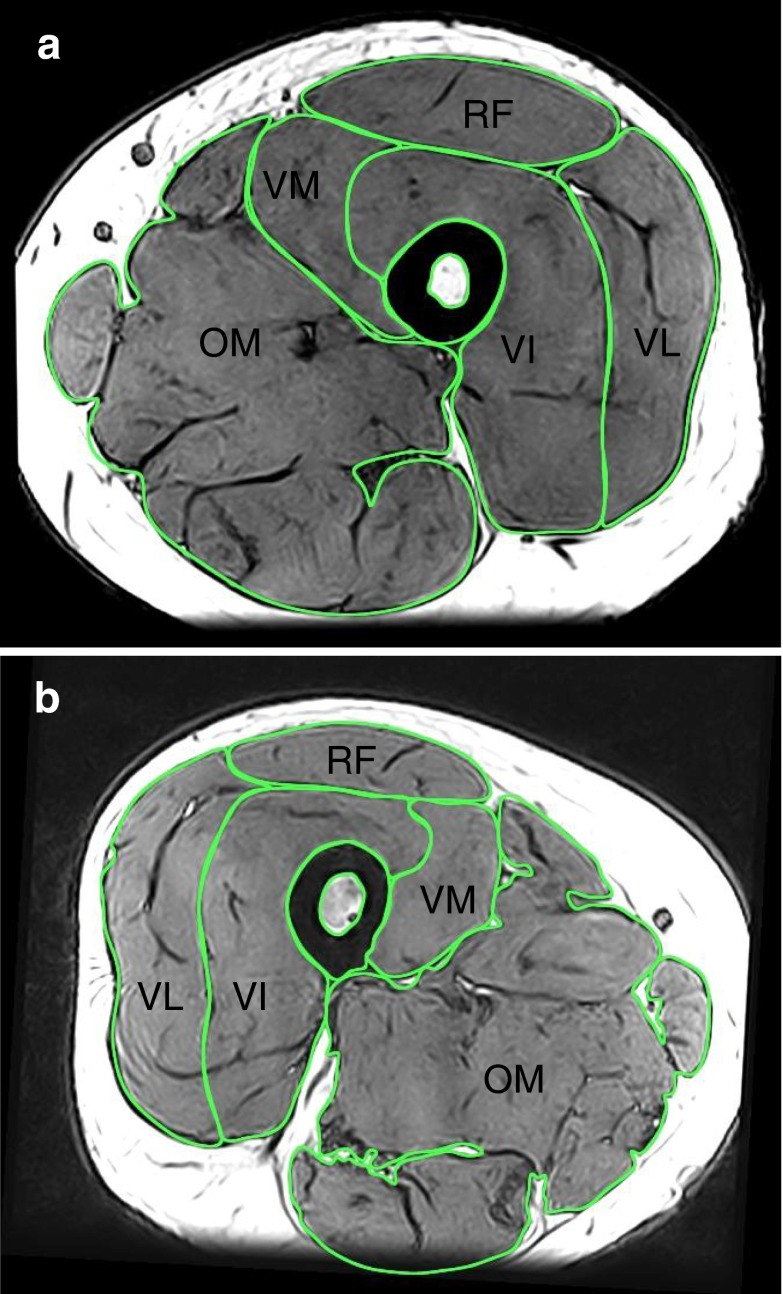
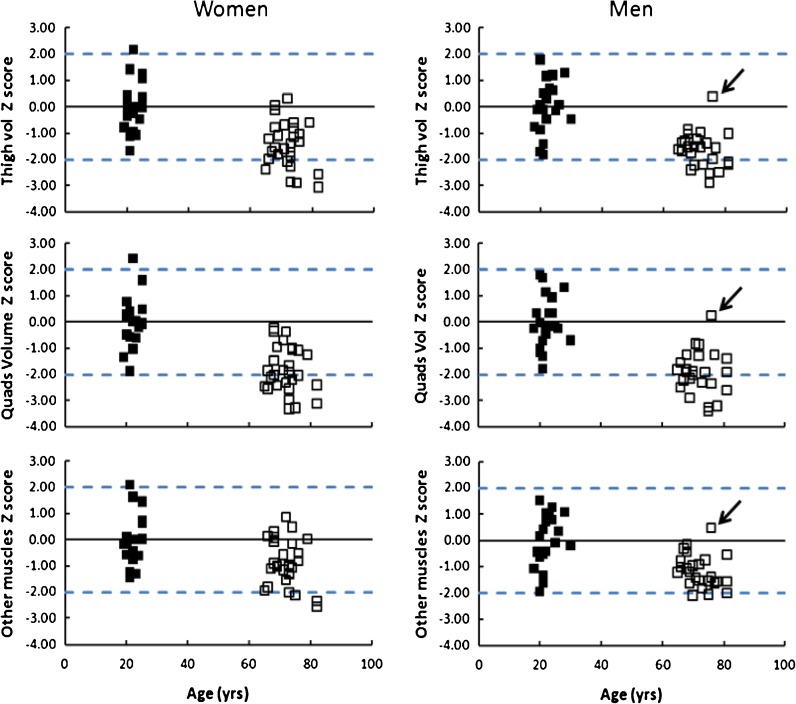
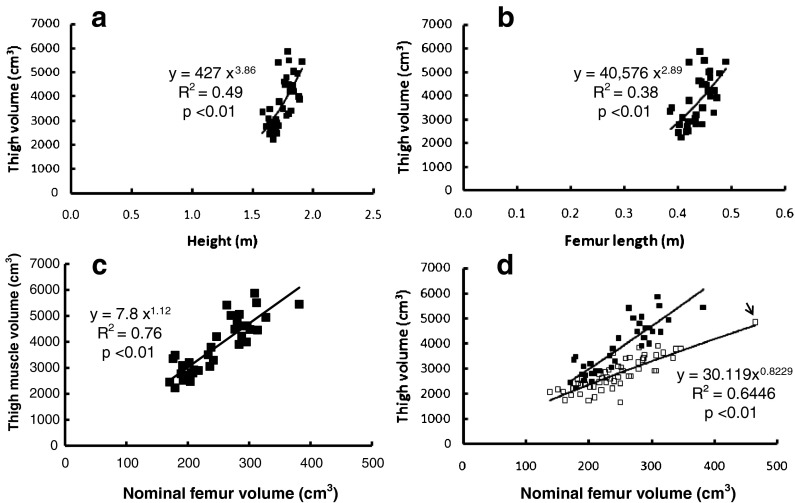
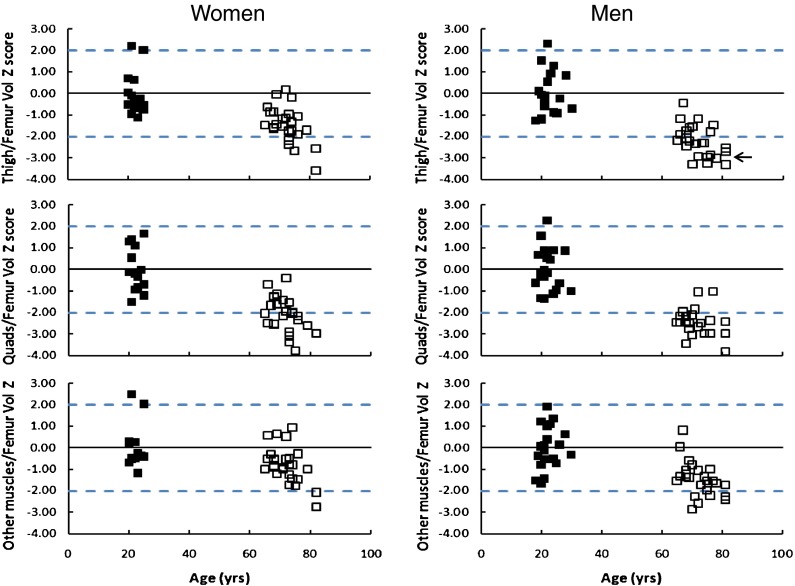
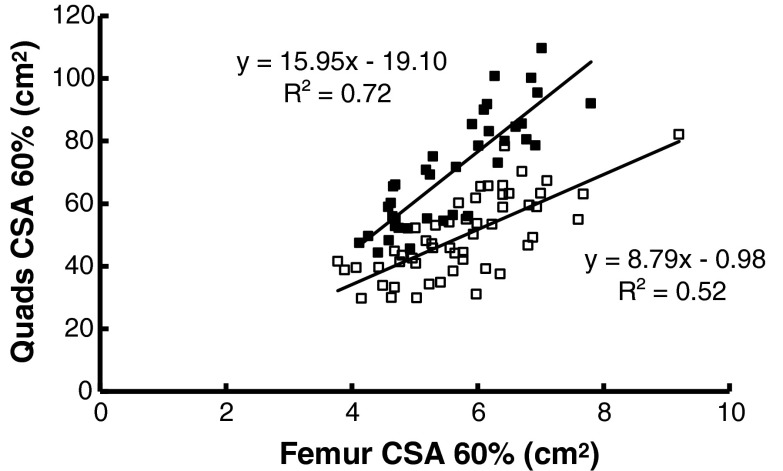
Secular changes and intra-individual differences in body shape and size can confound cross-sectional studies of muscle ageing. Normalising muscle mass to height squared is often suggested as a solution for this. We hypothesised that normalisation of muscle volume to femur volume may be a better way of determining the extent of muscle lost with ageing (sarcopenia). Thigh and femur muscle volumes were measured from serial magnetic resonance imaging sections in 20 recreationally active young men (mean age 22.4 years), 25 older men (72.3 years), 18 young women (22.1 years) and 28 older women (72.0 years). There were no age-related differences in femur volume. The relationship between thigh muscle volume and femur volume (R (2) = 0.76; exponent of 1.12; P < 0.01) was stronger than that with height (R (2) = 0.49; exponent of 3.86; P < 0.01) in young participants. For young subjects, the mean muscle/bone ratios were 16.0 and 14.6 for men and women, respectively. For older men and women, the mean ratios were 11.6 and 11.5, respectively. The Z score for the thigh muscle/bone volume ratio relative to young subjects was -2.2 ± 0.7 for older men and -1.4 ± 0.8 for older women. The extent of sarcopenia judged by the muscle/bone ratio was approximately twice that determined when normalising to height squared. These data suggest that the muscle/bone ratio captures the intra-individual loss of muscle mass during ageing, and that the age-related loss of muscle mass may be underestimated when normalised to height squared. The quadriceps seems relatively more affected by ageing than other thigh muscles.
Figures
References
-
- Degens H. Determinants of skeletal muscle hypertrophy and the attenuated hypertrophic response at old age. J Sports Med Doping Stud. 2012;S1:003.
Publication types
MeSH terms
LinkOut - more resources
Full Text Sources
Other Literature Sources
Medical