


What we talk about when we talk about nuclear actin
- PMID: 23934079
- PMCID: PMC3810337
- DOI: 10.4161/nucl.25960
What we talk about when we talk about nuclear actin
Abstract
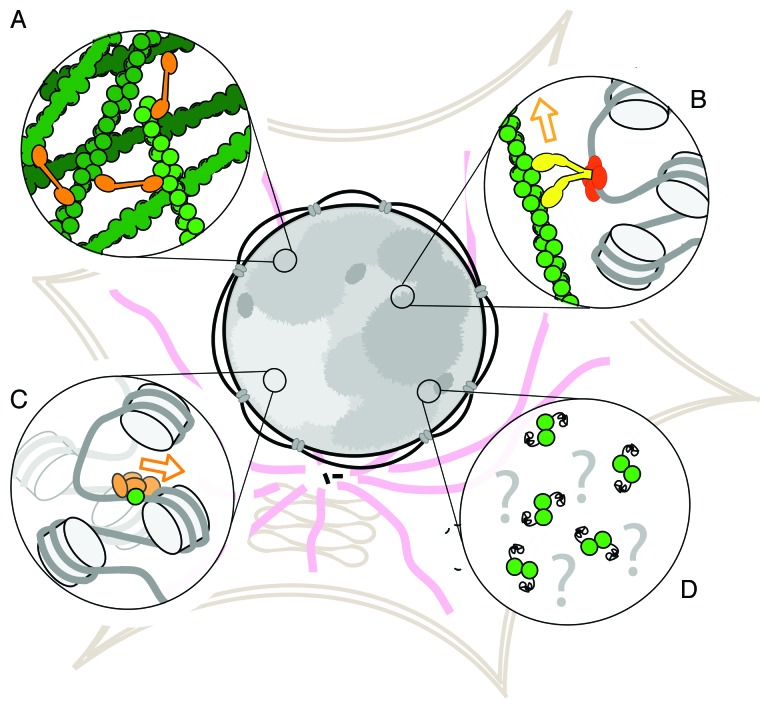
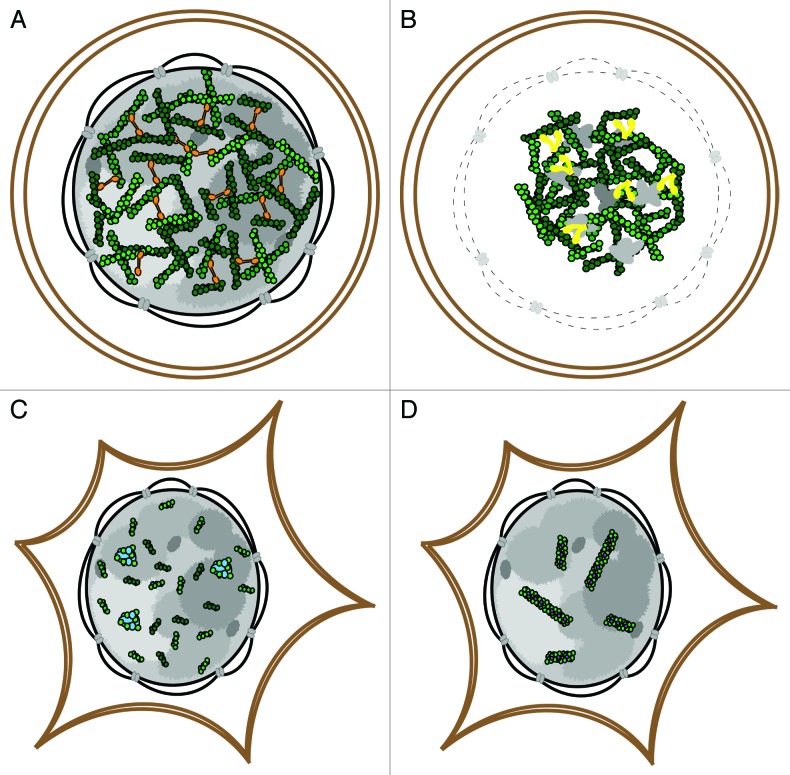
In the cytoplasm, actin filaments form crosslinked networks that enable eukaryotic cells to transport cargo, change shape, and move. Actin is also present in the nucleus but, in this compartment, its functions are more cryptic and controversial. If we distill the substantial literature on nuclear actin down to its essentials, we find four, recurring, and more-or-less independent, claims: (1) crosslinked networks of conventional actin filaments span the nucleus and help maintain its structure and organize its contents; (2) assembly or contraction of filaments regulates specific nuclear events; (3) actin monomers moonlight as subunits of chromatin remodeling complexes, independent of their ability to form filaments; and (4) modified actin monomers or oligomers, structurally distinct from canonical, cytoskeletal filaments, mediate nuclear events by unknown mechanisms. We discuss the evidence underlying these claims and as well as their strengths and weaknesses. Next, we describe our recent work, in which we built probes specific for nuclear actin and used them to describe the form and distribution of actin in somatic cell nuclei. Finally, we discuss how different forms of nuclear actin may play different roles in different cell types and physiological contexts.
Keywords: cytoskeleton; exportin 6; importin 9; nuclear actin; nuclear myosins; oocyte.
Figures
References
Publication types
MeSH terms
Substances
Grants and funding
LinkOut - more resources
Full Text Sources
Other Literature Sources
