The effects of alcohol on the pharmacokinetics and pharmacodynamics of the selective mu-opioid receptor antagonist GSK1521498 in healthy subjects
- PMID: 23934621
- PMCID: PMC4282435
- DOI: 10.1002/jcph.110
The effects of alcohol on the pharmacokinetics and pharmacodynamics of the selective mu-opioid receptor antagonist GSK1521498 in healthy subjects
Abstract
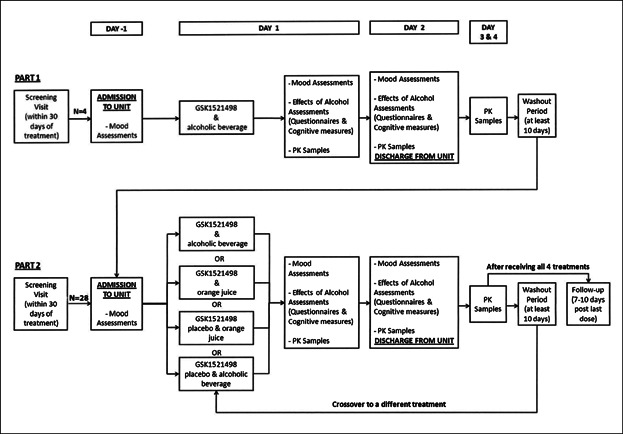
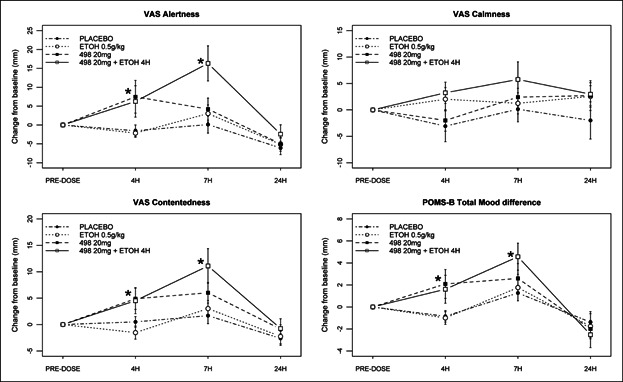
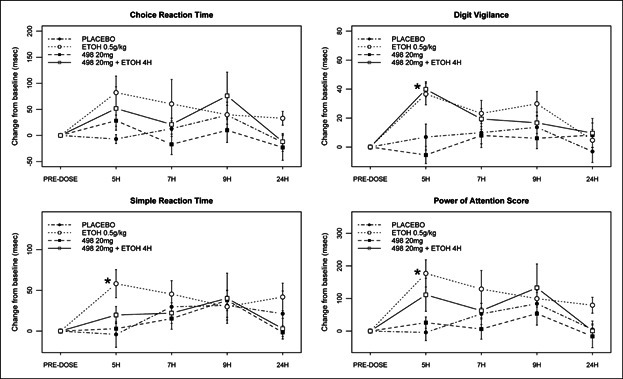
The mu-opioid system has a key role in hedonic and motivational processes critical to substance addiction. However, existing mu-opioid antagonists have had limited success as anti-addiction treatments. GSK1521498 is a selective and potent mu-opioid antagonist being developed for the treatment of overeating and substance addictions. In this study, 28 healthy participants were administered single doses of GSK1521498 20 mg, ethanol 0.5 g/kg body weight, or both in combination, in a double blind placebo controlled four-way crossover design. The primary objective was to determine the risk of significant adverse pharmacodynamic and pharmacokinetic (PK) interactions. The effects of GSK1521498 on hedonic and consummatory responses to alcohol and the attentional processing of alcohol-related stimuli, and their modulation by the OPRM1 A118G polymorphism were also explored. GSK1521498 20 mg was well tolerated alone and in combination with ethanol. There were mild transient effects of GSK1521498 on alertness and mood that were greater when it was combined with ethanol. These effects were not of clinical significance. There were no effects of GSK1521498 on reaction time, hedonic or consummatory responses. These findings provide encouraging safety and PK data to support continued development of GSK1521498 for the treatment of alcohol addiction.
Keywords: OPRM1; addiction; alcohol; mu-opioid receptor; pharmacodynamics; pharmacogenetics; pharmacokinetics; safety.
© The Authors 2013. The Journal of Clinical Pharmacology. Published by Wiley Periodicals, Inc.
Figures
References
-
- Deroche-Gamonet V, Belin D, Piazza PV. Evidence for addiction-like behavior in the rat. Science. 2004;305(5686):1014–1017. - PubMed
-
- MacDonald AF, Billington CJ, Levine AS. Effects of the opioid antagonist naltrexone on feeding induced by DAMGO in the ventral tegmental area and in the nucleus accumbens shell region in the rat. Am J Physiol Regul Integr Comp Physiol. 2003;285(5):R999–R1004. - PubMed
Publication types
MeSH terms
Substances
Grants and funding
LinkOut - more resources
Full Text Sources
Other Literature Sources
Research Materials