


Pseudoxanthoma elasticum: cardiac findings in patients and Abcc6-deficient mouse model
- PMID: 23935882
- PMCID: PMC3720798
- DOI: 10.1371/journal.pone.0068700
Pseudoxanthoma elasticum: cardiac findings in patients and Abcc6-deficient mouse model
Abstract
Background: Pseudoxanthoma elasticum (PXE), caused by mutations in the ABCC6 gene, is a rare multiorgan disease characterized by the mineralization and fragmentation of elastic fibers in connective tissue. Cardiac complications reportedly associated with PXE are mainly based on case reports.
Methods: A cohort of 67 PXE patients was prospectively assessed. Patients underwent physical examination, electrocardiogram, transthoracic echocardiography, cardiac magnetic resonance imaging (CMR), treadmill testing, and perfusion myocardial scintigraphy (SPECT). Additionally, the hearts of a PXE mouse models (Abcc6(-/-)) and wild-type controls (WT) were analyzed.
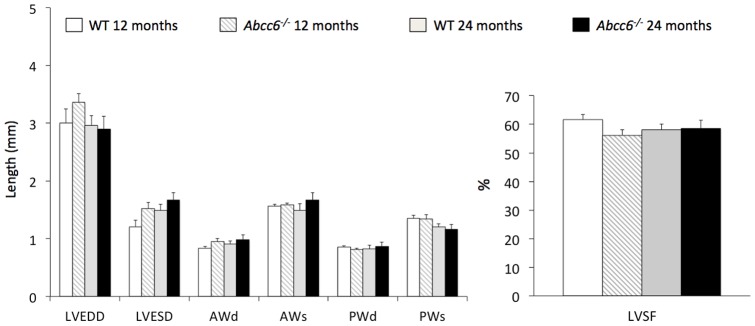
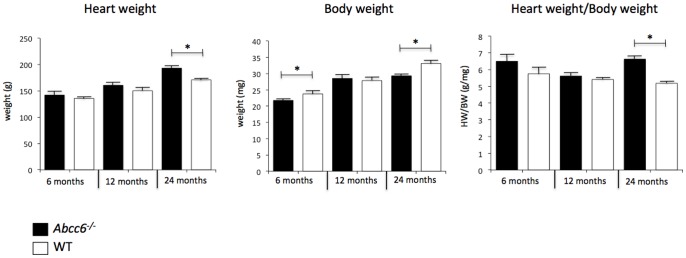
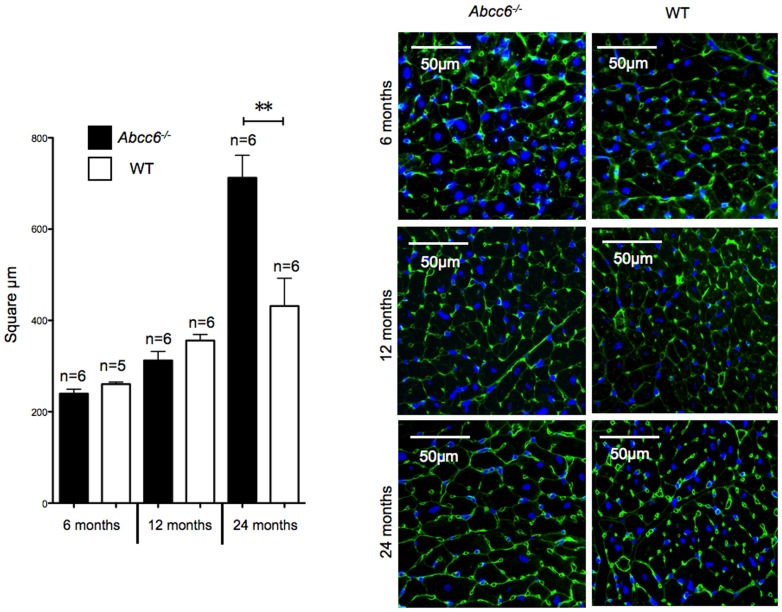
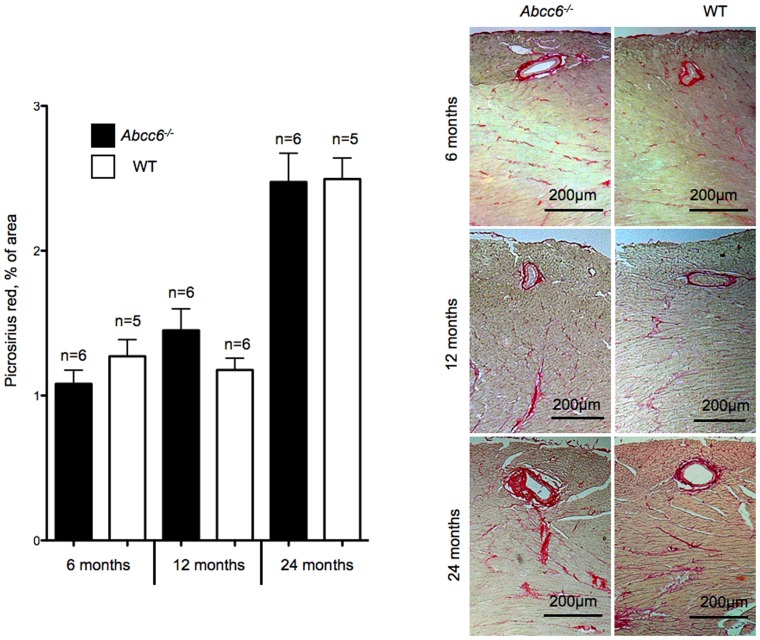
Results: Three patients had a history of proven coronary artery disease. In total, 40 patients underwent exercise treadmill tests, and 28 SPECT. The treadmill tests were all negative. SPECT showed mild perfusion abnormalities in two patients. Mean left ventricular (LV) dimension and function values were within the normal range. LV hypertrophy was found in 7 (10.4%) patients, though the hypertrophy etiology was unknown for 3 of those patients. Echocardiography revealed frequent but insignificant mitral and tricuspid valvulopathies. Mitral valve prolapse was present in 3 patients (4.5%). Two patients exhibited significant aortic stenosis (3.0%). While none of the functional and histological parameters diverged significantly between the Abcc6(-/-) and WT mice groups at age of 6 and 12 months, the 24-month-old Abcc6(-/-) mice developed cardiac hypertrophy without contractile dysfunction.
Conclusions: Despite sporadic cases, PXE does not appear to be associated with frequent cardiac complications. However, the development of cardiac hypertrophy in the 24-month-old Abcc6(-/-) mice suggests that old PXE patients might be prone to developing late cardiopathy.
Conflict of interest statement
Figures
References
-
- Neldner KH (1988) Pseudoxanthoma elasticum. Clin Dermatol 6: 1–159. - PubMed
-
- Bergen AA, Plomp AS, Schuurman EJ, Terry S, Breuning M, et al. (2000) Mutations in ABCC6 cause pseudoxanthoma elasticum. Nat Genet 25: 228–231. - PubMed
-
- Le Saux O, Urban Z, Tschuch C, Csiszar K, Bacchelli B, et al. (2000) Mutations in a gene encoding an ABC transporter cause pseudoxanthoma elasticum. Nat Genet 25: 223–227. - PubMed
Publication types
MeSH terms
Substances
Grants and funding
LinkOut - more resources
Full Text Sources
Other Literature Sources
Molecular Biology Databases
