. 2013 Jul 31;8(7):e69673.
doi: 10.1371/journal.pone.0069673. Print 2013.

Telomeric repeats facilitate CENP-A(Cnp1) incorporation via telomere binding proteins

Affiliations

Telomeric repeats facilitate CENP-A(Cnp1) incorporation via telomere binding proteins

Araceli G Castillo et al. PLoS One. .

Erratum in

  • PLoS One. 2013;8(10). doi:10.1371/annotation/c6430c38-0d7a-4b9f-aca9-7d8b212f9f09

Abstract

The histone H3 variant, CENP-A, is normally assembled upon canonical centromeric sequences, but there is no apparent obligate coupling of sequence and assembly, suggesting that centromere location can be epigenetically determined. To explore the tolerances and constraints on CENP-A deposition we investigated whether certain locations are favoured when additional CENP-A(Cnp1) is present in fission yeast cells. Our analyses show that additional CENP-A(Cnp1) accumulates within and close to heterochromatic centromeric outer repeats, and over regions adjacent to rDNA and telomeres. The use of minichromosome derivatives with unique DNA sequences internal to chromosome ends shows that telomeres are sufficient to direct CENP-A(Cnp1) deposition. However, chromosome ends are not required as CENP-A(Cnp1) deposition also occurs at telomere repeats inserted at an internal locus and correlates with the presence of H3K9 methylation near these repeats. The Ccq1 protein, which is known to bind telomere repeats and recruit telomerase, was found to be required to induce H3K9 methylation and thus promote the incorporation of CENP-A(Cnp1) near telomere repeats. These analyses demonstrate that at non-centromeric chromosomal locations the presence of heterochromatin influences the sites at which CENP-A is incorporated into chromatin and, thus, potentially the location of centromeres.


Conflict of interest statement

Competing Interests: The authors have declared that no competing interests exist.

Figures

Figure 1
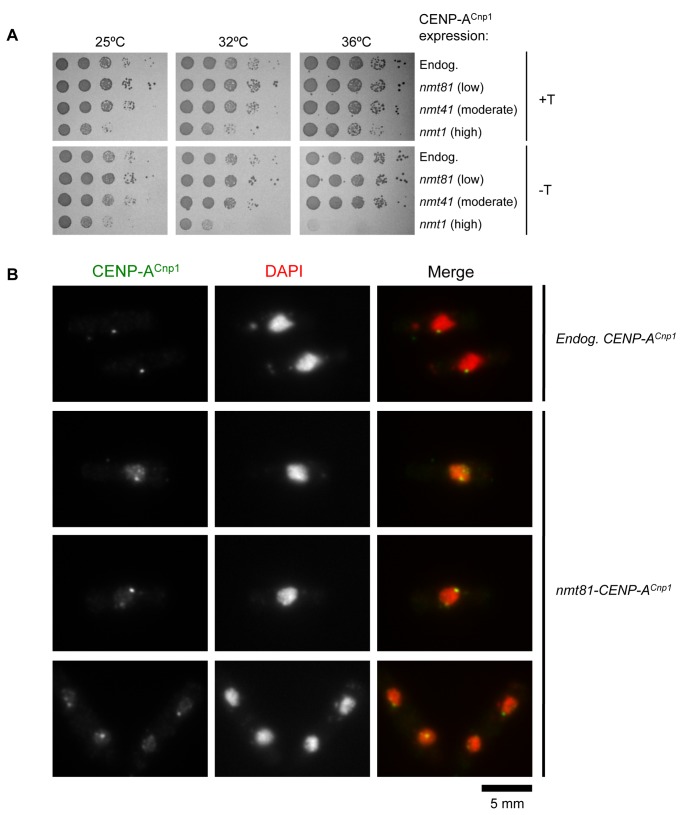
Figure 1. Additional CENP-ACnp1 accumulates at discrete foci in S. pombe cells.
CENP-ACnp1 was expressed from different strengths of the thiamine repressible nmt promoter (nmt81 – weak, nmt41 – medium, nmt1 – strong); integrated at ars1 in chromosome 1. A strain that has an empty nmt promoter plasmid integrated was used as a control (Endog: CENP-ACnp1 endogenous levels). (A) Serial dilution assays to monitor the effect of additional CENP-ACnp1 on cell growth. Cells were spotted on minimal media with (+T) or without (-T) thiamine at three different temperatures, 25°C, 32°C and 36°C. (B) Immunolocalization of CENP-ACnp1 in cells expressing endogenous levels of CENP-ACnp1 or extra CENP-ACnp1 expressed from the nmt81 promoter. Cells were grown in the absence of thiamine for 24 h at 36oC and stained with anti-CENP-ACnp1 antibody (green) and DAPI (DNA: red). Scale bar, 5 µm.
Figure 2
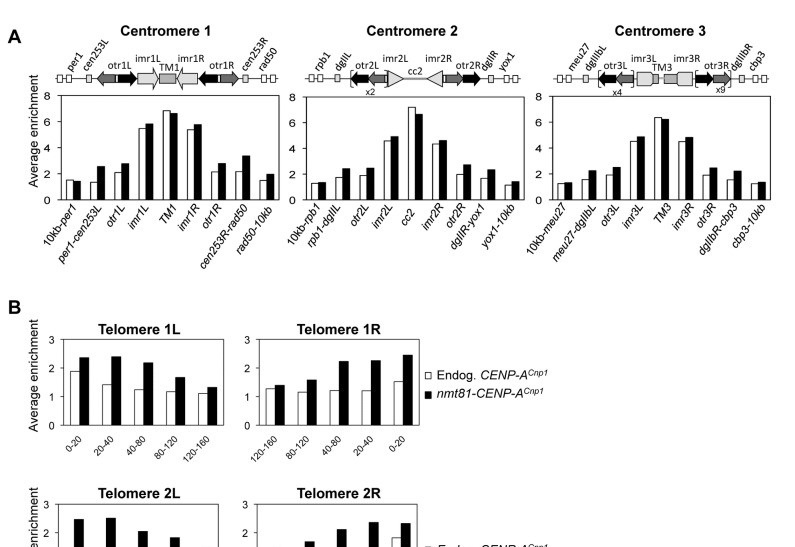
Figure 2. Additional CENP-ACnp1 is deposited at sub-telomeric and pericentromeric regions.
ChIP-chip analysis of CENP-ACnp1 levels at cells with moderate expression of additional CENP-ACnp1 (nmt81-CENP-ACnp1) or wild-type protein levels (Endog. CENP-ACnp1). (A) Average enrichment of CENP-ACnp1 over different chromosomal regions (cnt, imr, otr) of centromeres I, II and III (X-axis, linear scale). The number of repetitive elements at different loci is indicated (x2, x4, x9). The average enrichment over 10 kb regions immediately adjacent to the centromeric otr repeats is also shown (10 kb region encompassing the most proximal annotated gene on each side of each centromere; per1 and rad50 for cen1, rpb1 and yox1 for cen2 and meu27 and cbp3 for cen3). (B) Average enrichment from ChIP-chip analyses of CENP-ACnp1 over 120 kb regions from the left or right telomere of each chromosome. Signal intensity was averaged within 20 kb or 40 kb windows as indicated. Left panels, left telomeres; right panels, right telomeres of each chromosome.
Figure 3
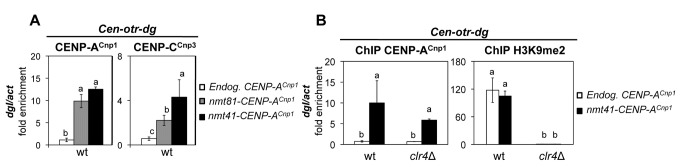
Figure 3. CENP-ACnp1 can accumulate on centromeric repeat regions independently of H3K9 methylation.
(A) ChIP-qPCR-analysis of CENP-ACnp1 and CENP-CCnp3 levels on centromeric outer repeat sequences (otr dgI) in cells expressing endogenous (Endog. CENP-ACnp1) or additional (nmt81-CENP-ACnp1 or nmt41-CENP-ACnp1) levels of CENP-ACnp1. (B) ChIP-qPCR analysis of CENP-ACnp1 and H3K9me2 levels on centromeric otr dgI repeats in wild-type and clr4∆ cells expressing endogenous (Endog. CENP-ACnp1) or additional levels (nmt41-CENP-ACnp1) of CENP-ACnp1. Enrichment on dgI was normalized to the signal obtained for the euchromatic gene encoding actin (act1 +). Error bars indicate S.D. from 3 biological replicates. Mean values marked with different letter (a, b or c) indicate results significantly different from each other, as established by One Way ANOVA and Holm-Sidak test for multiple comparison (P<0.01).
Figure 4
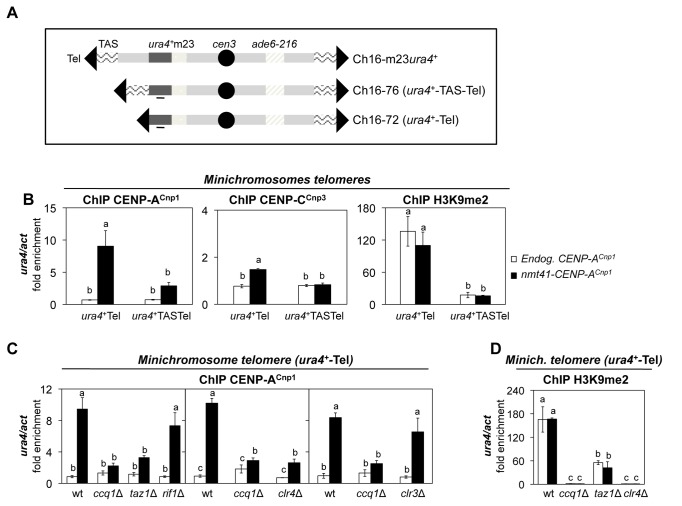
Figure 4. Terminal telomere repeats alone can attract CENP-ACnp1 in cells expressing additional CENP-ACnp1.
(A) Schematic representation of Ch16-m23 minichromosome derivatives with the ura4 + gene inserted 50 kb from the minichromosome end (Ch16-m23ura4 +) or adjacent to telomere-associated sequences at a telomere (ura4 +-TAS-Tel, Chs 16–76) or directly abutting terminal telomeric repeats (ura4 +-Tel, Chs 16–72). Black bar indicates the region at ura4 + analyzed by ChIP-qPCR. (B) ChIP-qPCR of CENP-ACnp1, CENP-CCnp3 and H3K9me2 levels on ura4 + in cells containing the ura4 +-Tel or ura4 +-TAS-Tel Ch16 minichromosomes and expressing endogenous (Endog. CENP-ACnp1) or additional CENP-ACnp1 levels (nmt41-CENP-ACnp1) (C) ChIP-qPCR of CENP-ACnp1 levels on ura4 + in wild-type (wt) or mutant cells (ccq1∆, taz1∆, clr4∆ and clr3∆) that contain the ura4 +-Tel or ura4 +-TAS-Tel Ch16 minichromosomes and express endogenous (Endog. CENP-ACnp1) or additional (nmt41-CENP-ACnp1) levels of CENP-ACnp1 (D) ChIP-qPCR of CENP-ACnp1 and H3K9me2 levels at ura4 + in wild-type (wt) or mutant cells (ccq1∆, taz1∆ and clr4∆) that contain the ura4 +-Tel and express endogenous (Endog. CENP-ACnp1) or additional (nmt41-CENP-ACnp1) levels of CENP-ACnp1. For all ChIP analyses, enrichment on ura4 + was normalized the signal obtained for the gene encoding actin (act1 +). Error bars indicate S.D. from 3 biological replicates. Mean values marked with different letter (a, b or c) indicate results significantly different from each other, as established by One Way ANOVA and Holm-Sidak test for multiple comparison (P<0.01).
Figure 5
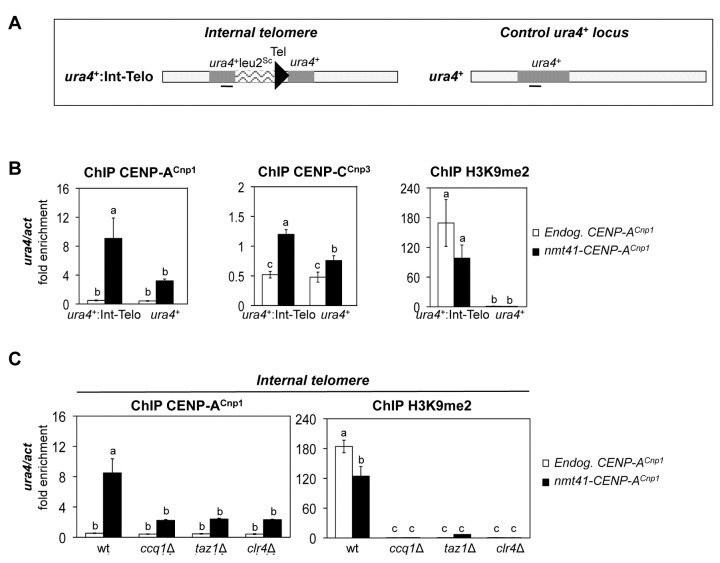
Figure 5. Telomeric repeat arrays promote CENP-ACnp1 deposition when inserted at an internal chromosomal location.
(A) Schematic representation of the genomic region of S. pombe chromosome III where an array of telomeric repeats was inserted into the ura4 + gene (Internal telomere: ura4 +: Int-Telo) [41]. Black bar indicates the region at ura4 + analyzed by ChIP-qPCR. (B) ChIP-qPCR of CENP-ACnp1, CENP-CCnp3 and H3K9me2 levels on ura4 + in control cells (ura4 +) or cells with telomeric repeats integrated at ura4 + (ura4 +: Int-Telo) and that express endogenous (Endog. CENP-ACnp1) or additional (nmt41-CENP-ACnp1) levels of CENP-ACnp1. (C) ChIP analysis of CENP-ACnp1 and H3K9me2 levels on ura4 +: Int-Telo (qPCR1) in wild-type (wt) or mutant cells (ccq1∆, taz1∆, and clr4∆) expressing endogenous (Endog. CENP-ACnp1) or additional (nmt41-CENP-ACnp1) levels of CENP-ACnp1. For all ChIP analyses, enrichment on ura4 + was normalized to the signal obtained for the gene encoding actin (act1 +). Error bars indicate S.D. from 3 biological replicates. Mean values marked with different letter (a, b or c) indicate results significantly different from each other, as established by One Way ANOVA and Holm-Sidak test for multiple comparison (P<0.01).
Figure 6
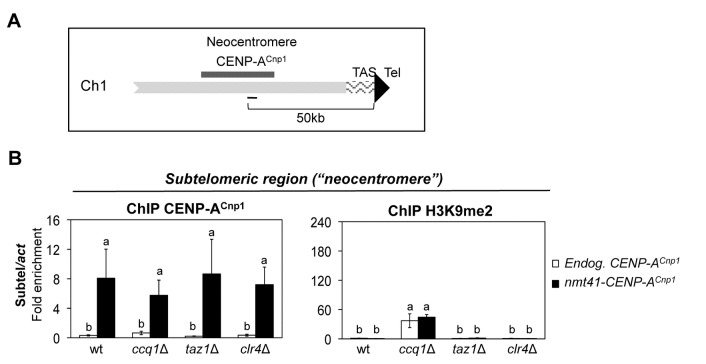
Figure 6. CENP-ACnp1 is deposited on subtelomeric regions of natural chromosomes independently of heterochromatin.
(A) Schematic representation of the right subtelomeric region of S. pombe chromosome I that has been shown to form neocentromeres (thick black line) [6]. Thin black line marks the region analyzed by ChIP-qPCR. (B) ChIP-qPCR of CENP-ACnp1 and H3K9me2 levels associated with the subtelomeric region of chromosome I in wild-type (wt) or mutant cells (ccq1∆, taz1∆, and clr4∆) expressing endogenous (Endog. CENP-ACnp1) or additional (nmt41-CENP-ACnp1) levels of CENP-ACnp1. Enrichment at the sub-telomere region (Subtel) was normalized to the signal obtained for the gene encoding actin (act1 +). Error bars indicate S.D. from 3 biological replicates. Mean values marked with different letter (a, b or c) indicate results significantly different from each other, as established by One Way ANOVA and Holm-Sidak test for multiple comparison (P<0.05).

References

    1. Earnshaw WC, Migeon BR (1985) Three related centromere proteins are absent from the inactive centromere of a stable isodicentric chromosome. Chromosoma 92: 290-296. doi:10.1007/BF00329812. PubMed: 2994966. - DOI - PubMed
    1. Sullivan BA, Schwartz S (1995) Identification of centromeric antigens in dicentric Robertsonian translocations: CENP-C and CENP-E are necessary components of functional centromeres. Hum Mol Genet 4: 2189-2197. doi:10.1093/hmg/4.12.2189. PubMed: 8634687. - DOI - PubMed
    1. Topp CN, Okagaki RJ, Melo JR, Kynast RG, Phillips RL et al. (2009) Identification of a maize neocentromere in an oat-maize addition line. Cytogenet Genome Res 124: 228-238. doi:10.1159/000218128. PubMed: 19556776. - DOI - PMC - PubMed
    1. Nasuda S, Hudakova S, Schubert I, Houben A, Endo TR (2005) Stable barley chromosomes without centromeric repeats. Proc Natl Acad Sci U S A 102: 9842-9847. PubMed: 15998740. - PMC - PubMed
    1. Maggert KA, Karpen GH (2001) The activation of a neocentromere in Drosophila requires proximity to an endogenous centromere. Genetics 158: 1615-1628. PubMed: 11514450. - PMC - PubMed

Publication types

MeSH terms

Associated data