. 2013 Jul 30;8(7):e70411.
doi: 10.1371/journal.pone.0070411. Print 2013.

Spontaneous sleep-like brain state alternations and breathing characteristics in urethane anesthetized mice

Affiliations

Spontaneous sleep-like brain state alternations and breathing characteristics in urethane anesthetized mice

Silvia Pagliardini et al. PLoS One. .

Abstract

Brain state alternations resembling those of sleep spontaneously occur in rats under urethane anesthesia and they are closely linked with sleep-like respiratory changes. Although rats are a common model for both sleep and respiratory physiology, we sought to determine if similar brain state and respiratory changes occur in mice under urethane. We made local field potential recordings from the hippocampus and measured respiratory activity by means of EMG recordings in intercostal, genioglossus, and abdominal muscles. Similar to results in adult rats, urethane anesthetized mice displayed quasi-periodic spontaneous forebrain state alternations between deactivated patterns resembling slow wave sleep (SWS) and activated patterns resembling rapid eye movement (REM) sleep. These alternations were associated with an increase in breathing rate, respiratory variability, a depression of inspiratory related activity in genioglossus muscle and an increase in expiratory-related abdominal muscle activity when comparing deactivated (SWS-like) to activated (REM-like) states. These results demonstrate that urethane anesthesia consistently induces sleep-like brain state alternations and correlated changes in respiratory activity across different rodent species. They open up the powerful possibility of utilizing transgenic mouse technology for the advancement and translation of knowledge regarding sleep cycle alternations and their impact on respiration.


Conflict of interest statement

Competing Interests: In the interest of full disclosure of any potential perceived competing interests we would like to declare that author Clayton T. Dickson is a PLoS ONE editorial board member. This does not alter our adherence to all the PLoS ONE policies on sharing data and materials.

Figures

Figure 1
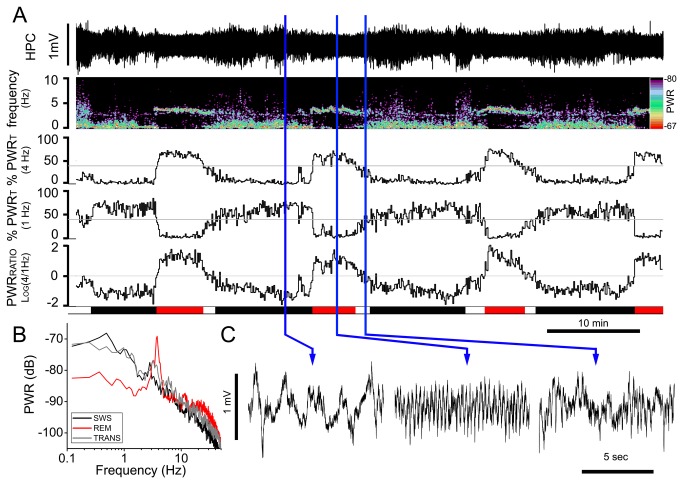
Figure 1. Spontaneous brain state alternations in urethane anesthetized mice.
A) Long-term EEG recording of hippocampal activity (HPC) and corresponding power spectrogram (1-10Hz frequency range) during spontaneous brain state alternations under urethane anesthesia. Below, the percentage of relative power (% PWRT) in the 3.5-4.5 and 0.2-1.2 Hz intervals and their ratio (on log scale) are displayed. Grey lines at the 40% of relative PWRT indicates the cutoff values for the identification of different states (REM-like, transition, SWS-like). Schematic blocks at the bottom of the plot indicate the time spent in REM-like (red), transition (white) and SWS-like (black) states. B) Power spectral analysis for HPC activity during SWS-like, REM-like and transition states further indicate the prevalence of ~1Hz power during SWS-like state and the prevalence of ~4Hz power during REM-like events. Note the increase in gamma band (25-40 Hz) frequency during REM-like state compared to SWS-like state. C) Magnification of the raw HPC traces in SWS-like (left), REM-like (centre) and transition (right). Blue vertical lines indicate the time point from which the traces are taken.
Figure 2
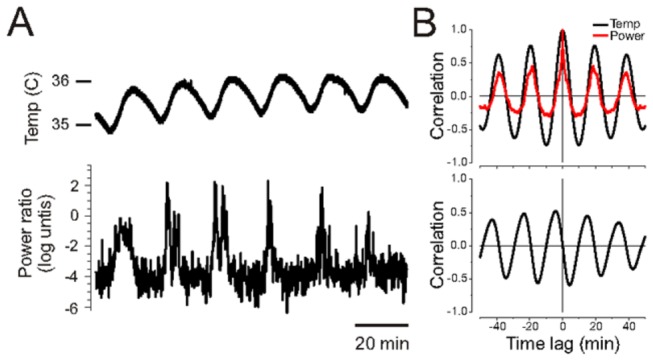
Figure 2. Spontaneous brain state alternations are coordinated with fluctuations in body temperature.
A) Core temperature measurements (upper trace) and state alternations, as shown by fluctuations in theta/slow oscillation (4Hz/1Hz) power ratios in hippocampal LFP (lower trace), appear rhythmically coordinated over a long recording period. B) Autocorrelation function (top panel) of traces shown in A) demonstrate rhythmicity of both temperature (black) and power (red) fluctuations occurring at a similar period of approximately twenty minutes. Cross correlation function (lower panel) between temperature and power measures shows coupling between these rhythms with peak in temperature lagging behind that of power by slightly over 4 minutes.
Figure 3
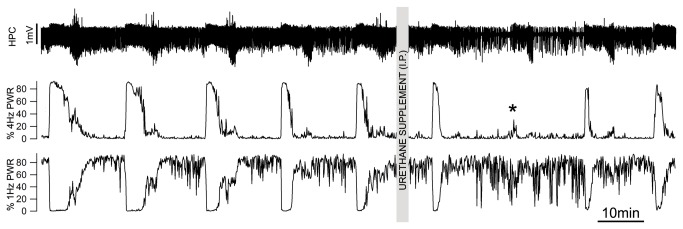
Figure 3. Supplemental doses of urethane anesthesia do not affect rhythmicity of brain state alternations.
Long term EEG recording at the HPC site and its corresponding percentage of total power calculated in the 3-4Hz range and for 0.2-1.2Hz range during regular brain state transitions under urethane anesthesia and supplemental dose of urethane (0.02ml at 0.2 g/ml dose). Note the temporary depression of power in the theta range (asterisk) followed by the resumption of regular brain state alternations.
Figure 4
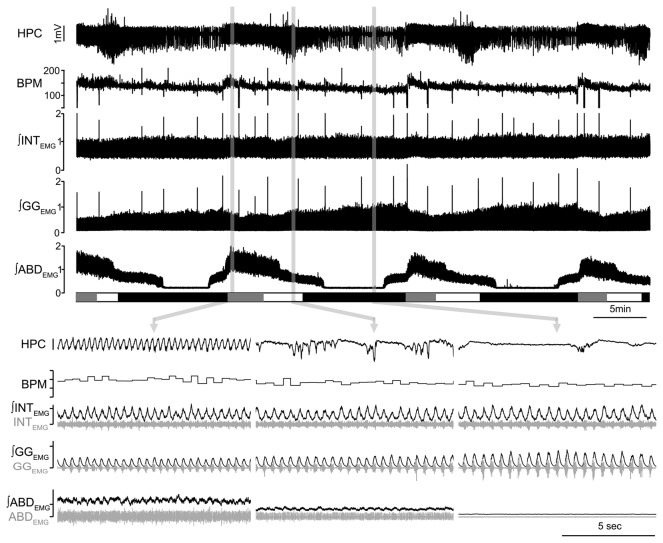
Figure 4. State dependent modulation of breathing in urethane anesthetized mice.
A) Long-term EEG recording at the HPC site and corresponding respiratory frequency (breath per minute, BPM) and rectified and integrated activity of intercostals (INT), genioglossus (GG) and abdominal (ABD) muscle EMG activity across spontaneous brain state alternations. Schematic block at the bottom of the plot indicate time spent in REM-like (grey), transition (white) and SWS-like (black) states. B) Details of the HPC trace, BPM and raw and integrated traces of INT, GG and ABD EMG in REM-like (left), transition (centre) and SWS-like states.

References

    1. Brown RE, Basheer R, McKenna JT, Strecker RE, McCarley RW (2012) Control of sleep and wakefulness. Physiol Rev 92: 1087-1187. doi:10.1152/physrev.00032.2011. PubMed: 22811426. - DOI - PMC - PubMed
    1. Havekes R, Vecsey CG, Abel T (2012) The impact of sleep deprivation on neuronal and glial signaling pathways important for memory and synaptic plasticity. Cell Signal 24: 1251-1260. doi:10.1016/j.cellsig.2012.02.010. PubMed: 22570866. - DOI - PMC - PubMed
    1. Trinder J, Jordan AS (2012) Activation of the upper airway dilator muscle genioglossus during sleep is largely dependent on an interaction between chemical drive and mechanoreceptor feedback. Sleep 34: 983-984. PubMed: 21804659. - PMC - PubMed
    1. Barone MT, Menna-Barreto L (2011) Diabetes and sleep: a complex cause-and-effect relationship. Diabetes Res Clin Pract 91: 129-137. doi:10.1016/j.diabres.2010.07.011. PubMed: 20810183. - DOI - PubMed
    1. Saper CB, Fuller PM, Pedersen NP, Lu J, Scammell TE (2010) Sleep state switching. Neuron 68: 1023-1042. doi:10.1016/j.neuron.2010.11.032. PubMed: 21172606. - DOI - PMC - PubMed

Publication types

LinkOut - more resources