


Adenoviral transduction of human acid sphingomyelinase into neo-angiogenic endothelium radiosensitizes tumor cure
- PMID: 23936314
- PMCID: PMC3732255
- DOI: 10.1371/journal.pone.0069025
Adenoviral transduction of human acid sphingomyelinase into neo-angiogenic endothelium radiosensitizes tumor cure
Abstract
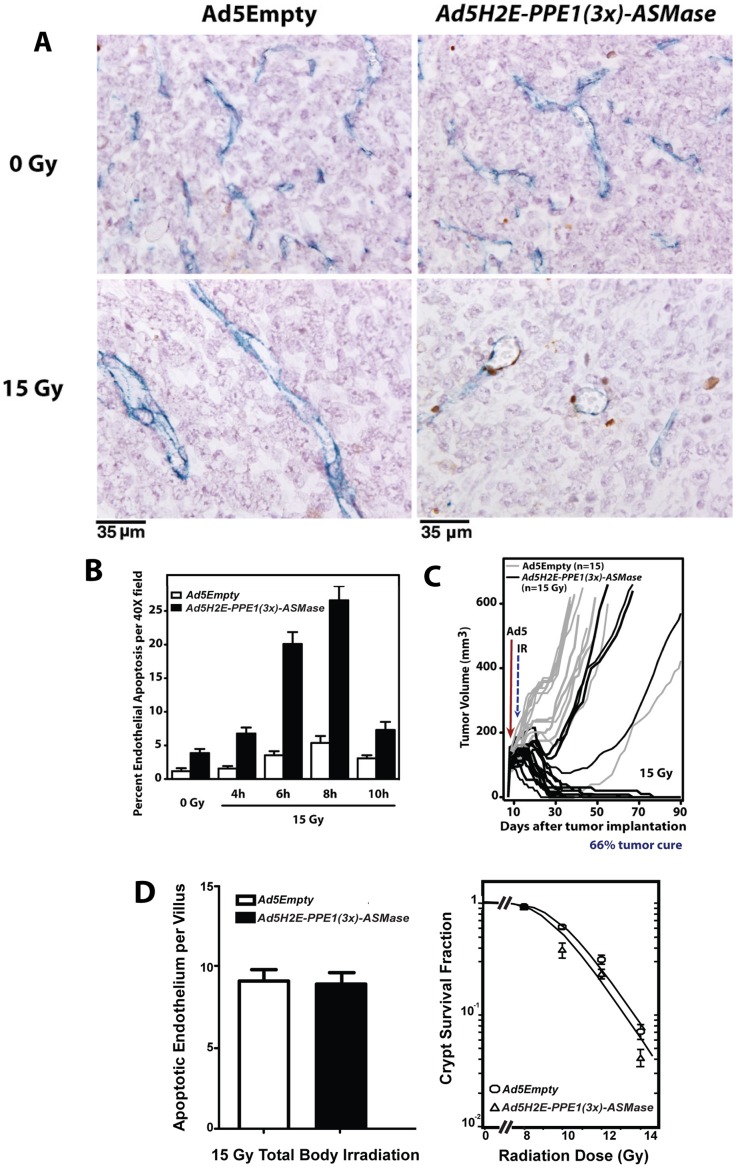
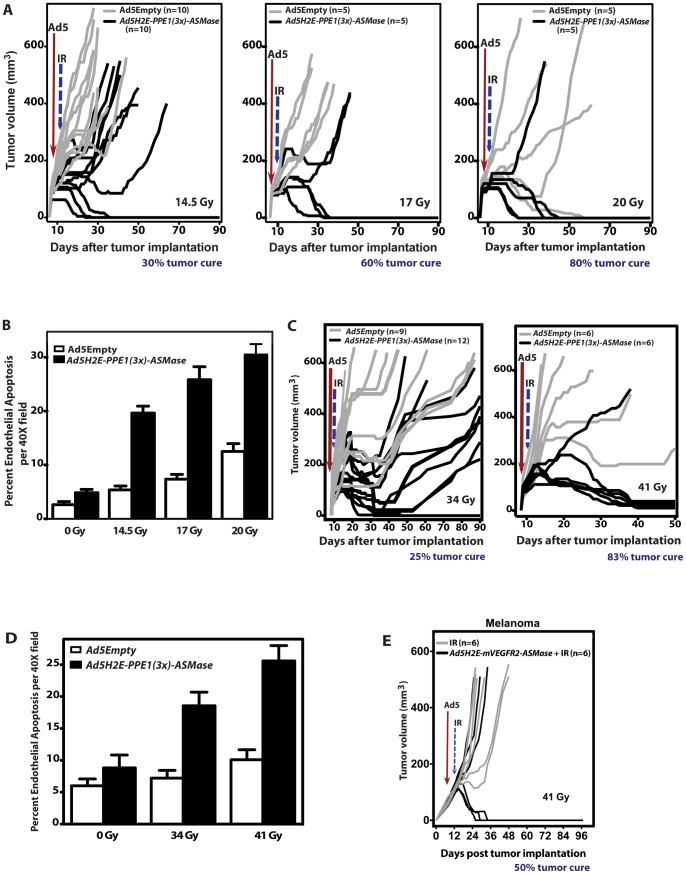
These studies define a new mechanism-based approach to radiosensitize tumor cure by single dose radiotherapy (SDRT). Published evidence indicates that SDRT induces acute microvascular endothelial apoptosis initiated via acid sphingomyelinase (ASMase) translocation to the external plasma membrane. Ensuing microvascular damage regulates radiation lethality of tumor stem cell clonogens to effect tumor cure. Based on this biology, we engineered an ASMase-producing vector consisting of a modified pre-proendothelin-1 promoter, PPE1(3x), and a hypoxia-inducible dual-binding HIF-2α-Ets-1 enhancer element upstream of the asmase gene, inserted into a replication-deficient adenovirus yielding the vector Ad5H2E-PPE1(3x)-ASMase. This vector confers ASMase over-expression in cycling angiogenic endothelium in vitro and within tumors in vivo, with no detectable enhancement in endothelium of normal tissues that exhibit a minute fraction of cycling cells or in non-endothelial tumor or normal tissue cells. Intravenous pretreatment with Ad5H2E-PPE1(3x)-ASMase markedly increases SDRT cure of inherently radiosensitive MCA/129 fibrosarcomas, and converts radiation-incurable B16 melanomas into biopsy-proven tumor cures. In contrast, Ad5H2E-PPE1(3x)-ASMase treatment did not impact radiation damage to small intestinal crypts as non-dividing small intestinal microvessels did not overexpress ASMase and were not radiosensitized. We posit that combination of genetic up-regulation of tumor microvascular ASMase and SDRT provides therapeutic options for currently radiation-incurable human tumors.
Conflict of interest statement
Figures
References
-
- Hall EJ, Giaccia AJ (2006) In:McAllister L, Bierig L, Barrett K, editors. Radiobiology for the Radiologist. Sixth Edition ed. Philadelphia: Lippincott, Williams & Wilkins. 378–397.
-
- Hoppe RT, Phillips TL, Roach M (2010) Leibel and Phillips textbook of radiation oncology; Saunders E, editor. Philadelphia, PA. 40–54.
-
- Leibel SA, Ling CC, Kutcher GJ, Mohan R, Cordon-Cordo C, et al. (1991) The biological basis for conformal three-dimensional radiation therapy. Int J Radiat Oncol Biol Phys 21: 805–811. - PubMed
-
- Okunieff P, Morgan D, Niemierko A, Suit HD (1995) Radiation dose-response of human tumors. Int J Rad Oncol Biol Phys 32: 1227–1237. - PubMed
-
- Yamada Y, Bilsky MH, Lovelock DM, Venkatraman ES, Toner S, et al. (2008) High-dose, single-fraction image-guided intensity-modulated radiotherapy for metastatic spinal lesions. Int J Radiat Oncol Biol Phys 71: 484–490. - PubMed
Publication types
MeSH terms
Substances
Grants and funding
LinkOut - more resources
Full Text Sources
Other Literature Sources
