


RNA-Seq reveals dynamic changes of gene expression in key stages of intestine regeneration in the sea cucumber Apostichopus japonicus. [corrected]
- PMID: 23936330
- PMCID: PMC3735544
- DOI: 10.1371/journal.pone.0069441
RNA-Seq reveals dynamic changes of gene expression in key stages of intestine regeneration in the sea cucumber Apostichopus japonicus. [corrected]
Erratum in
- PLoS One. 2013;8(8). doi: 10.1371/annotation/d2d71c46-4254-46bd-8a83-9a7a56f2abdf doi: 10.1371/annotation/d2d71c46-4254-46bd-8a83-9a7a56f2abdf
Abstract
Background: Sea cucumbers (Holothuroidea; Echinodermata) have the capacity to regenerate lost tissues and organs. Although the histological and cytological aspects of intestine regeneration have been extensively studied, little is known of the genetic mechanisms involved. There has, however, been a renewed effort to develop a database of Expressed Sequence Tags (ESTs) in Apostichopus japonicus, an economically-important species that occurs in China. This is important for studies on genetic breeding, molecular markers and special physiological phenomena. We have also constructed a library of ESTs obtained from the regenerative body wall and intestine of A. japonicus. The database has increased to ~30000 ESTs.
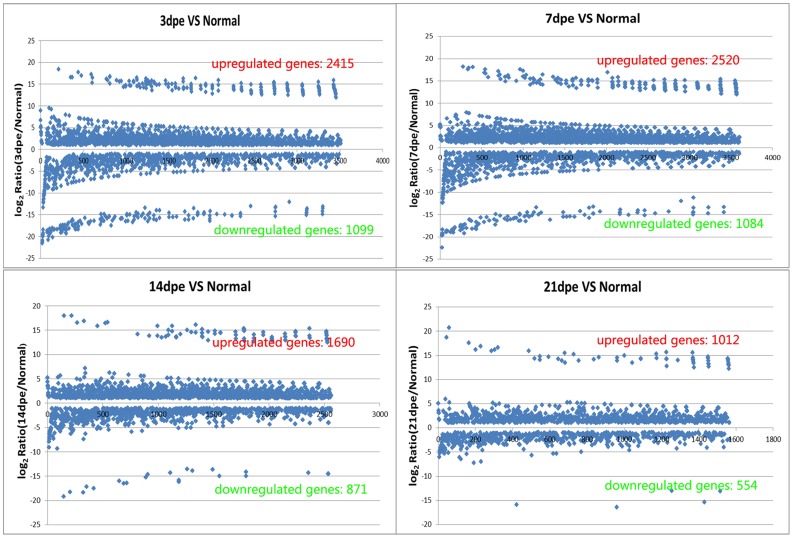
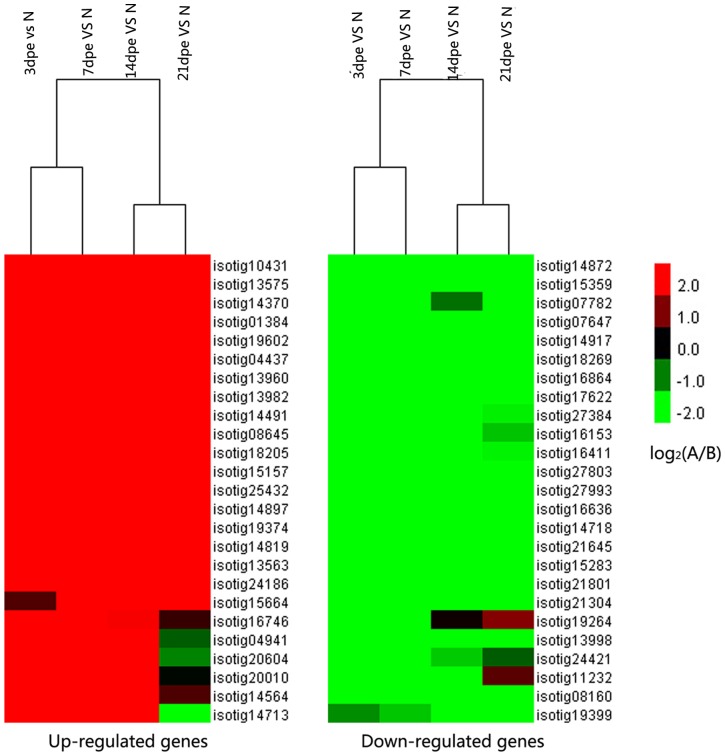
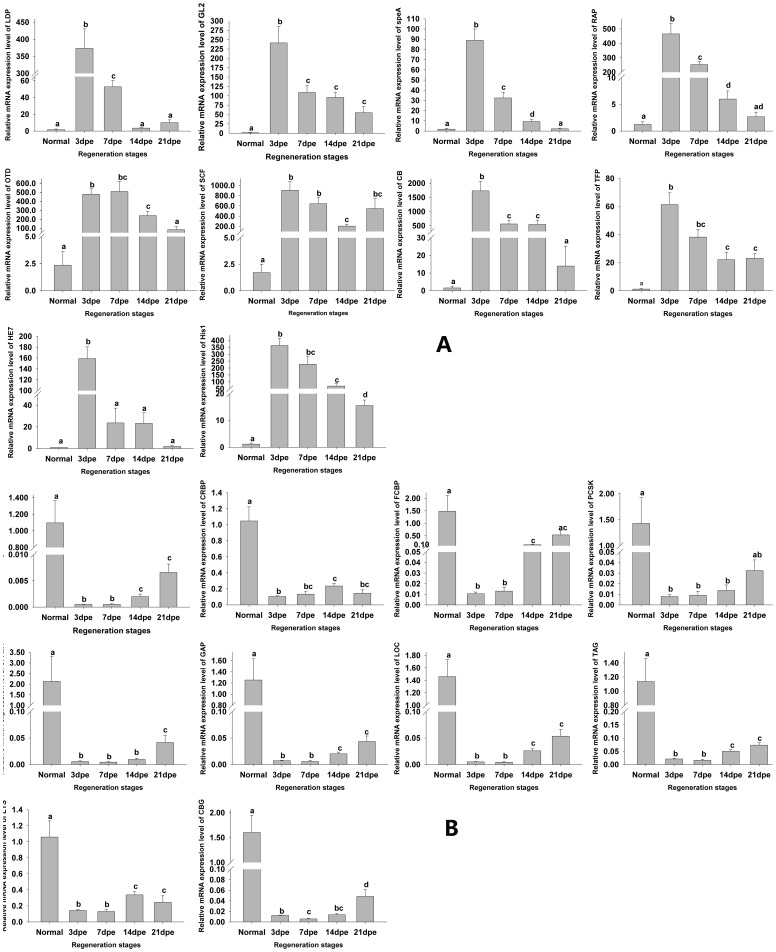
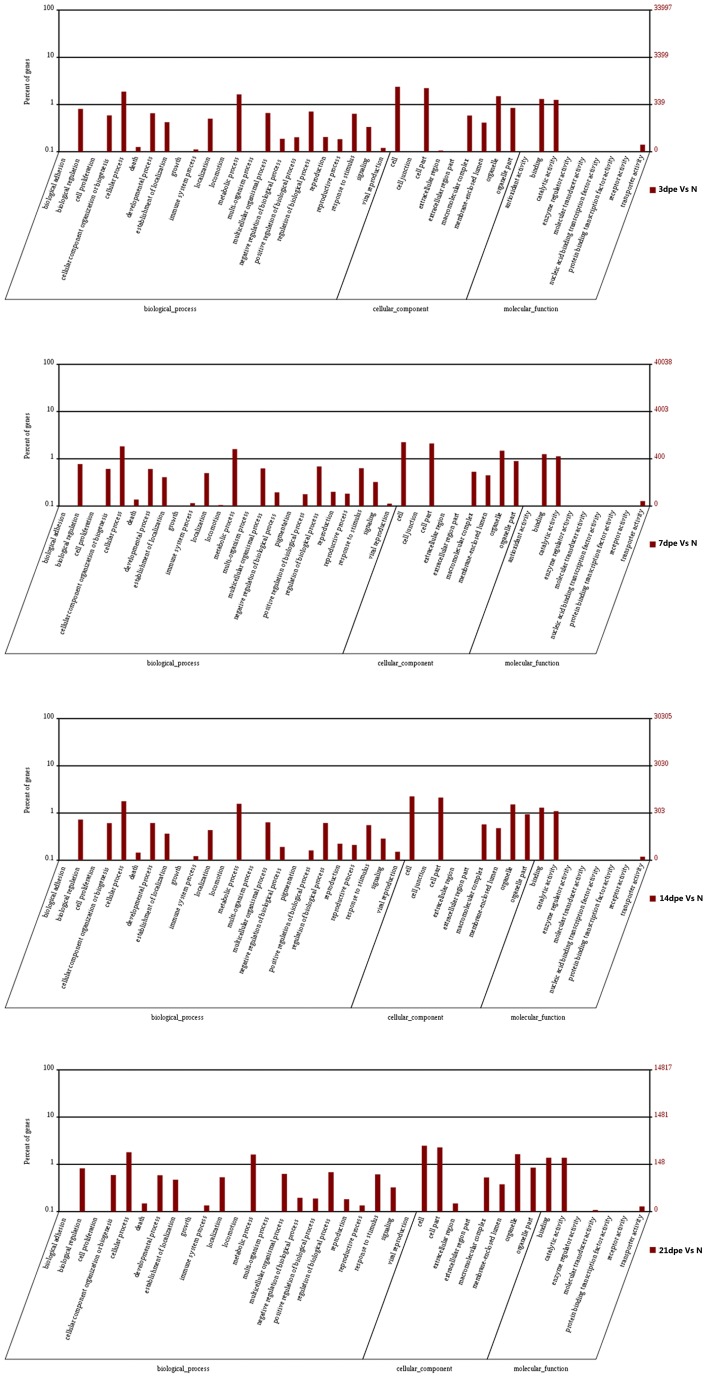
Results: We used RNA-Seq to determine gene expression profiles associated with intestinal regeneration in A. japonicus at 3, 7, 14 and 21 days post evisceration (dpe). This was compared to profiles obtained from a normally-functioning intestine. Approximately 5 million (M) reads were sequenced in every library. Over 2400 up-regulated genes (>10%) and over 1000 down-regulated genes (~5%) were observed at 3 and 7dpe (log2Ratio ≥ 1, FDR ≤ 0.001). Specific "Go terms" revealed that the DEGs (Differentially Expressed Genes) performed an important function at every regeneration stage. Besides some expected pathways (for example, Ribosome and Spliceosome pathway term), the "Notch signaling pathway," the "ECM-receptor interaction" and the "Cytokine-cytokine receptor interaction" were significantly enriched. We also investigated the expression profiles of developmental genes, ECM-associated genes and Cytoskeletal genes. Twenty of the most important differentially expressed genes (DEGs) were verified by Real-time PCR, which resulted in a trend concordance of almost 100% between the two techniques.
Conclusion: Our studies demonstrated dynamic changes in global gene expression during intestine regeneration and presented a series of candidate genes and enriched pathways that contribute to intestine regeneration in sea cucumbers. This provides a foundation for future studies on the genetics/molecular mechanisms associated with intestine regeneration.
Conflict of interest statement
Figures
References
-
- Rychel AL, Swalla BJ (2009) Regeneration in hemichordates and echinoderms. Stem Cells in Marine Organisms: 245–265.
-
- Alvarado AS, Tsonis PA (2006) Bridging the regeneration gap: genetic insights from diverse animal models. Nature Reviews Genetics 7: 873–884. - PubMed
-
- Carnevali MDC (2006) Regeneration in Echinoderms: repair, regrowth, cloning. ISJ 3: 64¨C76.
-
- Jopling C, Boue S, Belmonte JCI (2011) Dedifferentiation, transdifferentiation and reprogramming: three routes to regeneration. Nature Reviews Molecular Cell Biology 12: 79–89. - PubMed
Publication types
MeSH terms
LinkOut - more resources
Full Text Sources
Other Literature Sources
Molecular Biology Databases
Miscellaneous
