


Genistein inhibits prostate cancer cell growth by targeting miR-34a and oncogenic HOTAIR
- PMID: 23936419
- PMCID: PMC3731248
- DOI: 10.1371/journal.pone.0070372
Genistein inhibits prostate cancer cell growth by targeting miR-34a and oncogenic HOTAIR
Abstract
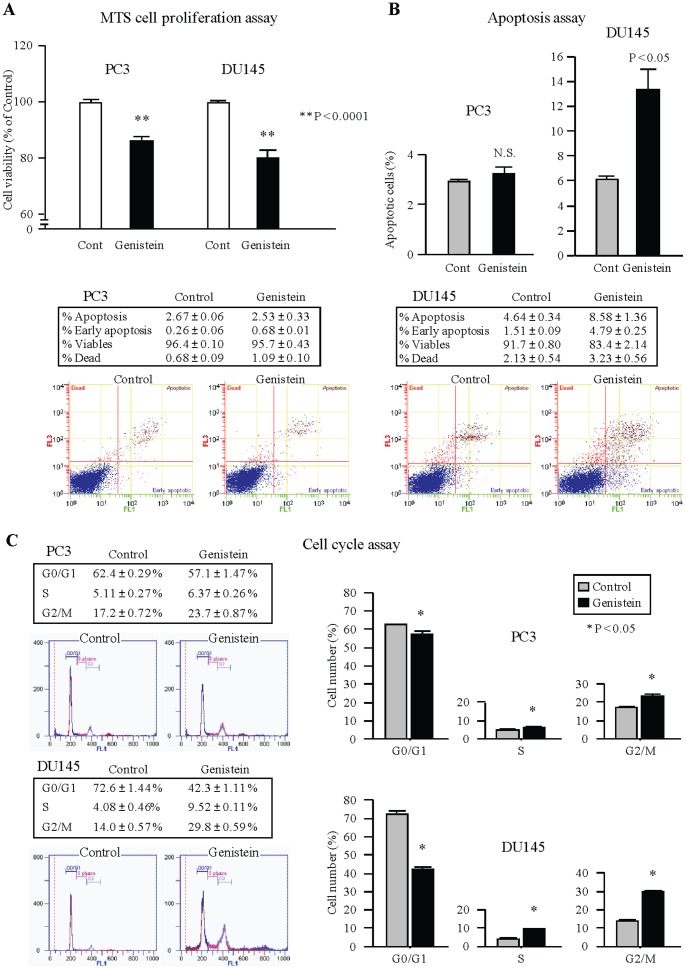
Objective: Genistein is a soy isoflavone that has antitumor activity both in vitro and in vivo. It has been shown that genistein inhibits many type of cancers including prostate cancer (PCa) by regulating several cell signaling pathways and microRNAs (miRNAs). Recent studies suggest that the long non-coding RNAs (lncRNAs) are also involved in many cellular processes. At present there are no reports about the relationship between gensitein, miRNAs and lncRNAs. In this study, we focused on miRNAs, lncRNA that are regulated by genistein and investigated their functional role in PCa.
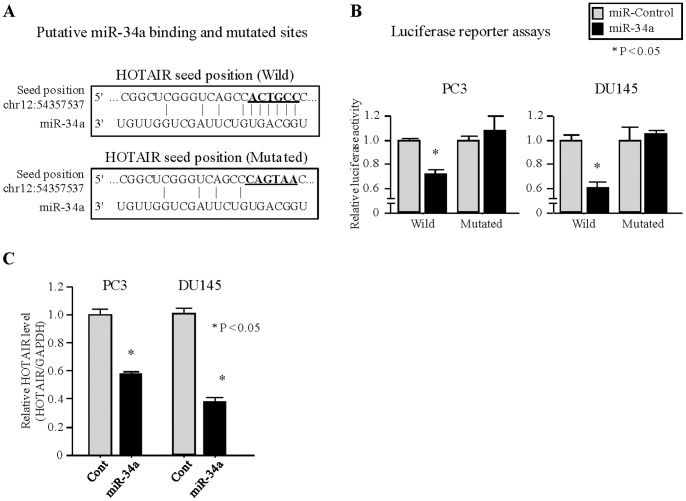
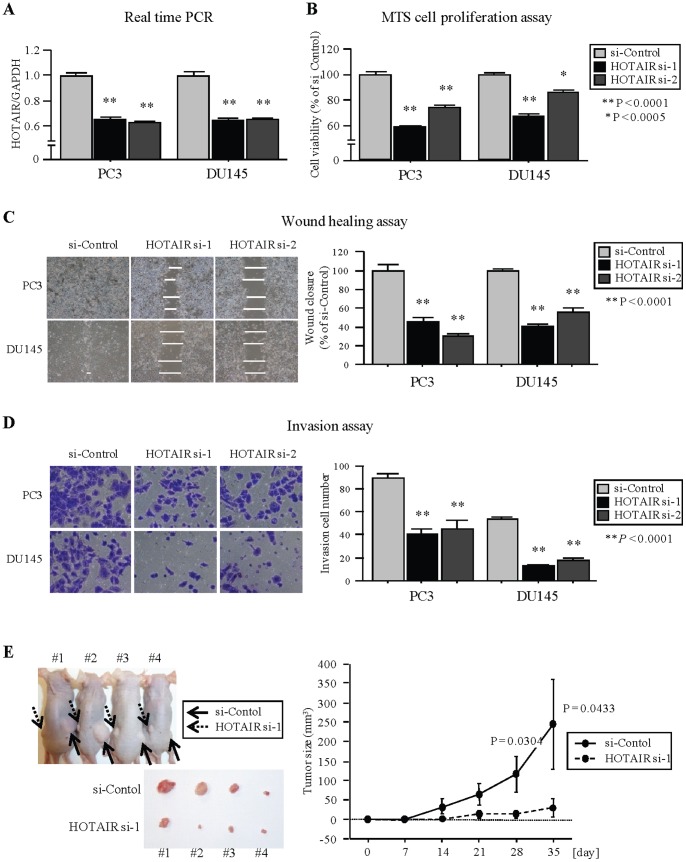
Method: Microarray (SurePrint G3 Human GE 8×60K) was used for expression profiling of genistein treated and control PCa cells (PC3 and DU145). Functional assay (cell proliferation, migration, invasion, apoptosis and cell cycle assays) were performed with the PCa cell lines, PC3 and DU145. Both in vitro and in vivo (nude mouse) models were used for growth assays. Luciferase reporter assays were used for binding of miR-34a to HOTAIR.
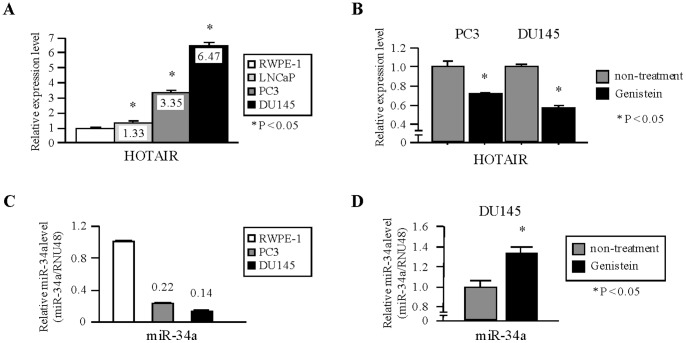
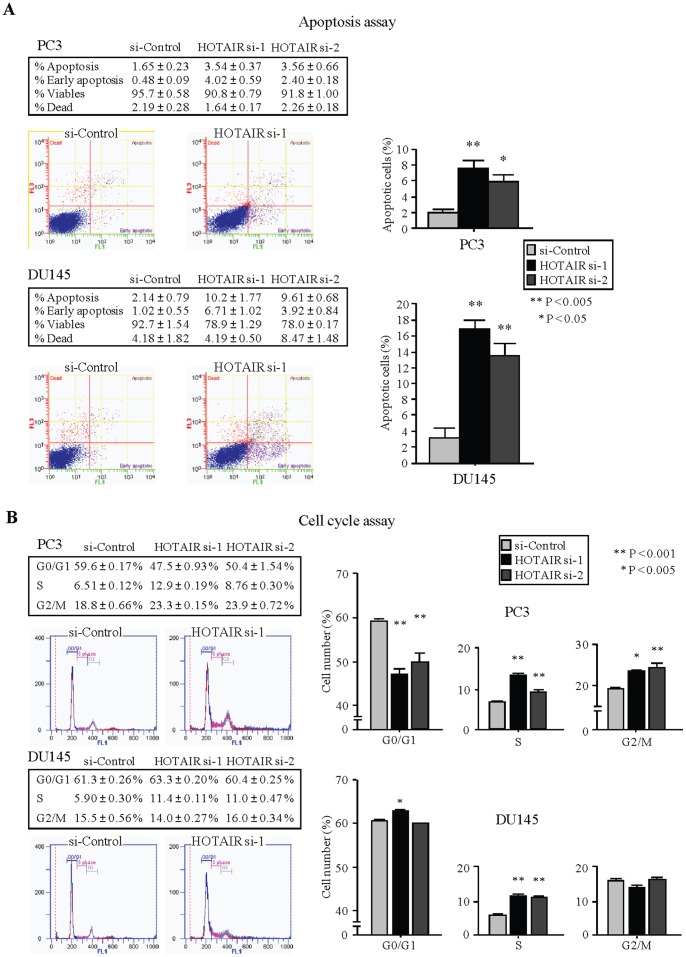
Results: LncRNA profiling showed that HOTAIR was highly regulated by genistein and its expression was higher in castration-resistant PCa cell lines than in normal prostate cells. Knockdown (siRNA) of HOTAIR decreased PCa cell proliferation, migration and invasion and induced apoptosis and cell cycle arrest. miR-34a was also up-regulated by genistein and may directly target HOTAIR in both PC3 and DU145 PCa cells.
Conclusions: Our results indicated that genistein inhibited PCa cell growth through down-regulation of oncogenic HOTAIR that is also targeted by tumor suppressor miR-34a. These findings enhance understanding of how genistein regulates lncRNA HOTAIR and miR-34a in PCa.
Conflict of interest statement
Figures
References
-
- Kuiper GG, Lemmen JG, Carlsson B, Corton JC, Safe SH, et al. (1998) Interaction of estrogenic chemicals and phytoestrogens with estrogen receptor beta. Endocrinology 139: 4252–4263. - PubMed
-
- Akiyama T, Ishida J, Nakagawa S, Ogawara H, Watanabe S, et al. (1987) Genistein, a specific inhibitor of tyrosine-specific protein kinases. J Biol Chem 262: 5592–5595. - PubMed
-
- Hwang YW, Kim SY, Jee SH, Kim YN, Nam CM (2009) Soy food consumption and risk of prostate cancer: a meta-analysis of observational studies. Nutr Cancer 61: 598–606. - PubMed
-
- de Souza PL, Russell PJ, Kearsley JH, Howes LG (2010) Clinical pharmacology of isoflavones and its relevance for potential prevention of prostate cancer. Nutr Rev 68: 542–555. - PubMed
-
- Liss MA, Schlicht M, Kahler A, Fitzgerald R, Thomassi T, et al. (2010) Characterization of soy-based changes in Wnt-frizzled signaling in prostate cancer. Cancer Genomics Proteomics 7: 245–252. - PubMed
Publication types
MeSH terms
Substances
Grants and funding
LinkOut - more resources
Full Text Sources
Other Literature Sources
Medical
Molecular Biology Databases
