


Gene expression profiling of histiocytic sarcomas in a canine model: the predisposed flatcoated retriever dog
- PMID: 23936488
- PMCID: PMC3731289
- DOI: 10.1371/journal.pone.0071094
Gene expression profiling of histiocytic sarcomas in a canine model: the predisposed flatcoated retriever dog
Abstract
Background: The determination of altered expression of genes in specific tumor types and their effect upon cellular processes may create insight in tumorigenesis and help to design better treatments. The Flatcoated retriever is a dog breed with an exceptionally high incidence of histiocytic sarcomas. The breed develops two distinct entities of histiocytic neoplasia, a soft tissue form and a visceral form. Gene expression studies of these tumors have value for comparable human diseases such as histiocytic/dendritic cell sarcoma for which knowledge is difficult to accrue due to their rare occurrence. In addition, such studies may help in the search for genetic aberrations underlying the genetic predisposition in this dog breed.
Methods: Microarray analysis and pathway analyses were performed on fresh-frozen tissues obtained from Flatcoated retrievers with localized, soft tissue histiocytic sarcomas (STHS) and disseminated, visceral histiocytic sarcomas (VHS) and on normal canine spleens from various breeds. Expression differences of nine genes were validated with quantitative real-time PCR (qPCR) analyses.
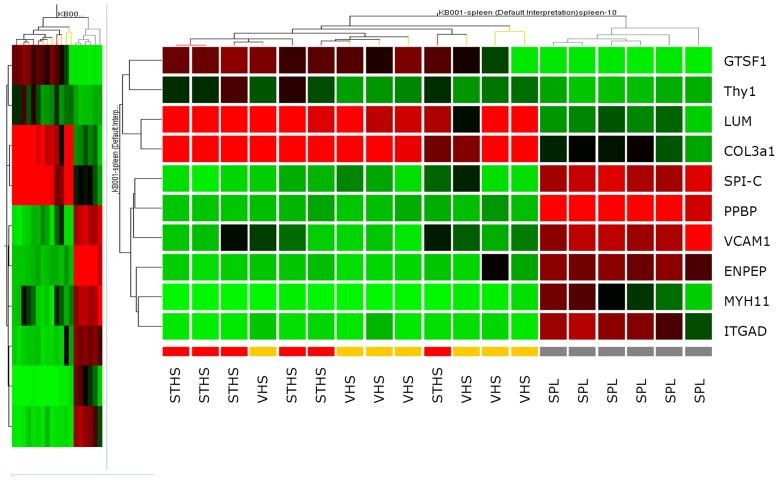
Results: QPCR analyses identified the significantly altered expression of nine genes; PPBP, SpiC, VCAM1, ENPEP, ITGAD (down-regulated), and GTSF1, Col3a1, CD90 and LUM (up-regulated) in the comparison of both the soft tissue and the visceral form with healthy spleen. DAVID pathway analyses revealed 24 pathways that were significantly involved in the development of HS in general, most of which were involved in the DNA repair and replication process.
Conclusions: This study identified altered expression of nine genes not yet implicated in histiocytic sarcoma manifestations in the dog nor in comparable human histiocytic/dendritic sarcomas. Exploration of the downside effect of canine inbreeding strategies for the study of similar sarcomas in humans might also lead to the identification of genes related to these rare malignancies in the human.
Conflict of interest statement
Figures
References
-
- Dobson J, Hoather T, McKinley TJ, Wood JL (2009) Mortality in a cohort of flat-coated retrievers in the UK. Vet Comp Oncol 7: 115–121 10.1111/j.1476–5829.2009.00181.x. - PubMed
-
- Fidel J, Schiller I, Hauser B, Jausi Y, Rohrer-Bley C, et al. (2006) Histiocytic sarcomas in flat-coated retrievers: A summary of 37 cases (november 1998-march 2005). Vet Comp Oncol 4: 63–74 10.1111/j.1476–5810.2006.00090.x. - PubMed
-
- Scott DW, Miller WH Jr, Tasker JB, Schultz RD, Meuten DJ (1979) Lymphoreticular neoplasia in a dog resembling malignant histiocytosis (histiocytic medullary reticulosis) in man. Cornell Vet 69: 176–197. - PubMed
Publication types
MeSH terms
LinkOut - more resources
Full Text Sources
Other Literature Sources
Molecular Biology Databases
Miscellaneous
