Dried-blood spots: a cost-effective field method for the detection of Chikungunya virus circulation in remote areas
- PMID: 23936570
- PMCID: PMC3723542
- DOI: 10.1371/journal.pntd.0002339
Dried-blood spots: a cost-effective field method for the detection of Chikungunya virus circulation in remote areas
Abstract
Background: In 2005, there were outbreaks of febrile polyarthritis due to Chikungunya virus (CHIKV) in the Comoros Islands. CHIKV then spread to other islands in the Indian Ocean: La Réunion, Mauritius, Seychelles and Madagascar. These outbreaks revealed the lack of surveillance and preparedness of Madagascar and other countries. Thus, it was decided in 2007 to establish a syndrome-based surveillance network to monitor dengue-like illness.
Objective: This study aims to evaluate the use of capillary blood samples blotted on filter papers for molecular diagnosis of CHIKV infection. Venous blood samples can be difficult to obtain and the shipment of serum in appropriate temperature conditions is too costly for most developing countries.
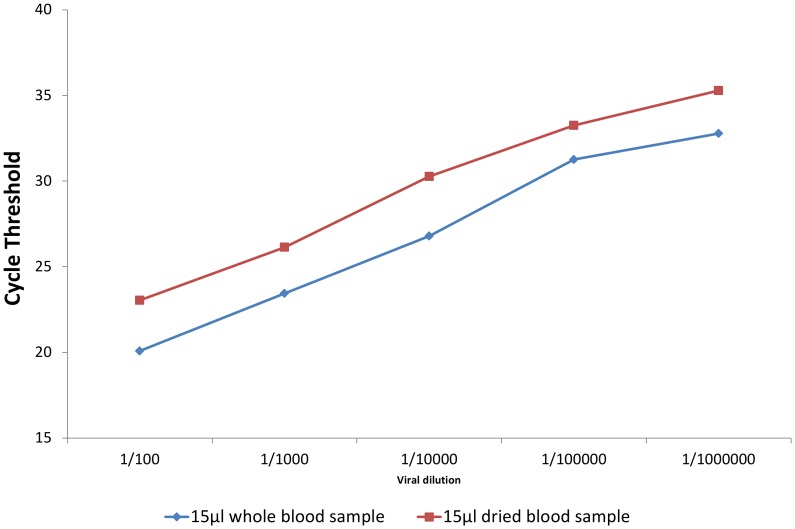
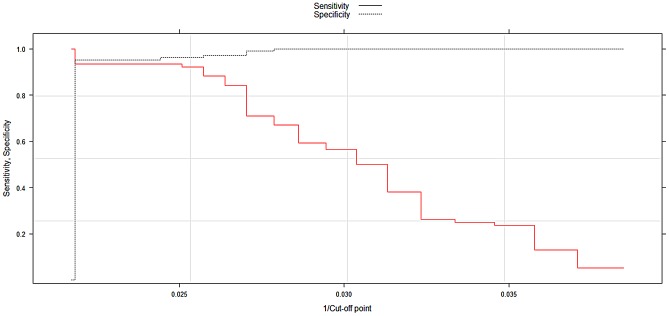
Methodology and principal findings: Venous blood and dried-blood blotted on filter paper (DBFP) were collected during the last CHIKV outbreak in Madagascar (2010) and as part of our routine surveillance of dengue-like illness. All samples were tested by real-time RT-PCR and results with serum and DBFP samples were compared for each patient. The sensitivity and specificity of tests performed with DBFP, relative to those with venous samples (defined as 100%) were 93.1% (95% CI:[84.7-97.7]) and 94.4% (95% CI:[88.3-97.7]), respectively. The Kappa coefficient 0.87 (95% CI:[0.80-0.94]) was excellent.
Conclusion: This study shows that DBFP specimens can be used as a cost-effective alternative sampling method for the surveillance and monitoring of CHIKV circulation and emergence in developing countries, and probably also for other arboviruses. The loss of sensitivity is insignificant and involved a very small number of patients, all with low viral loads. Whether viruses can be isolated from dried blood spots remains to be determined.
Conflict of interest statement
The authors have declared that no competing interests exist.
Figures
References
-
- Pastorino B, Muyembe-Tamfum JJ, Bessaud M, Tock F, Tolou H, et al. (2004) Epidemic resurgence of Chikungunya virus in democratic Republic of the Congo: identification of a new central African strain. J Med Virol 74: 277–282. - PubMed
-
- Peyrefitte CN, Bessaud M, Pastorino BA, Gravier P, Plumet S, et al. (2008) Circulation of Chikungunya virus in Gabon, 2006–2007. J Med Virol 80: 430–433. - PubMed
-
- WHO (2007) Outbreak and spread of chikungunya. Wkly Epidemiol Rec 82: 409–415. - PubMed
-
- Ravi V (2006) Re-emergence of chikungunya virus in India. Indian J Med Microbiol 24: 83–84. - PubMed
Publication types
MeSH terms
LinkOut - more resources
Full Text Sources
Other Literature Sources
Medical