Mothers' parenting and child sex differences in behavior problems among African American preschoolers
- PMID: 23937420
- PMCID: PMC3981992
- DOI: 10.1037/a0033792
Mothers' parenting and child sex differences in behavior problems among African American preschoolers
Abstract
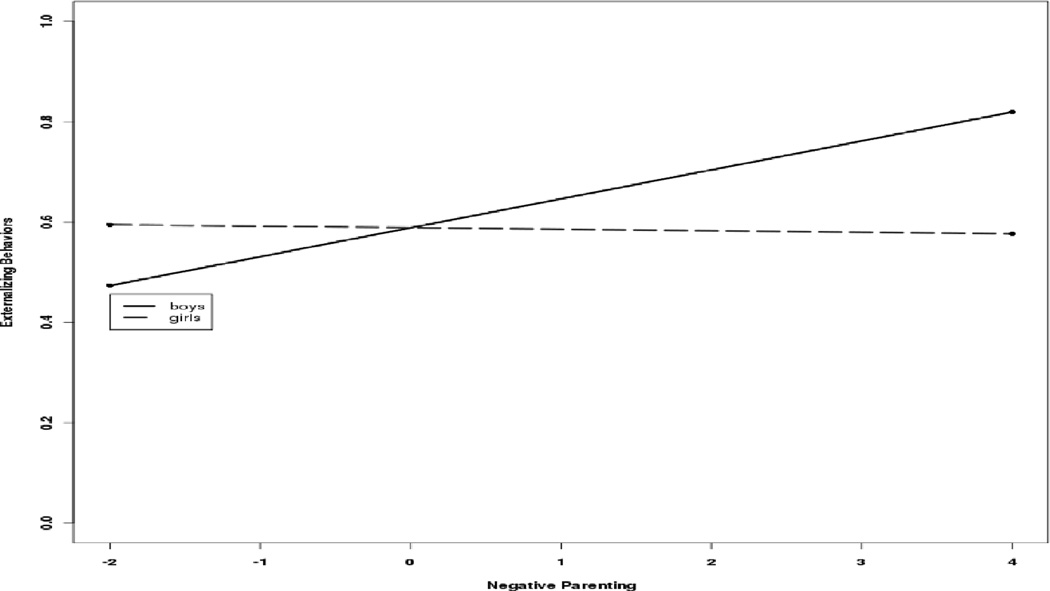
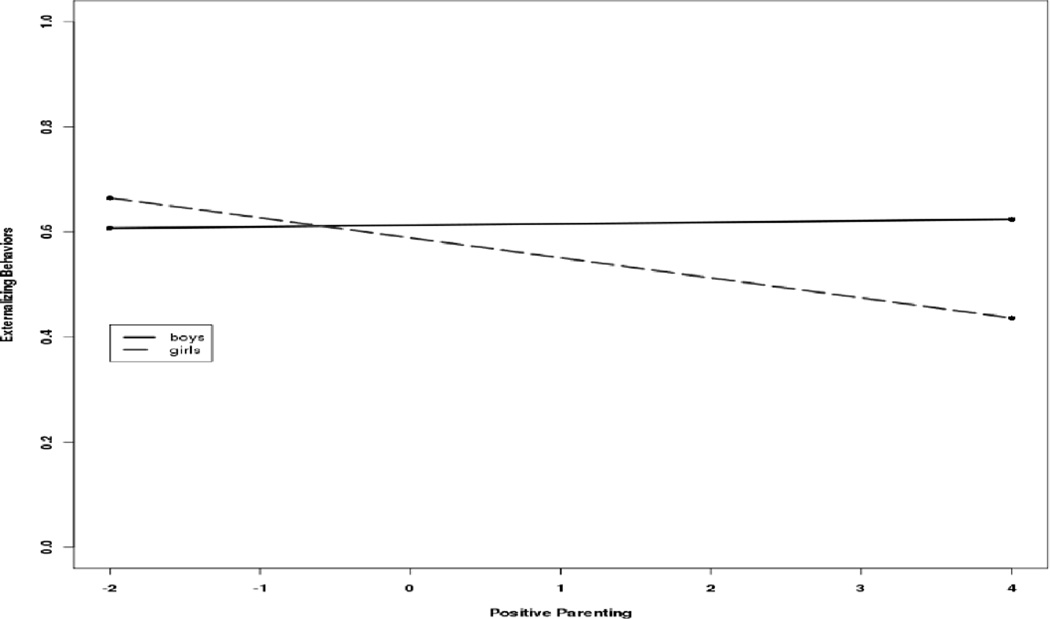
Sex differences in rates of behavior problems, including internalizing and externalizing problems, begin to emerge during early childhood. These sex differences may occur because mothers parent their sons and daughters differently, or because the impact of parenting on behavior problems is different for boys and girls. In this study, we examined whether associations between observations of mothers' positive and negative parenting and children's externalizing and internalizing behaviors vary as a function of child sex. The sample consisted of 137 African American low-income families with one sibling approximately 2 years old and the closest-aged older sibling who was approximately 4 years old. Results from fixed-effects within-family models indicate clear sex differences regardless of child age. Mothers were observed to use less positive parenting with sons than with daughters. Higher levels of observed negative parenting were linked to more externalizing behaviors for boys, whereas lower levels of positive parenting were linked to more externalizing behaviors for girls. No child sex differences emerged regarding associations between observed positive and negative parenting and internalizing behaviors.
Figures
References
-
- Achenbach T. Child behavior checklist. VT: University of Vermont; 1994.
-
- Angold A, Egger HL. Preschool psychopathology: Lessons for the lifespan. Journal of Child Psychology and Psychiatry. 2007;48:961–966. - PubMed
-
- Bryk AS, Raudenbush SW. Hierarchical linear models for social and behavioral research: Applications and data analysis methods. Newbury Park, CA: Sage; 1992.
Publication types
MeSH terms
Grants and funding
LinkOut - more resources
Full Text Sources
Other Literature Sources
Medical