


Cultural humility: essential foundation for clinical researchers
- PMID: 23938129
- PMCID: PMC3834043
- DOI: 10.1016/j.apnr.2013.06.008
Cultural humility: essential foundation for clinical researchers
Abstract
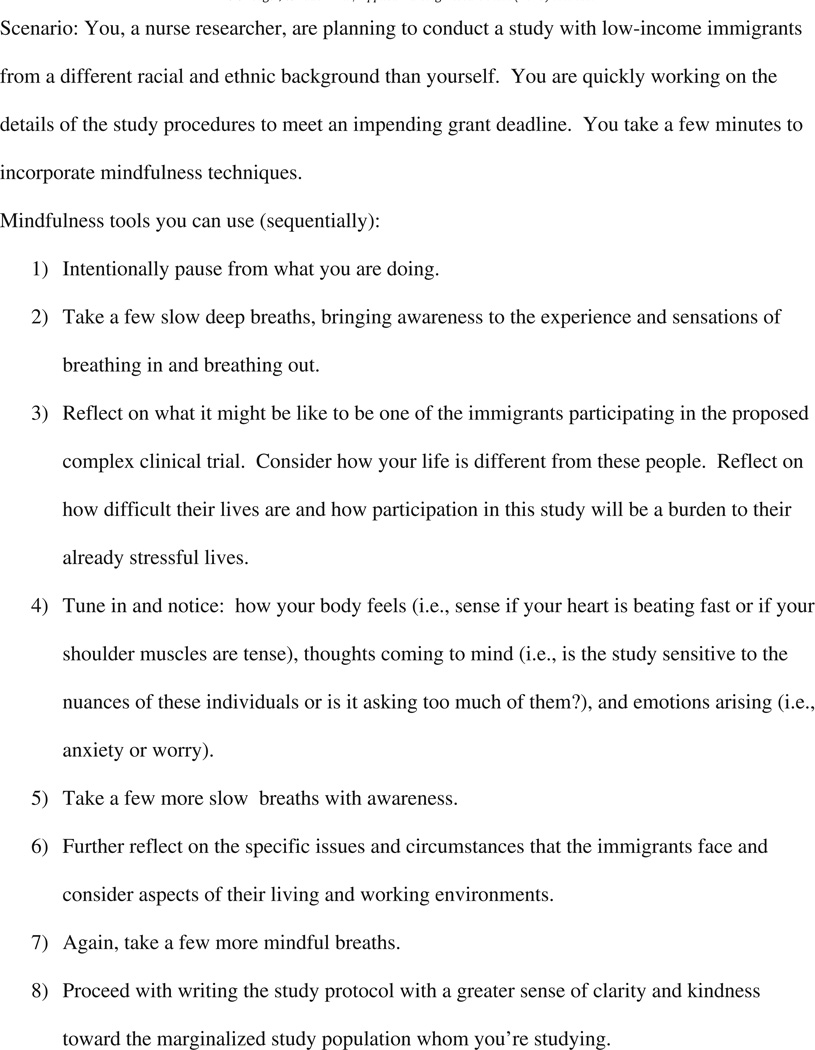
Cultural humility is a process of self-reflection and discovery in order to build honest and trustworthy relationships. It offers promise for researchers to understand and eliminate health disparities, a continual and disturbing problem necessitating attention and action on many levels. This paper presents a discussion of the process of cultural humility and its important role in research to better understand the perspectives and context of the researcher and the research participant. We discern cultural humility from similar concepts, specifically cultural competence and reflexivity. We will also explore ways to cultivate cultural humility in the context of human subjects research. Mindfulness is one approach that can be helpful in enhancing awareness of self and others in this process. With a foundation in cultural humility, nurse researchers and other investigators can implement meaningful and ethical projects to better address health disparities.
Keywords: Culture; Nursing; Research.
© 2013.
Conflict of interest statement
Conflict of interest statement: No conflict of interest has been declared by the authors.
Figures
References
-
- Baker SM, Brawley OW, Marks LS. Effects of untreated syphilis in the negro male, 1932 to 1972: A closure comes to the Tuskegee study, 2004. Urology. 2005;65(6):1259–1262. http://dx.doi.org/10.1016/j.urology.2004.10.023. - DOI - PubMed
-
- Bauer-Wu S. Leaves falling gently: Living fully with serious & life-limiting illness through mindfulness, compassion, and connectedness. Oakland, CA: New Harbinger; 2011.
-
- Brown KW, Ryan RM, Creswell JD. Mindfulness: Theoretical foundations and evidence for its salutary effects. Psychological Inquiry. 2007;18:211–237. http://dx.doi.org/10.1080/10478400701598298. - DOI
-
- Corbie-Smith G, Ford CL. Distrust and poor self-reported health - Canaries in the coal mine? Journal of General Internal Medicine. 2006;21(4):395–397. http://dx.doi.org/10.1007/s11606-006-0138-4. - DOI - PMC - PubMed
-
- Cozzarelli C, Wilkinson AV, Tagler MJ. Attitudes toward the poor and attributions for poverty. Journal of Social Issues. 2001;57(2):207–227. http://dx.doi.org/10.1111/0022-4537.00209. - DOI
Publication types
MeSH terms
Grants and funding
LinkOut - more resources
Full Text Sources
Other Literature Sources
