Climate and leishmaniasis in French Guiana
- PMID: 23939706
- PMCID: PMC3771301
- DOI: 10.4269/ajtmh.12-0771
Climate and leishmaniasis in French Guiana
Abstract
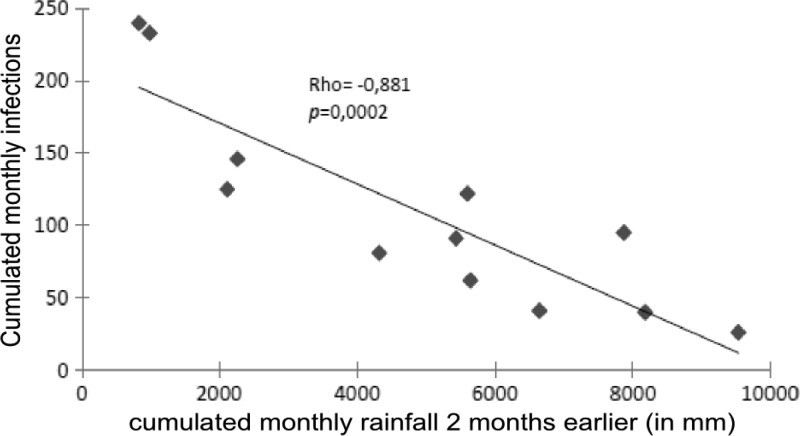
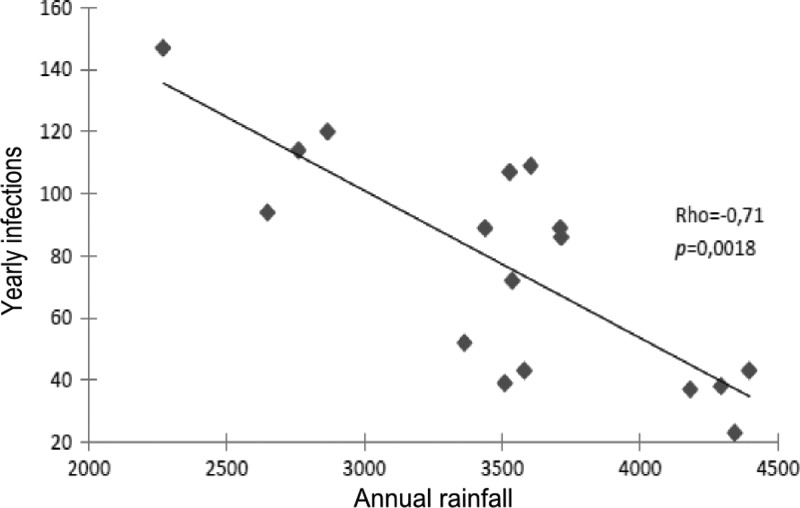
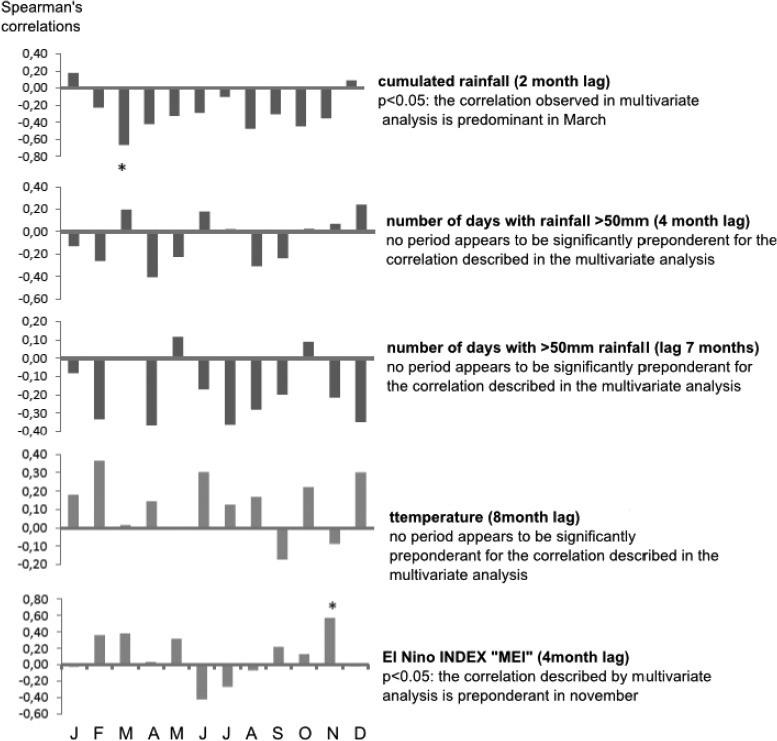
To study the link between climatic variables and the incidence of leishmaniasis a study was conducted in Cayenne, French Guiana. Patients infected between January 1994 and December 2010. Meteorological data were studied in relation to the incidence of leishmaniasis using an ARIMA model. In the final model, the infections were negatively correlated with rainfall (with a 2-month lag) and with the number of days with rainfall > 50 mm (lags of 4 and 7 months). The variables that were positively correlated were temperature and the Multivariate El Niño Southern Oscillation Index with lags of 8 and 4 months, respectively. Significantly greater correlations were observed in March for rainfall and in November for the Multivariate El Niño/Southern Oscillation Index. Climate thus seems to be a non-negligible explanatory variable for the fluctuations of leishmaniasis. A decrease in rainfall is linked to increased cases 2 months later. This easily perceptible point could lead to an interesting prevention message.
Figures
References
-
- Kiladis G, Diaz HF. Global climatic anomalies associated with extremes in the Southern Oscillation. J Clim. 1989;2:1069–1090.
-
- Ropelewski C, Halpert MS. Global and regional scale precipitation patterns associated with the El Niño/Southern Oscillation. Mon Weather Rev. 1987;15:1606–1626.
-
- Gratz N. Emerging and resurging vector-borne diseases. Annu Rev Entomol. 1999;44:51–75. - PubMed
-
- Lainson R, Shaw JJ. Epidemiology and ecology of leishmaniasis in Latin America. Nature. 1978;273:595–600. - PubMed
MeSH terms
Substances
LinkOut - more resources
Full Text Sources
Other Literature Sources
Medical