


Neandertals made the first specialized bone tools in Europe
- PMID: 23940333
- PMCID: PMC3761603
- DOI: 10.1073/pnas.1302730110
Neandertals made the first specialized bone tools in Europe
Abstract
Modern humans replaced Neandertals ∼40,000 y ago. Close to the time of replacement, Neandertals show behaviors similar to those of the modern humans arriving into Europe, including the use of specialized bone tools, body ornaments, and small blades. It is highly debated whether these modern behaviors developed before or as a result of contact with modern humans. Here we report the identification of a type of specialized bone tool, lissoir, previously only associated with modern humans. The microwear preserved on one of these lissoir is consistent with the use of lissoir in modern times to obtain supple, lustrous, and more impermeable hides. These tools are from a Neandertal context proceeding the replacement period and are the oldest specialized bone tools in Europe. As such, they are either a demonstration of independent invention by Neandertals or an indication that modern humans started influencing European Neandertals much earlier than previously believed. Because these finds clearly predate the oldest known age for the use of similar objects in Europe by anatomically modern humans, they could also be evidence for cultural diffusion from Neandertals to modern humans.
Keywords: Middle Paleolithic; Paleolithic archaeology; human evolution.
Conflict of interest statement
The authors declare no conflict of interest.
Figures
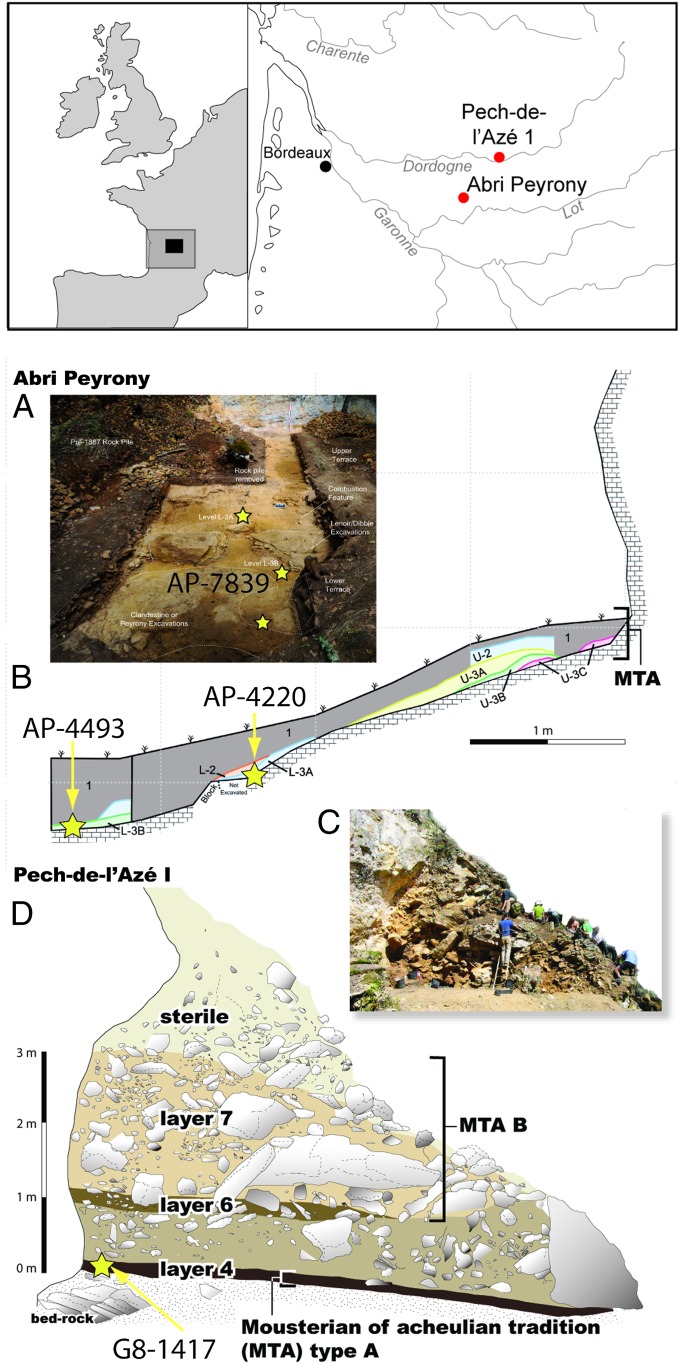
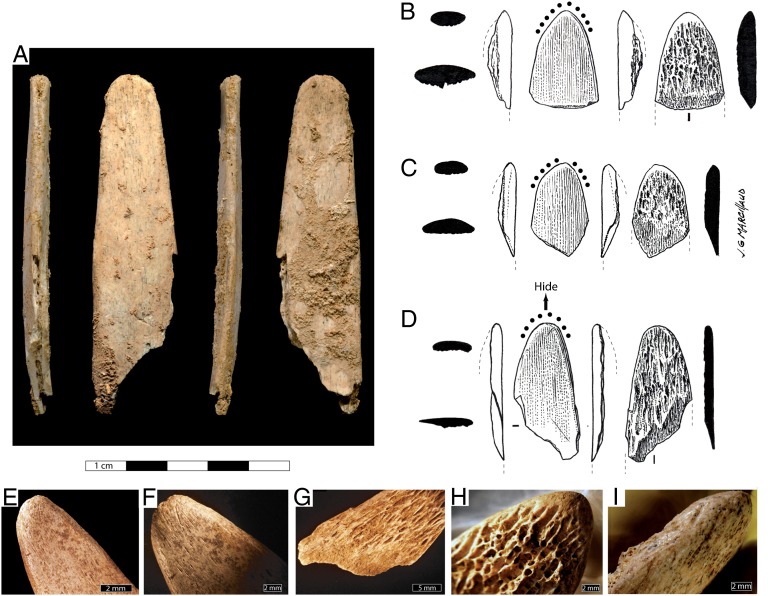
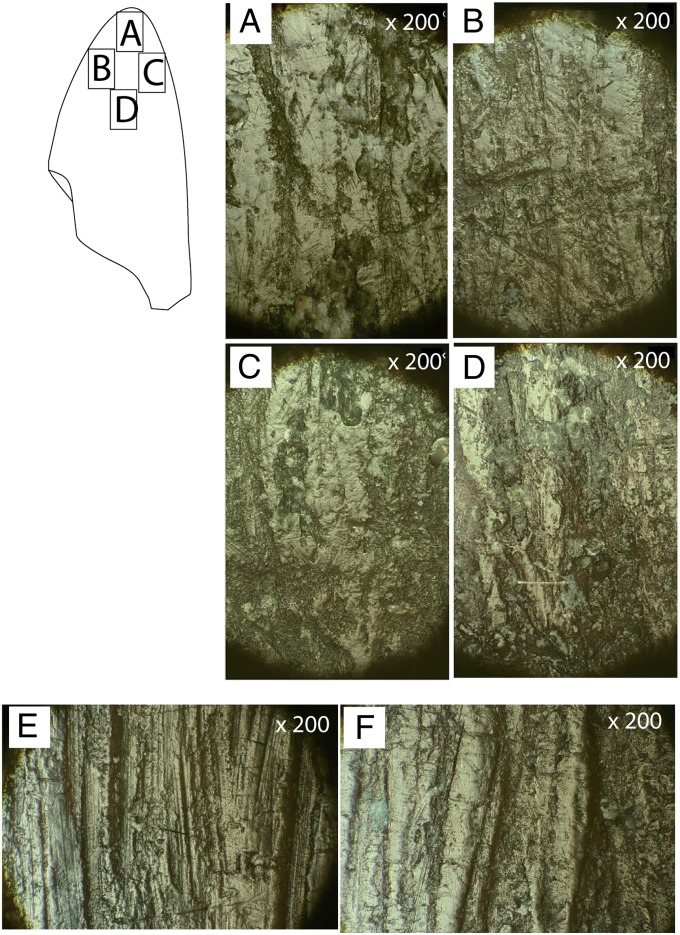
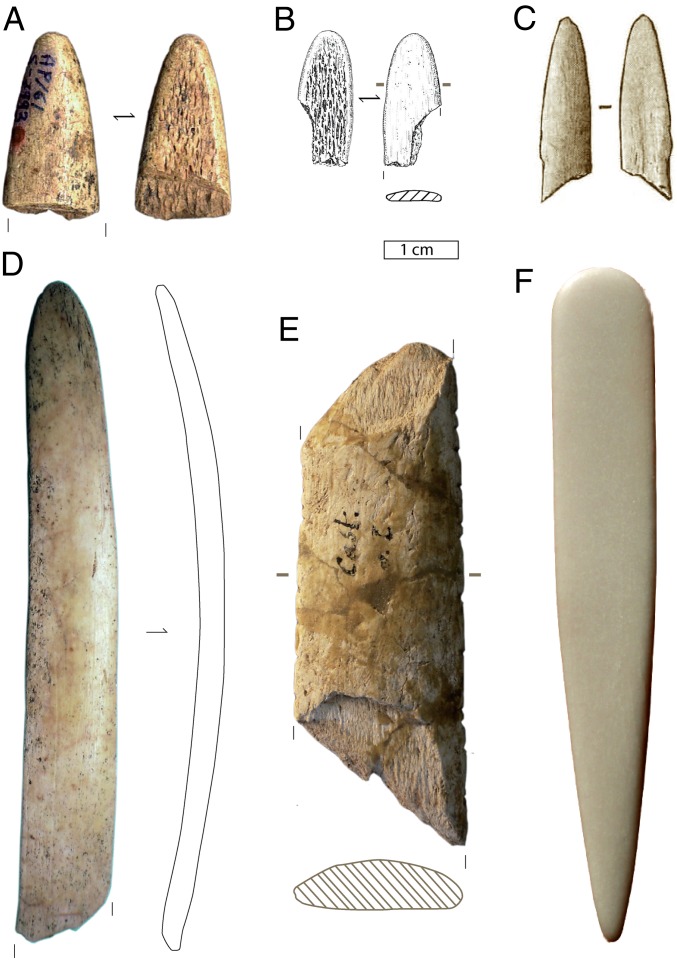
References
-
- Yellen JE, Brooks AS, Cornelissen E, Mehlman MJ, Stewart K. A middle stone age worked bone industry from Katanda, Upper Semliki Valley, Zaire. Science. 1995;268(5210):553–556. - PubMed
-
- Henshilwood CS, d’Errico F, Marean CW, Milo RG, Yates RJ. An early bone tool industry from the Middle Stone Age at Blombos Cave, South Africa: Implications for the origins of modern human behaviour, symbolism and language. J Hum Evol. 2001;41(6):631–678. - PubMed
-
- Feathers JK, Migliorini E. Luminescence dating at Katanda—A reassessment. Quat Sci Rev. 2001;20:961–966.
-
- Jacobs Z, Duller GAT, Wintle AG, Henshilwood CS. Extending the chronology of deposits at Blombos Cave, South Africa, back to 140 ka using optical dating of single and multiple grains of quartz. J Hum Evol. 2006;51(3):255–273. - PubMed
-
- D’ Errico F, Backwell LR, Wadley L. Identifying regional variability in Middle Stone Age bone technology: The case of Sibudu Cave. J Archaeol Sci. 2012;39(7):2479–2495.
Publication types
MeSH terms
LinkOut - more resources
Full Text Sources
Other Literature Sources
Research Materials
