


Efficient genome engineering in human pluripotent stem cells using Cas9 from Neisseria meningitidis
- PMID: 23940360
- PMCID: PMC3785731
- DOI: 10.1073/pnas.1313587110
Efficient genome engineering in human pluripotent stem cells using Cas9 from Neisseria meningitidis
Abstract
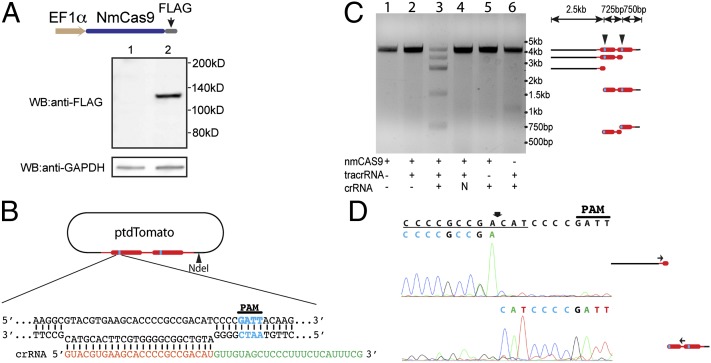
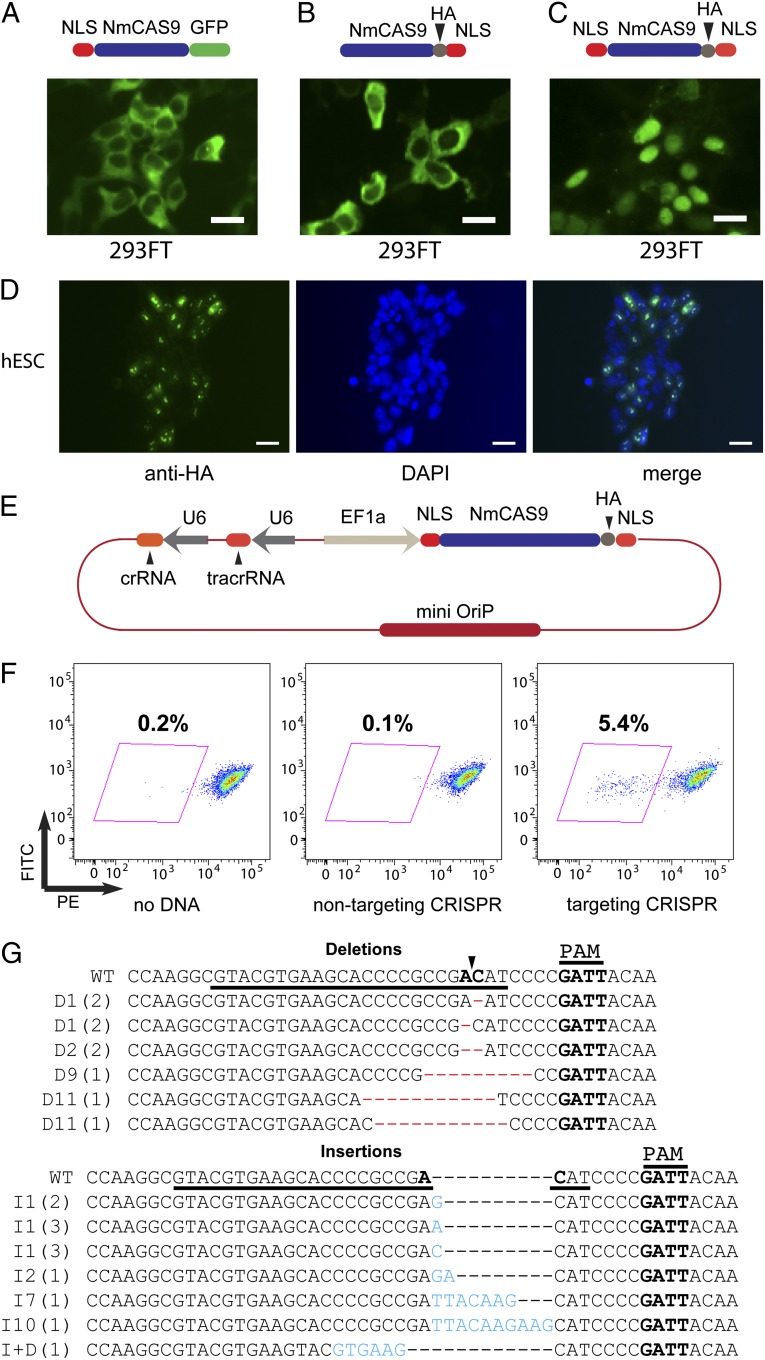
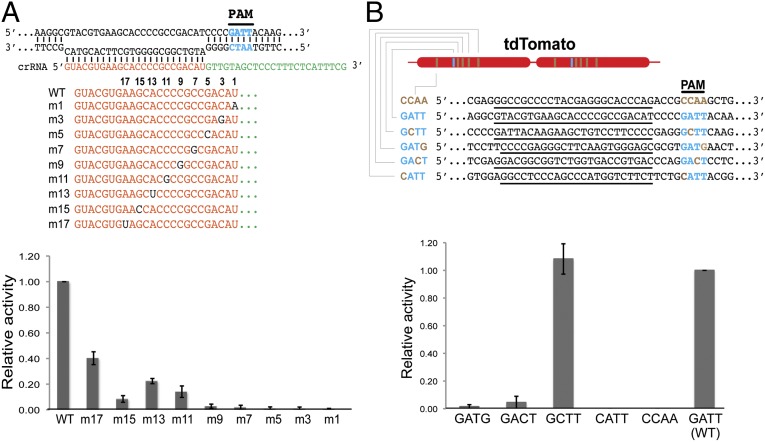
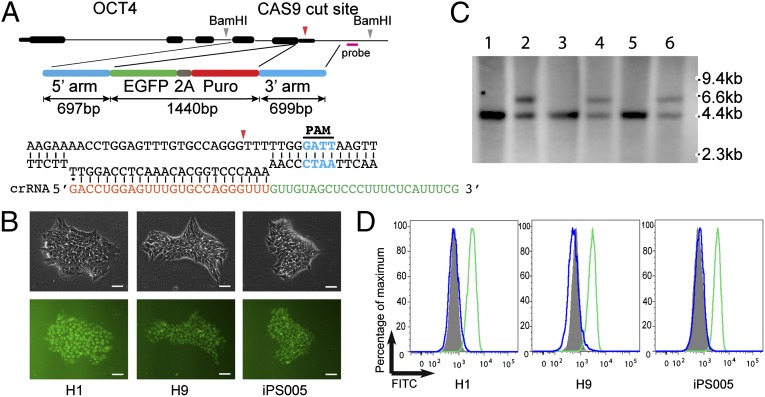
Genome engineering in human pluripotent stem cells (hPSCs) holds great promise for biomedical research and regenerative medicine. Recently, an RNA-guided, DNA-cleaving interference pathway from bacteria [the type II clustered, regularly interspaced, short palindromic repeats (CRISPR)-CRISPR-associated (Cas) pathway] has been adapted for use in eukaryotic cells, greatly facilitating genome editing. Only two CRISPR-Cas systems (from Streptococcus pyogenes and Streptococcus thermophilus), each with their own distinct targeting requirements and limitations, have been developed for genome editing thus far. Furthermore, limited information exists about homology-directed repair (HDR)-mediated gene targeting using long donor DNA templates in hPSCs with these systems. Here, using a distinct CRISPR-Cas system from Neisseria meningitidis, we demonstrate efficient targeting of an endogenous gene in three hPSC lines using HDR. The Cas9 RNA-guided endonuclease from N. meningitidis (NmCas9) recognizes a 5'-NNNNGATT-3' protospacer adjacent motif (PAM) different from those recognized by Cas9 proteins from S. pyogenes and S. thermophilus (SpCas9 and StCas9, respectively). Similar to SpCas9, NmCas9 is able to use a single-guide RNA (sgRNA) to direct its activity. Because of its distinct protospacer adjacent motif, the N. meningitidis CRISPR-Cas machinery increases the sequence contexts amenable to RNA-directed genome editing.
Keywords: crRNA; embryonic stem cells; induced pluripotent stem cells; tracrRNA.
Conflict of interest statement
Conflict of interest statement: Northwestern University (Y.Z. and E.J.S.) and Wisconsin Alumni Research Foundation (Z.H. and J.A.T.) have filed a related patent: DNA cleavage and genome editing using Cas9 from
Figures
Comment in
-
A variant CRISPR-Cas9 system adds versatility to genome engineering.Proc Natl Acad Sci U S A. 2013 Sep 24;110(39):15514-5. doi: 10.1073/pnas.1314697110. Epub 2013 Sep 6. Proc Natl Acad Sci U S A. 2013. PMID: 24014593 Free PMC article. No abstract available.
References
-
- Thomson JA, et al. Embryonic stem cell lines derived from human blastocysts. Science. 1998;282(5391):1145–1147. - PubMed
-
- Zwaka TP, Thomson JA. Homologous recombination in human embryonic stem cells. Nat Biotechnol. 2003;21(3):319–321. - PubMed
-
- Urnov FD, Rebar EJ, Holmes MC, Zhang HS, Gregory PD. Genome editing with engineered zinc finger nucleases. Nat Rev Genet. 2010;11(9):636–646. - PubMed
Publication types
MeSH terms
Substances
Grants and funding
LinkOut - more resources
Full Text Sources
Other Literature Sources
Research Materials
Miscellaneous
