. 2013 Aug 5;8(8):e69965.
doi: 10.1371/journal.pone.0069965. Print 2013.

Autonomic substrates of the response to pups in male prairie voles

Affiliations

Autonomic substrates of the response to pups in male prairie voles

William M Kenkel et al. PLoS One. .

Abstract

Caregiving by nonparents (alloparenting) and fathers is a defining aspect of human social behavior, yet this phenomenon is rare among mammals. Male prairie voles (Microtus ochrogaster) spontaneously exhibit high levels of alloparental care, even in the absence of reproductive experience. In previous studies, exposure to a pup was selectively associated with increased activity in oxytocin and vasopressin neurons along with decreased plasma corticosterone. In the present study, physiological, pharmacological and neuroanatomical methods were used to explore the autonomic and behavioral consequences of exposing male prairie voles to a pup. Reproductively naïve, adult male prairie voles were implanted with radiotransmitters used for recording ECG, temperature and activity. Males responded with a sustained increase in heart-rate during pup exposure. This prolonged increase in heart rate was not explained by novelty, locomotion or thermoregulation. Although heart rate was elevated during pup exposure, respiratory sinus arrhythmia (RSA) did not differ between these males and males exposed to control stimuli indicating that vagal inhibition of the heart was maintained. Blockade of beta-adrenergic receptors with atenolol abolished the pup-induced heart rate increase, implicating sympathetic activity in the pup-induced increase in heart rate. Blockade of vagal input to the heart delayed the males' approach to the pup. Increased activity in brainstem autonomic regulatory nuclei was also observed in males exposed to pups. Together, these findings suggest that exposure to a pup activates both vagal and sympathetic systems. This unique physiological state (i.e. increased sympathetic excitation of the heart, while maintaining some vagal cardiac tone) associated with male caregiving behavior may allow males to both nurture and protect infants.


Conflict of interest statement

Competing Interests: The authors have declared that no competing interests exist.

Figures

Figure 1
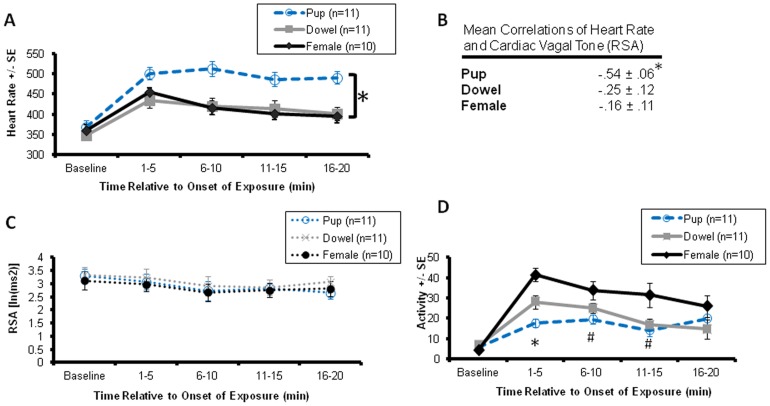
Figure 1. Respiratory sinus arrhythmia (RSA) is maintained and heart rate increased during alloparental behavior which is not explained by locomotor activity.
(A) Heart rate during exposure to social (pup, female) and non-social (dowel) stimuli yielded main effects of stimulus and time, with the pup condition generally highest. (B) The correlation between heart rate and RSA during exposure was highest in the pup condition. (C) There were no effects on RSA other than a main effect of time. (D) Locomotor activity yielded main effects of stimulus and time as well as an interaction between stimulus and time. * indicates the effect of stimulus, such that both the dowel and female stimuli were significantly different than the pup condition (p<0.05), # difference significant only between the female and pup groups (p<0.05).
Figure 2
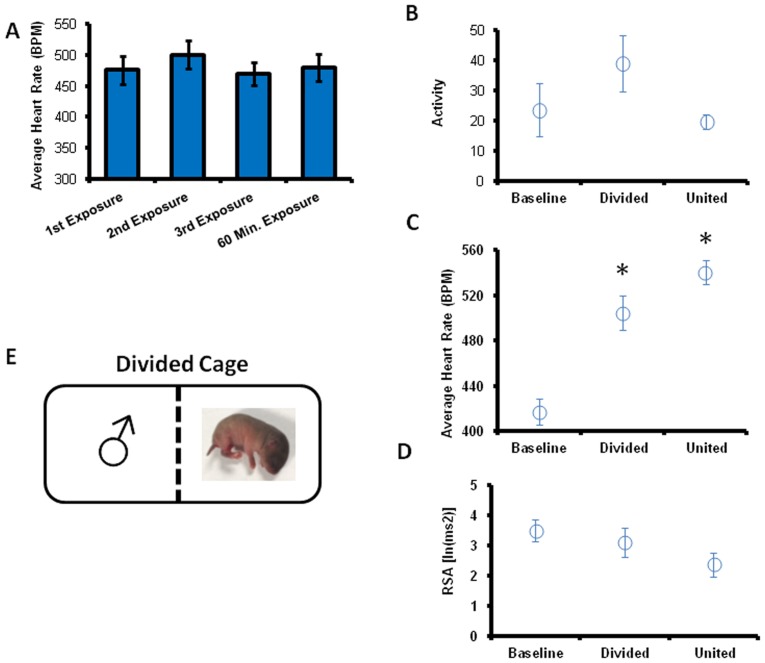
Figure 2. The cardiovascular response to a pup does not readily habituate.
(A) Heart rate during interaction with a pup did not differ during repeated pup exposures (1st three bars) or during prolonged pup exposure (4th bar) (p>0.05). Time was collapsed across the 10 minutes of each condition (baseline, divided cage, united with pup) to yield a main effect of condition on heart rate (B), no effect on activity (C) and a trend towards an effect on RSA (D) (p>0.05). * indicates p<0.05 in comparison to both other conditions.
Figure 3
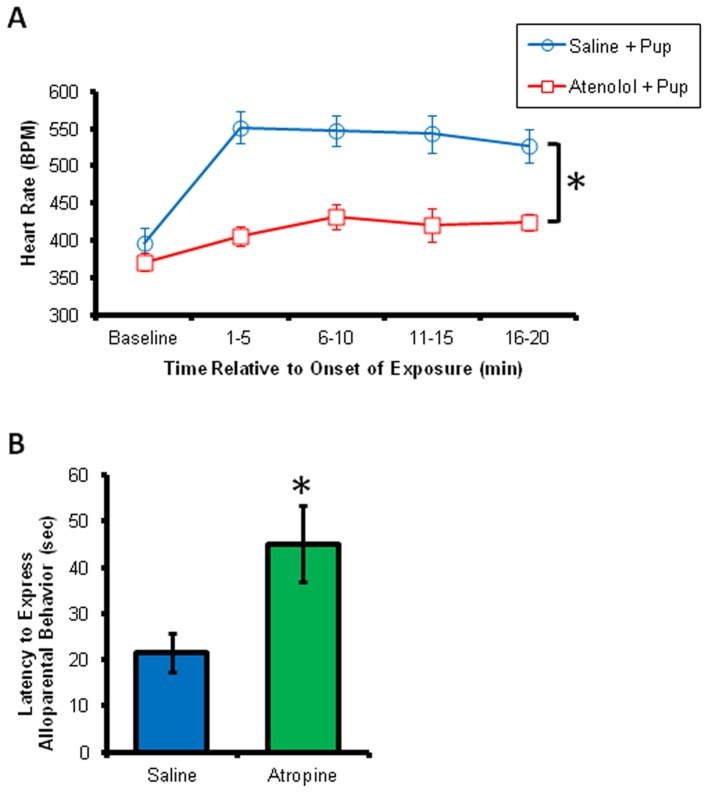
Figure 3. Pharmacological manipulations illustrate the contributions of the sympathetic and parasympathetic branches of the autonomic nervous system.
(A) Atenolol (8 mg/kg, i.p.) blocked the pup-induced heart rate increase, with main effects of time and treatment. * indicates the effect of treatment, such that the saline treatment produced a higher heart rate than the atenolol treatment. (B) Atropine (4 mg/kg, i.p.) delayed initial approach to the pup. * indicates p<0.05.
Figure 4
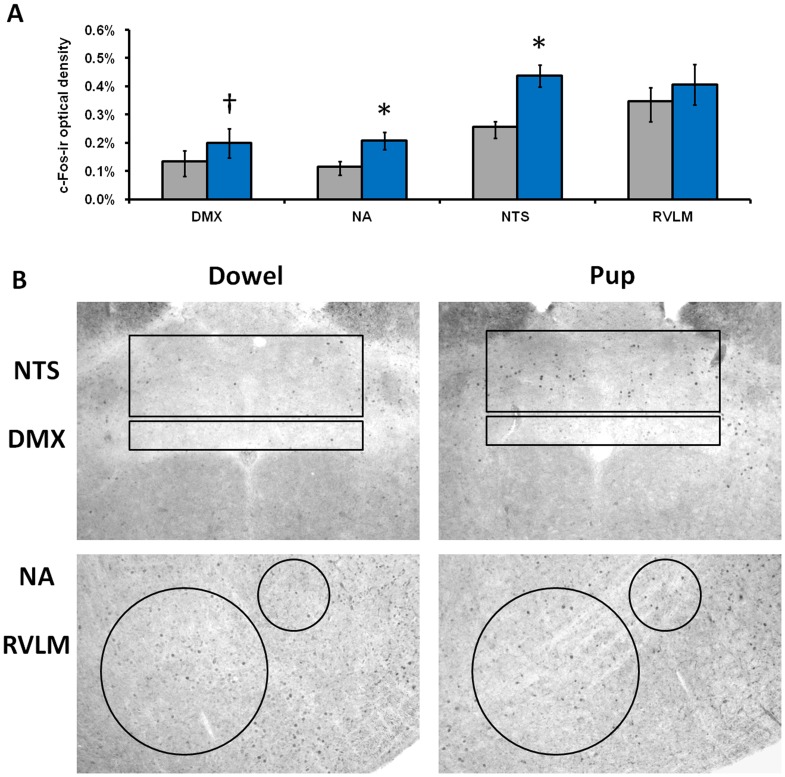
Figure 4. c-Fos activity is higher in brainstem autonomic nuclei related to parasympathetic function (A).
Mean c-Fos optical density (+/− SEM) in the dorsal motor nucleus of the vagus (DMX), nucleus ambiguus (NA), nucleus tractus solitarius (NTS), and rostral ventrolateral medulla (RVLM) following exposure to either a dowel (gray) or pup (blue). † indicates p<0.1 * indicates p<0.05. Representative photomicrographs at 4× magnification (B).

References

    1. Quinlan RJ, Quinlan MB (2008) Human Lactation, Pair-bonds, and Alloparents. Human Nature 19: 87–102. - PubMed
    1. DeSilva JM (2011) A shift toward birthing relatively large infants early in human evolution. Proc Natl Acad Sci U S A 108: 1022–1027. - PMC - PubMed
    1. Hrdy SB (2009) Mothers and Others: The Evolutionary Origins of Mutual Understanding. Cambridge, MA: Belknap Press of Harvard University Press.
    1. Kennedy GE (2005) From the ape’s dilemma to the weanling’s dilemma: early weaning and its evolutionary context. J Hum Evol 48: 123–145. - PubMed
    1. Broad KD, Curley JP, Keverne EB (2006) Mother-infant bonding and the evolution of mammalian social relationships. Philos Trans R Soc Lond B Biol Sci 361: 2199–2214. - PMC - PubMed

Publication types

MeSH terms