


Effects of wheat and oat-based whole grain foods on serum lipoprotein size and distribution in overweight middle aged people: a randomised controlled trial
- PMID: 23940575
- PMCID: PMC3734251
- DOI: 10.1371/journal.pone.0070436
Effects of wheat and oat-based whole grain foods on serum lipoprotein size and distribution in overweight middle aged people: a randomised controlled trial
Abstract
Introduction: Epidemiological studies suggest three daily servings of whole-grain foods (WGF) might lower cardiovascular disease risk, at least partly by lowering serum lipid levels. We have assessed the effects of consuming three daily portions of wholegrain food (provided as wheat or a mixture of wheat and oats) on lipoprotein subclass size and concentration in a dietary randomised controlled trial involving middle aged healthy individuals.
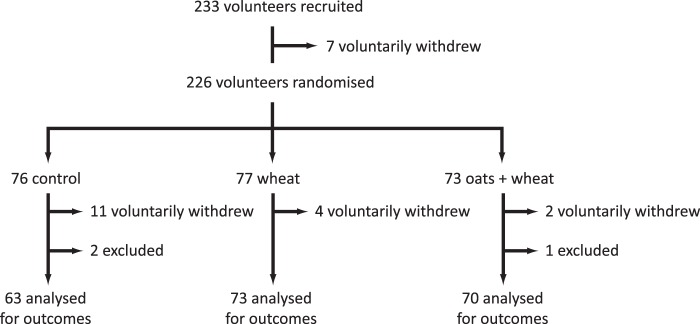
Methods: After a 4-week run-in period on a refined diet, volunteers were randomly allocated to a control (refined diet), wheat, or wheat + oats group for 12 weeks. Our servings were determined in order to significantly increase the intakes of non starch polysaccharides to the UK Dietary Reference Value of 18 g per day in the whole grain groups (18.5 g and 16.8 g per day in the wheat and wheat + oats groups respectively in comparison with 11.3 g per day in the control group). Outcome measures were serum lipoprotein subclasses' size and concentration. Habitual dietary intake was assessed prior and during the intervention. Of the 233 volunteers recruited, 24 withdrew and 3 were excluded.
Results: At baseline, significant associations were found between lipoprotein size and subclasses' concentrations and some markers of cardiovascular risk such as insulin resistance, blood pressure and serum Inter cellular adhesion molecule 1 concentration. Furthermore, alcohol and vitamin C intake were positively associated with an anti-atherogenic lipoprotein profile, with regards to lipoprotein size and subclasses' distribution. However, none of the interventions with whole grain affected lipoprotein size and profile.
Conclusion: Our results indicate that three portions of wholegrain foods, irrelevant of the type (wheat or oat-based) do not reduce cardiovascular risk by beneficially altering the size and distribution of lipoprotein subclasses.
Trial registration: www.Controlled-Trials.com ISRCTN 27657880.
Conflict of interest statement
References
-
- Jacobs DR, Meyer KA, Hushi LH, Folsom AR (1998) Whole grain intake may reduce the risk of ischaemic heart disease death in postmenopausal women: the Iowa Women's Health Study. Am J Clin Nutr 68: 248–257. - PubMed
-
- Liu S, Stampfer MJ, Hu FB, Giovannucci E, Rimm E, et al. (1999) Whole-grain consumption and risk of CHD: results from the Nurses' Health Study. Am J Clin Nutr 70: 412–419. - PubMed
-
- Salmeron J, Manson JE, Stampfer MJ, Colditz GA, Wing AL, et al. (1997) Dietary fiber, glycaemic load, and risk of non-insulin-dependent diabetes mellitus in women. J Am Med Assoc 277: 472–477. - PubMed
-
- Meyer KA, Kushi LH, Jacobs DR Jr, Slavin J, Sellers TA, et al. (2000) Carbohydrates, dietary fiber, and incidence of type 2 diabetes in older women. Am J Clin Nutr 71: 921–930. - PubMed
-
- Anderson JW, Hanna TJ (1999) Impact of non-digestible carbohydrates on serum lipoproteins and risk for cardiovascular disease. J Nutr 129: 1457–1466. - PubMed
Publication types
MeSH terms
Substances
Associated data
LinkOut - more resources
Full Text Sources
Other Literature Sources
Molecular Biology Databases
