


Low glucose but not galactose enhances oxidative mitochondrial metabolism in C2C12 myoblasts and myotubes
- PMID: 23940640
- PMCID: PMC3733643
- DOI: 10.1371/journal.pone.0070772
Low glucose but not galactose enhances oxidative mitochondrial metabolism in C2C12 myoblasts and myotubes
Abstract
Background: Substituting galactose for glucose in cell culture media has been suggested to enhance mitochondrial metabolism in a variety of cell lines. We studied the effects of carbohydrate availability on growth, differentiation and metabolism of C2C12 myoblasts and myotubes.
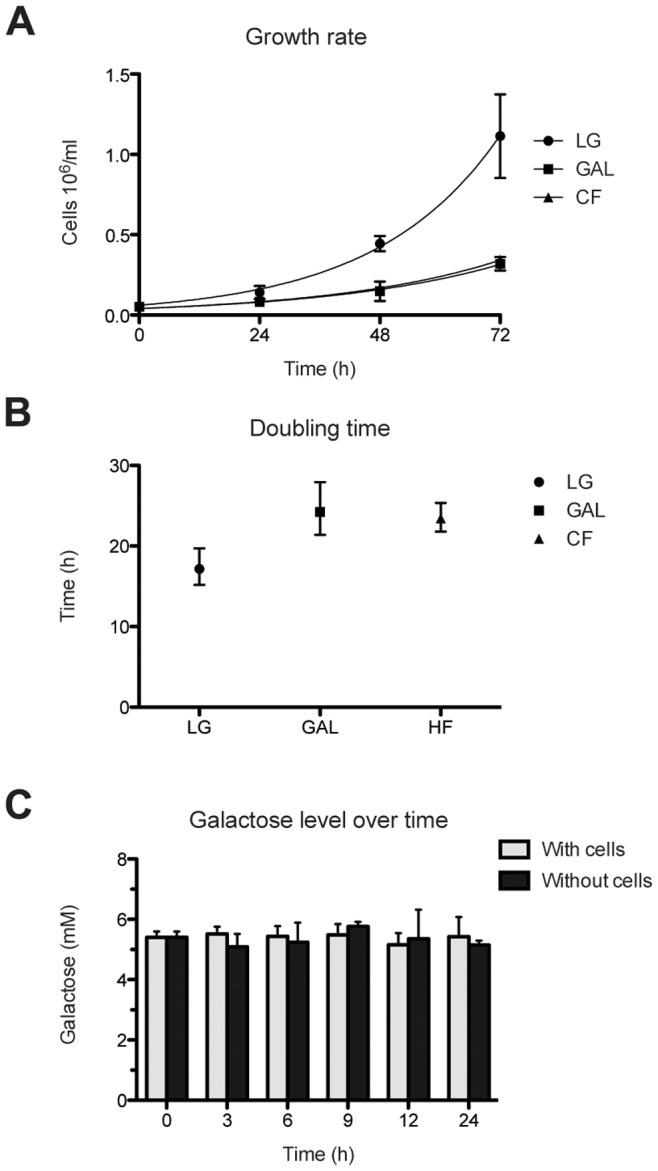
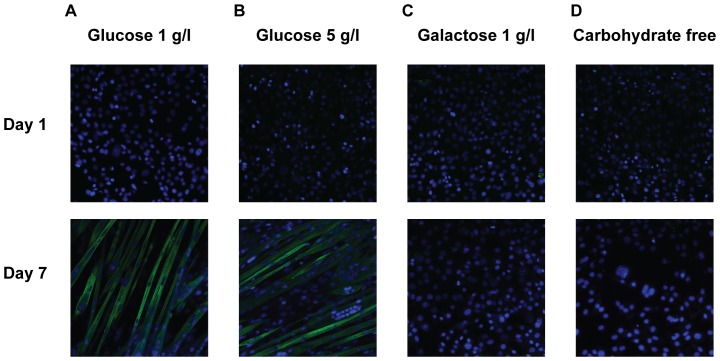
Methodology/principal findings: We measured growth rates, ability to differentiate, citrate synthase and respiratory chain activities and several parameters of mitochondrial respiration in C2C12 cells grown in media with varying carbohydrate availability (5 g/l glucose, 1 g/l glucose, 1 g/l galactose, and no added carbohydrates). C2C12 myoblasts grow more slowly without glucose irrespective of the presence of galactose, which is not consumed by the cells, and they fail to differentiate without glucose in the medium. Cells grown in a no-glucose medium (with or without galactose) have lower maximal respiration and spare respiratory capacity than cells grown in the presence of glucose. However, increasing glucose concentration above physiological levels decreases the achievable maximal respiration. C2C12 myotubes differentiated at a high glucose concentration showed higher dependency on oxidative respiration under basal conditions but had lower maximal and spare respiratory capacity when compared to cells differentiated under low glucose condition. Citrate synthase activity or mitochondrial yield were not significantly affected by changes in the available substrate concentration but a trend towards a higher respiratory chain activity was observed at reduced glucose levels.
Conclusions/significance: Our results show that using galactose to increase oxidative metabolism may not be applicable to every cell line, and the changes in mitochondrial respiratory parameters associated with treating cells with galactose are mainly due to glucose deprivation. Moderate concentrations of glucose (1 g/l) in a growth medium are optimal for mitochondrial respiration in C2C12 cell line while supraphysiological concentrations of glucose cause mitochondrial dysfunction in C2C12 myoblasts and myotubes.
Conflict of interest statement
Figures
References
-
- Sinacore DR, Gulve EA (1993) The role of skeletal muscle in glucose transport, glucose homeostasis, and insulin resistance: implications for physical therapy. Physical Therapy 73: 878–891. - PubMed
-
- Phielix E, Mensink M (2008) Type 2 diabetes mellitus and skeletal muscle metabolic function. Physiology & Behavior 94: 252–258. - PubMed
-
- Yaffe D, Saxel O (1977) Serial passaging and differentiation of myogenic cells isolated from dystrophic mouse muscle. Nature 270: 725–727. - PubMed
Publication types
MeSH terms
Substances
LinkOut - more resources
Full Text Sources
Other Literature Sources
