


A human in vitro whole blood assay to predict the systemic cytokine response to therapeutic oligonucleotides including siRNA
- PMID: 23940691
- PMCID: PMC3733725
- DOI: 10.1371/journal.pone.0071057
A human in vitro whole blood assay to predict the systemic cytokine response to therapeutic oligonucleotides including siRNA
Abstract
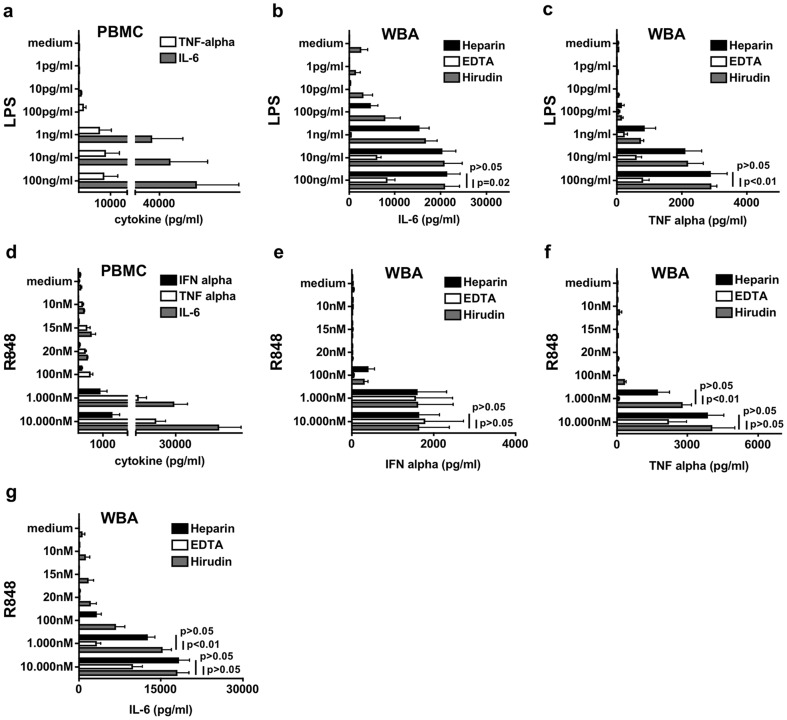
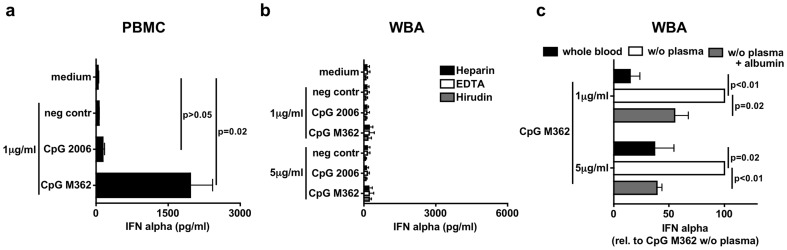
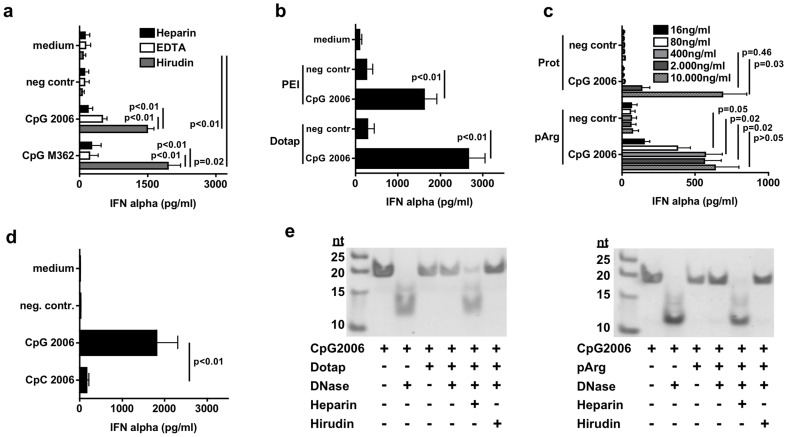
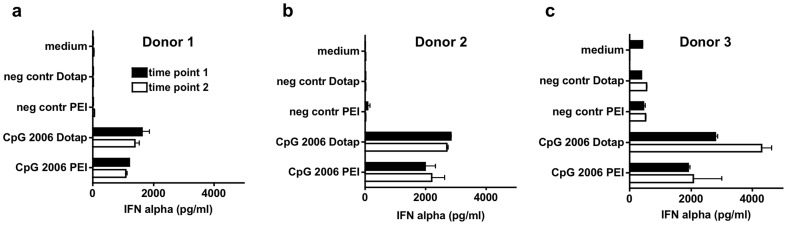
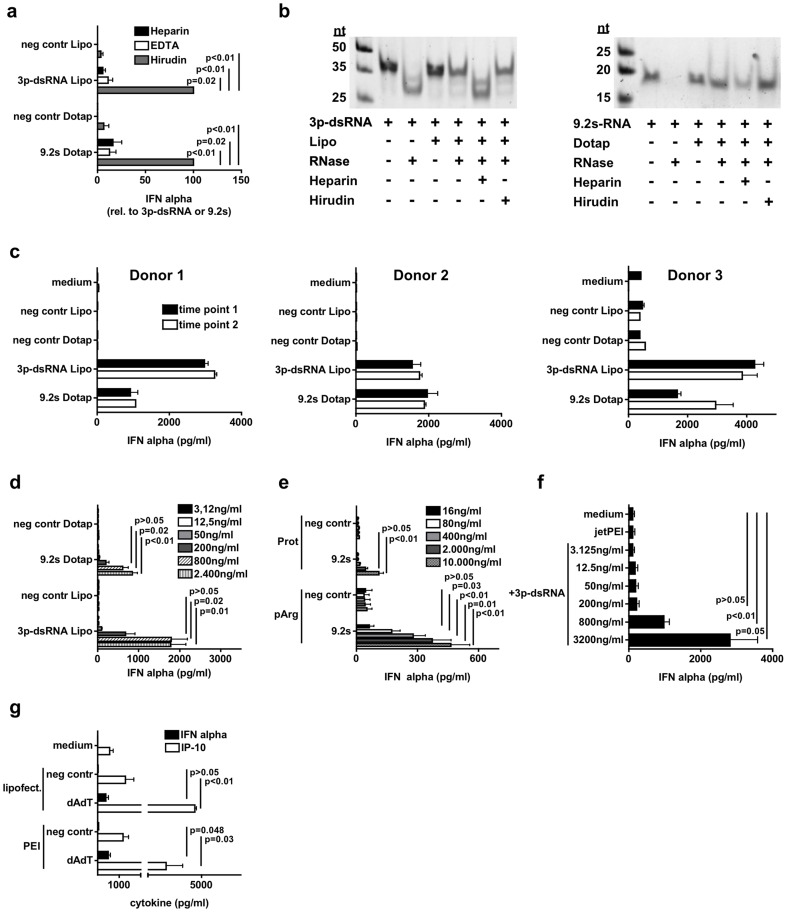
Therapeutic oligonucleotides including siRNA and immunostimulatory ligands of Toll-like receptors (TLR) or RIG-I like helicases (RLH) are a promising novel class of drugs. They are in clinical development for a broad spectrum of applications, e.g. as adjuvants in vaccines and for the immunotherapy of cancer. Species-specific immune activation leading to cytokine release is characteristic for therapeutic oligonucleotides either as an unwanted side effect or intended pharmacology. Reliable in vitro tests designed for therapeutic oligonucleotides are therefore urgently needed in order to predict clinical efficacy and to prevent unexpected harmful effects in clinical development. To serve this purpose, we here established a human whole blood assay (WBA) that is fast and easy to perform. Its response to synthetic TLR ligands (R848: TLR7/8, LPS: TLR4) was on a comparable threshold to the more time consuming peripheral blood mononuclear cell (PBMC) based assay. By contrast, the type I IFN profile provoked by intravenous CpG-DNA (TLR9 ligand) in humans in vivo was more precisely replicated in the WBA than in stimulated PBMC. Since Heparin and EDTA, but not Hirudin, displaced oligonucleotides from their delivery agent, only Hirudin qualified as the anticoagulant to be used in the WBA. The Hirudin WBA exhibited a similar capacity as the PBMC assay to distinguish between TLR7-activating and modified non-stimulatory siRNA sequences. RNA-based immunoactivating TLR7/8- and RIG-I-ligands induced substantial amounts of IFN-α in the Hirudin-WBA dependent on delivery agent used. In conclusion, we present a human Hirudin WBA to determine therapeutic oligonucleotide-induced cytokine release during preclinical development that can readily be performed and offers a close reflection of human cytokine response in vivo.
Conflict of interest statement
Figures

References
-
- Vaishnaw AK, Gollob J, Gamba-Vitalo C, Hutabarat R, Sah D, et al. (2010) A status report on RNAi therapeutics. Silence 1: 14 doi:10.1186/1758-907X-1-14 - DOI - PMC - PubMed
-
- Krieg AM (2006) Therapeutic potential of Toll-like receptor 9 activation. Nat Rev Drug Discov 5: 471–484 doi:10.1038/nrd2059 - DOI - PubMed
-
- Barchet W, Wimmenauer V, Schlee M, Hartmann G (2008) Accessing the therapeutic potential of immunostimulatory nucleic acids. Curr Opin Immunol 20: 389–395 doi:10.1016/j.coi.2008.07.007 - DOI - PubMed
-
- Hornung V, Guenthner-Biller M, Bourquin C, Ablasser A, Schlee M, et al. (2005) Sequence-specific potent induction of IFN-alpha by short interfering RNA in plasmacytoid dendritic cells through TLR7. Nat Med 11: 263–270 doi:10.1038/nm1191 - DOI - PubMed
-
- Krieg AM, Yi AK, Matson S, Waldschmidt TJ, Bishop GA, et al. (1995) CpG motifs in bacterial DNA trigger direct B-cell activation. Nature 374: 546–549 doi:10.1038/374546a0 - DOI - PubMed
Publication types
MeSH terms
Substances
LinkOut - more resources
Full Text Sources
Other Literature Sources
