


Internet informs parents about growth hormone
- PMID: 23942255
- PMCID: PMC4114729
- DOI: 10.1159/000351463
Internet informs parents about growth hormone
Abstract
Background: Parents' knowledge influences decisions regarding medical care for their children.
Methods: Parents of pediatric primary care patients aged 9-14 years, irrespective of height, participated in open focus groups (OFGs). Moderators asked the question, 'How do people find out about growth hormone (GH)?' Because many parents cited the Internet, the top 10 results from the Google searches of 'growth hormone children' and 'parents of children who take growth hormone' were examined. Three investigators independently performed content analysis and then reached a consensus. The results were tabulated via summary statistics.
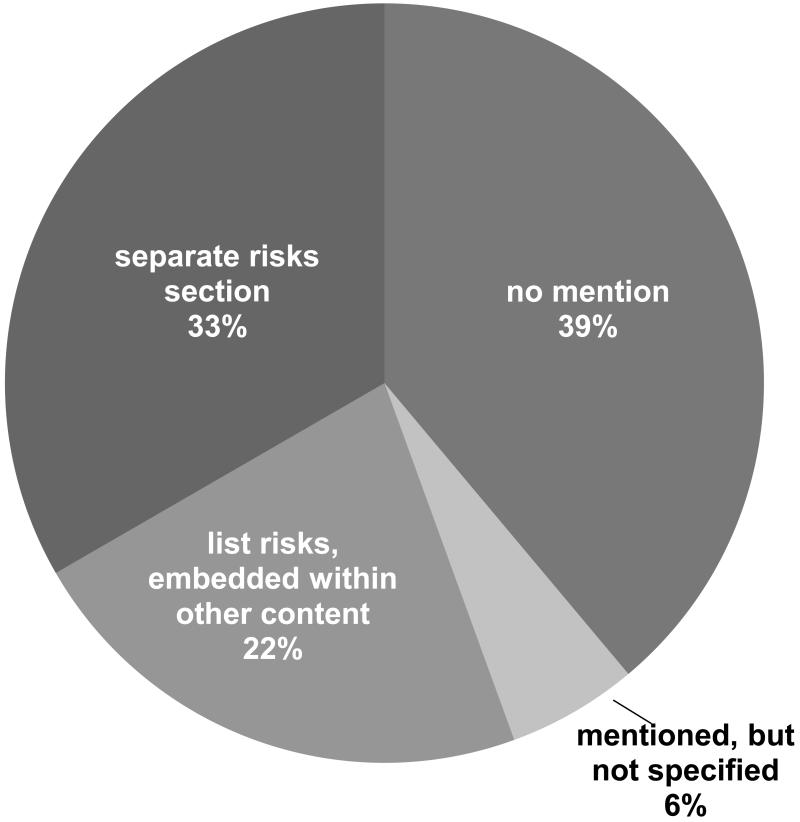
Results: Eighteen websites were reviewed, most with the purpose of education (56%) and many funded by commercial sources (44%). GH treatment information varied, with 33% of the sites containing content only about US FDA-approved indications. Fifty-six percent of the sites included information about psychosocial benefits from treatment, with 44% acknowledging them as controversial. Although important to OFG participants, risks and costs were each omitted from 39% of the websites.
Conclusion: Parents often turn to the Internet for GH-related information for their children, although its content may be incomplete and/or biased. Clinicians may want to provide parents with tools for critically evaluating Internet-based information, a list of prereviewed websites, or their own educational materials.
Copyright © 2013 S. Karger AG, Basel.
Figures
References
-
- Grimberg A, Lifshitz F. Worrisome Growth. In: Lifshitz F, editor. Pediatric Endocrinology. 5th edition Informa Health Care; New York: 2007. pp. 1–50.
-
- Bullinger M, Koltowska-Haggstrom M, Sandberg D, Chaplin J, Wollmann H, Noeker M, Brutt AL. Health-related quality of life of children and adolescents with growth hormone deficiency or idiopathic short staturepart 2: available results and future directions. Horm Res. 2009;72:74–81. - PubMed
-
- Sandberg DE, Voss LD. The psychosocial consequences of short stature: a review of the evidence. Best Pract Res Clin Endocrinol Metab. 2002;16:449–463. - PubMed
-
- Sandberg DE, Bukowski WM, Fung CM, Noll RB. Height and social adjustment: are extremes cause for concern and action? Pediatrics. 2004;114:744–50. - PubMed
-
- Lee JM, Appugliese D, Coleman SM, Kaciroti N, Corwyn RF, Bradley RH, Sandberg DE, Lumeng JC. Short stature in population-based cohort: social, emotional, and behavioral functioning. Pediatrics. 2009;124:903–910. - PubMed
Publication types
MeSH terms
Substances
Grants and funding
LinkOut - more resources
Full Text Sources
Other Literature Sources
Medical
