. 2013 Oct;163(2):857-66.
doi: 10.1104/pp.113.224386. Epub 2013 Aug 14.

FAR-RED ELONGATED HYPOCOTYL3 and FAR-RED IMPAIRED RESPONSE1 transcription factors integrate light and abscisic acid signaling in Arabidopsis

Affiliations

FAR-RED ELONGATED HYPOCOTYL3 and FAR-RED IMPAIRED RESPONSE1 transcription factors integrate light and abscisic acid signaling in Arabidopsis

Weijiang Tang et al. Plant Physiol. 2013 Oct.

Abstract

Light and the phytohormone abscisic acid (ABA) regulate overlapping processes in plants, such as seed germination and seedling development. However, the molecular mechanism underlying the interaction between light and ABA signaling is largely unknown. Here, we show that FAR-RED ELONGATED HYPOCOTYL3 (FHY3) and FAR-RED IMPAIRED RESPONSE1 (FAR1), two key positive transcription factors in the phytochrome A pathway, directly bind to the promoter of ABA-Insensitive5 and activate its expression in Arabidopsis (Arabidopsis thaliana). Disruption of FHY3 and/or FAR1 reduces the sensitivity to ABA-mediated inhibition of seed germination, seedling development, and primary root growth. The seed germination of the fhy3 mutant is also less sensitive to salt and osmotic stress than that of the wild type. Constitutive expression of ABA-Insensitive5 restores the seed germination response of fhy3. Furthermore, the expression of several ABA-responsive genes is decreased in the fhy3 and/or far1 mutants during seed imbibition. Consistently, FHY3 and FAR1 transcripts are up-regulated by ABA and abiotic stresses. Moreover, the fhy3 and far1 mutants have wider stomata, lose water faster, and are more sensitive to drought than the wild type. These findings demonstrate that FHY3 and FAR1 are positive regulators of ABA signaling and provide insight into the integration of light and ABA signaling, a process that may allow plants to better adapt to environmental stresses.


Figures
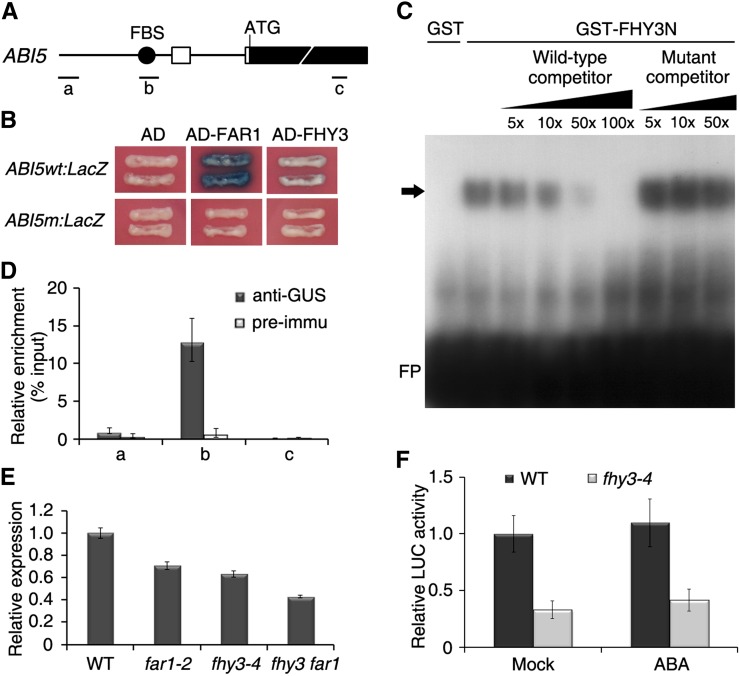
Figure 1.
Figure 1.
FHY3 directly activates ABI5 expression. A, Schematic diagram of ABI5. Black rectangles represent exons, and white rectangles denote untranslated regions. The circle indicates the FBS motif (CACGCGC). a, b, and c indicate fragments used for ChIP-PCR. ATG is the ABI5 translational start codon. B, Yeast one-hybrid assay showing the activity of LacZ reporters driven by either wild-type (ABI5wt:LacZ) or mutant (ABI5m:LacZ) ABI5 and activated by activation domain (AD) fusion effectors. C, EMSA showing the binding activity of GST-FHY3N or GST recombinant proteins with 32P-labeled wild-type ABI5 oligonucleotides in the presence of excess amounts of unlabeled competitors (wild-type and mutant probes). The arrow indicates shifted bands of protein-DNA complexes. FP denotes free probe. D, ChIP assay showing the specific precipitation of the ABI5 fragment by GUS antibody in extracts from 35S:GUS-FHY3 transgenic plants. Precipitation by preimmune serum served as the negative control. ChIP DNA was quantified by real-time PCR with primers targeting fragments as shown in A. Values are means ± sd; n = 3. E, Relative ABI5 expression in the seeds of various mutants and the wild type (WT) after imbibition for 12 h. Values are means ± sd; n = 3. F, Relative activity of the LUC reporter gene in protoplasts isolated from wild-type and fhy3 mutant seedlings transformed with both ABI5p:LUC and 35S:GUS. After transformation, the protoplasts were incubated without (Mock) or with 50 μm ABA in weak light for 12 h. Relative activities are expressed as the ratio of LUC to GUS (internal control). Values are means ± sd; n = 5. [See online article for color version of this figure.].
Figure 2.
Figure 2.
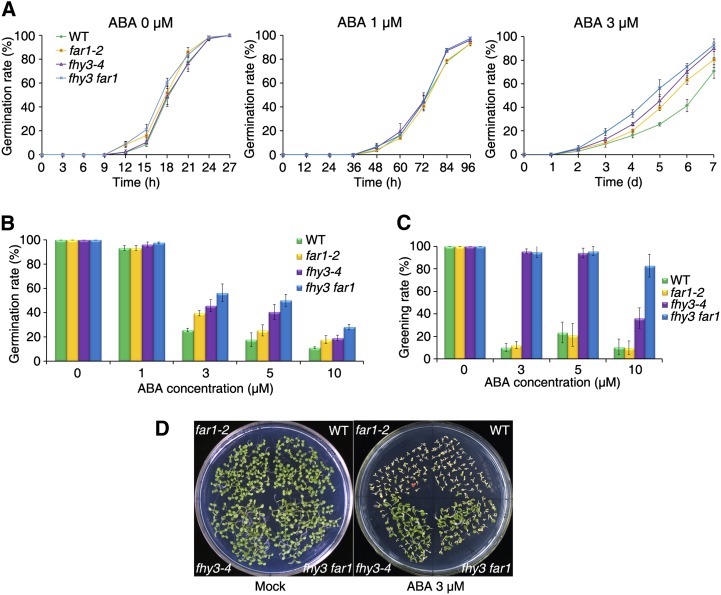
FHY3 and FAR1 knockout mutants are hyposensitive to ABA-mediated inhibition of seed germination and seedling greening. A, Percentage of seed germination of the NO wild type (WT) and fhy3-4, far1-2, and fhy3 far1 mutants on medium containing various concentrations of ABA. Germination rate was monitored at the indicated time points. Values are means ± sd; n = 3. B, Percentage of seed germination 5 d after imbibition as shown in A and Supplemental Figure S1. Values are means ± sd; n = 3. C, Greening rate of seedlings grown in various concentrations of ABA for 4 weeks. Values are means ± sd; n = 3. D, Representative images of seedlings grown in medium without (Mock; 7 d old) or with 3 μm ABA (21 d old).
Figure 3.
Figure 3.
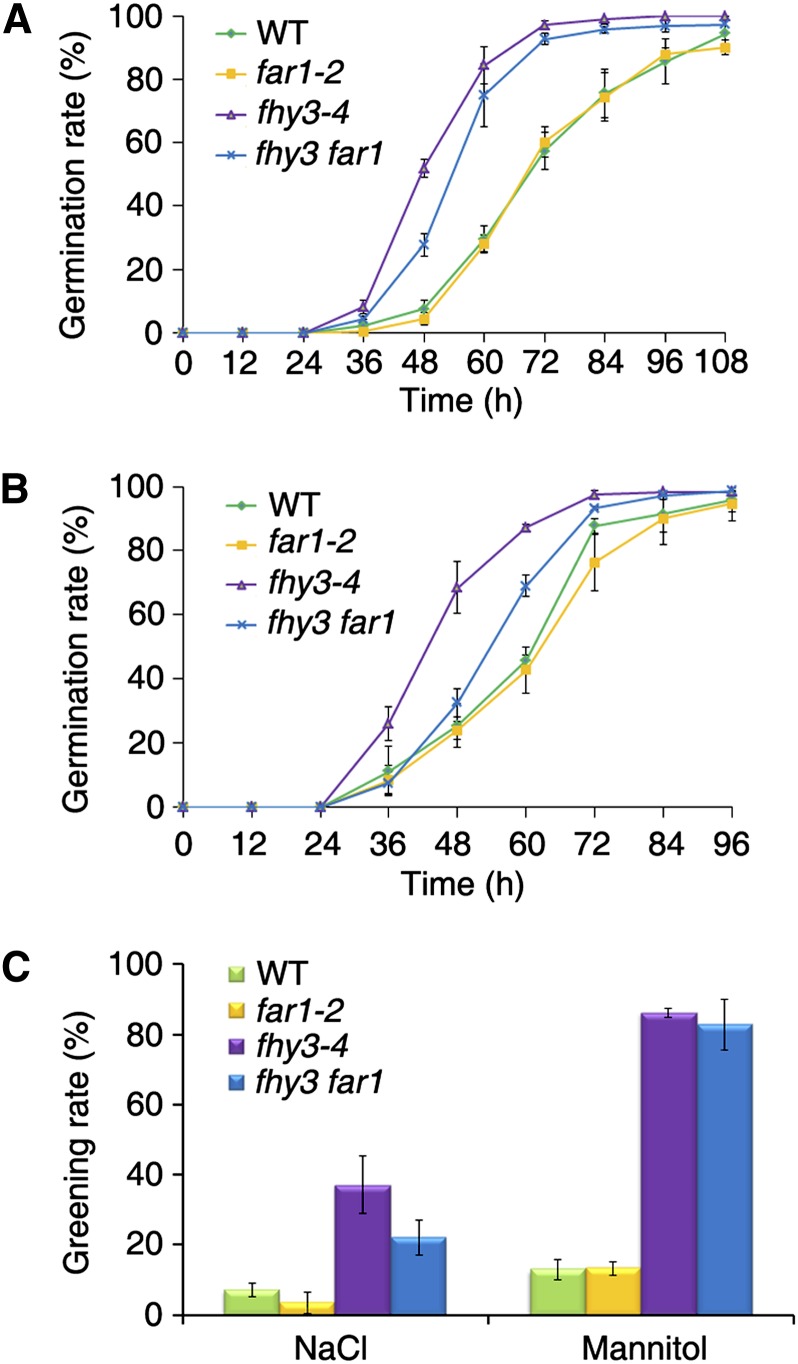
The fhy3 mutant is less sensitive to salinity and osmotic stress. A and B, Kinetics of seed germination on medium containing 200 mm NaCl (A) and 400 mm mannitol (B). Germination rate was monitored at the times indicated. Values are means ± sd; n = 3. C, Quantification of seedlings with green cotyledons shown in A and B. The greening rate was recorded 21 and 14 d after germination for NaCl and mannitol treatment, respectively. Values are means ± sd; n = 3.
Figure 4.
Figure 4.
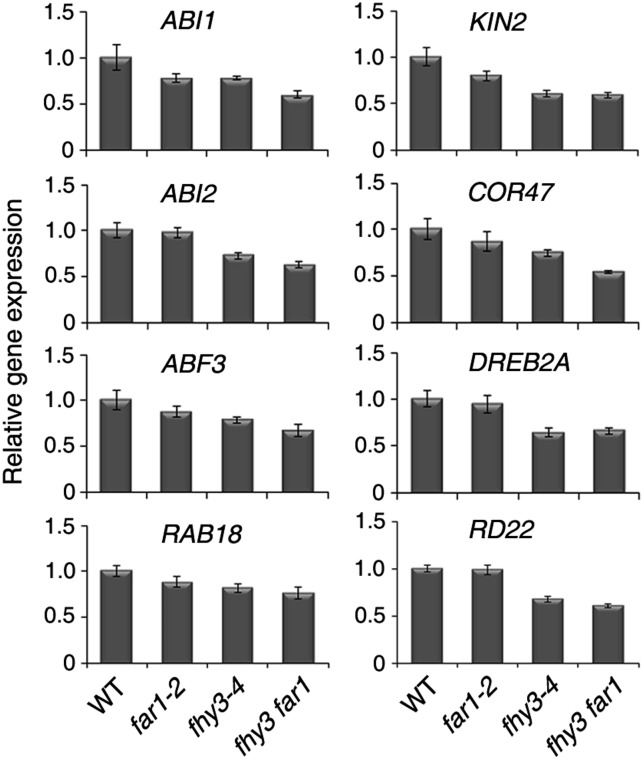
FHY3 and FAR1 are required for ABA-responsive gene expression. Total RNA was isolated from wild-type (WT), fhy3-4, far1-2, and fhy3 far1 seeds after 12 h of imbibition. qRT-PCR was performed using specific primers as listed in Supplemental Table S1. Values are means ± sd; n = 3.
Figure 5.
Figure 5.
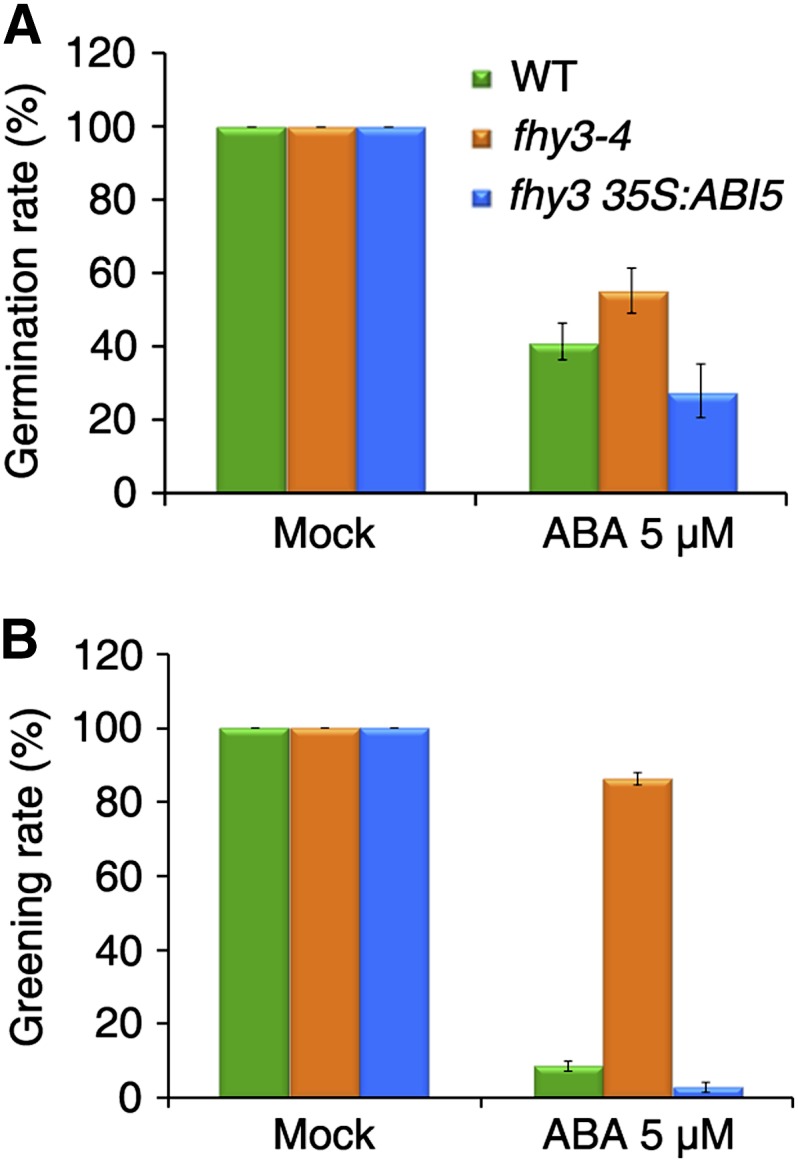
Overexpression of ABI5 rescues fhy3 mutant phenotypes. The percentage of seed germination (A) and of seedlings with green cotyledons (B) on medium in the absence (Mock) or presence of 5 μm ABA is shown. The germination rate was recorded after 5 d, and the greening rate was calculated after 4 weeks. Values are means ± sd; n = 3. WT, Wild type.
Figure 6.
Figure 6.
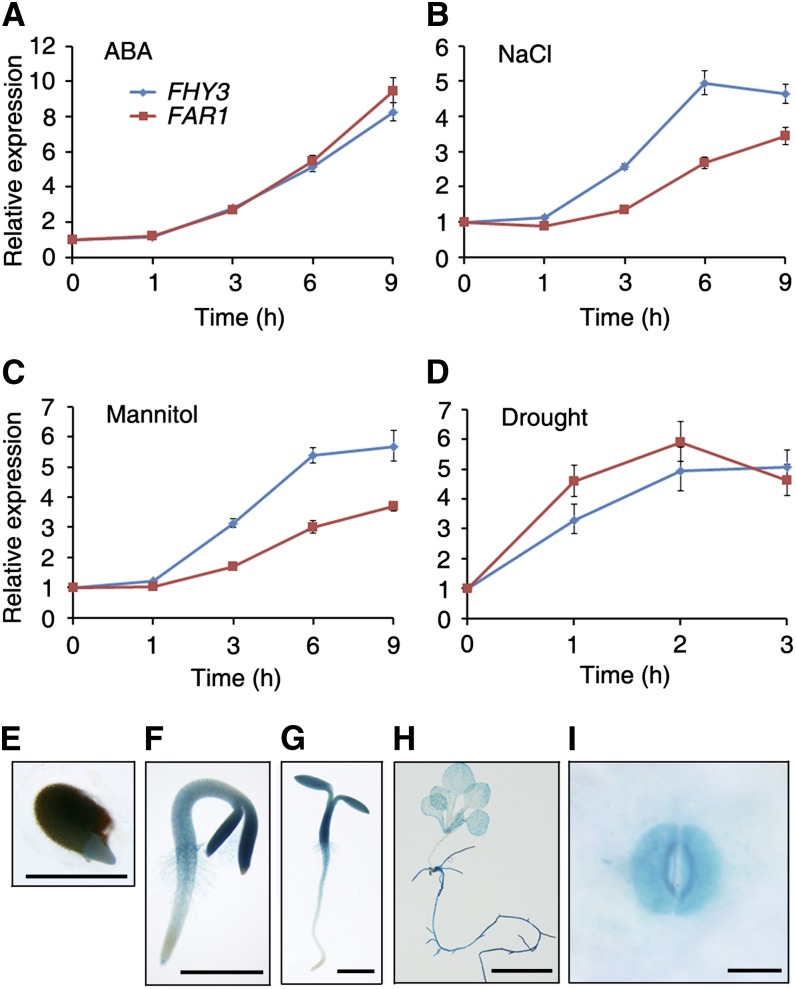
Expression patterns of FHY3 and FAR1. A to C, Seven-day-old NO wild-type seedlings were transferred to medium containing 100 μm ABA (A), 200 mm NaCl (B), or 400 mm mannitol (C) for various periods of time. D, Seven-day-old NO wild-type seedlings were placed on filter paper under normal growth conditions for up to 3 h. The expression of FHY3 and FAR1 was analyzed by qRT-PCR. Relative expression levels were normalized to that of UBQ. Values are means ± sd; n = 3. E to I, GUS staining of FHY3p:GUS transgenic plants during seed germination (E) and of 2-d-old (F), 3-d-old (G), and 3-week-old (H) FHY3p:GUS plants and the guard cells of 3-week-old FHY3p:GUS plants (I). Bars = 0.5 mm (E), 1 mm (F and G), 5 mm (H), and 10 μm (I).
Figure 7.
Figure 7.
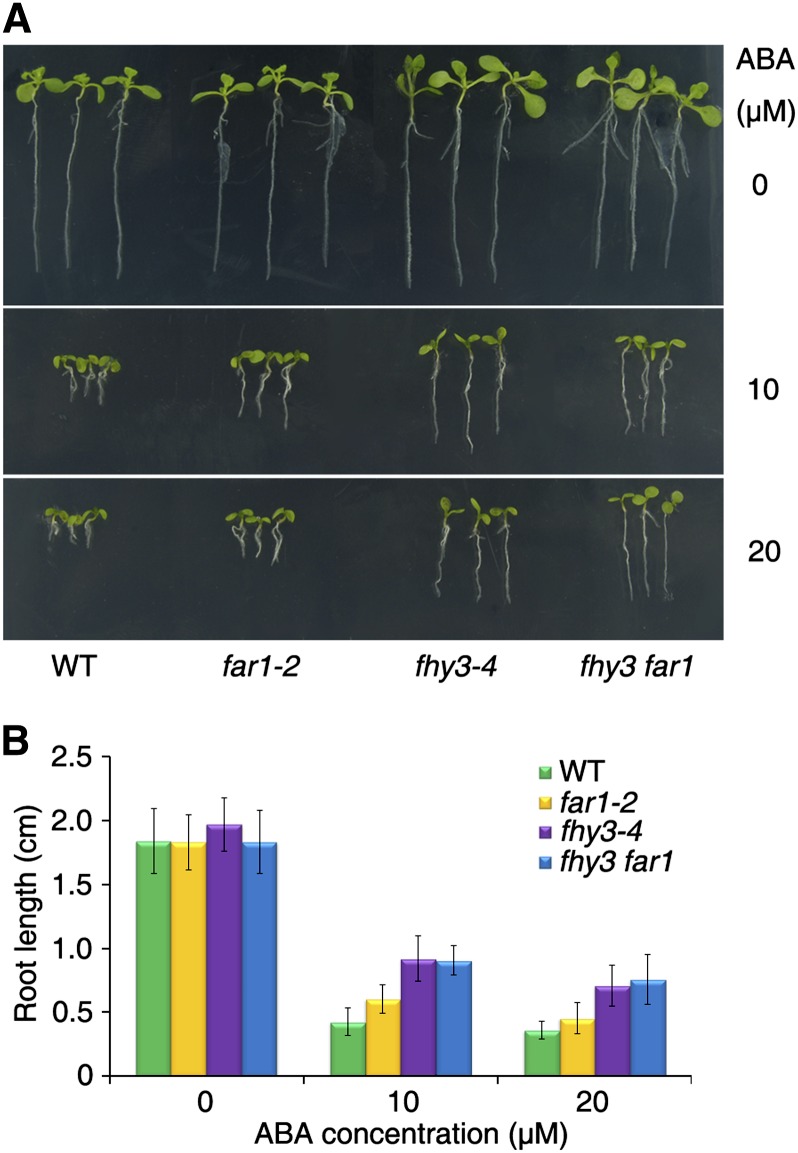
FHY3 and FAR1 regulate ABA-mediated root growth. A, Representative images of root growth on medium with or without ABA. Two-day-old seedlings were transferred to MS medium containing various concentrations of ABA and grown for an additional 7 d. B, Quantification of primary root length of the seedlings shown in A. Values are means ± sd; n = 20. WT, Wild type.
Figure 8.
Figure 8.
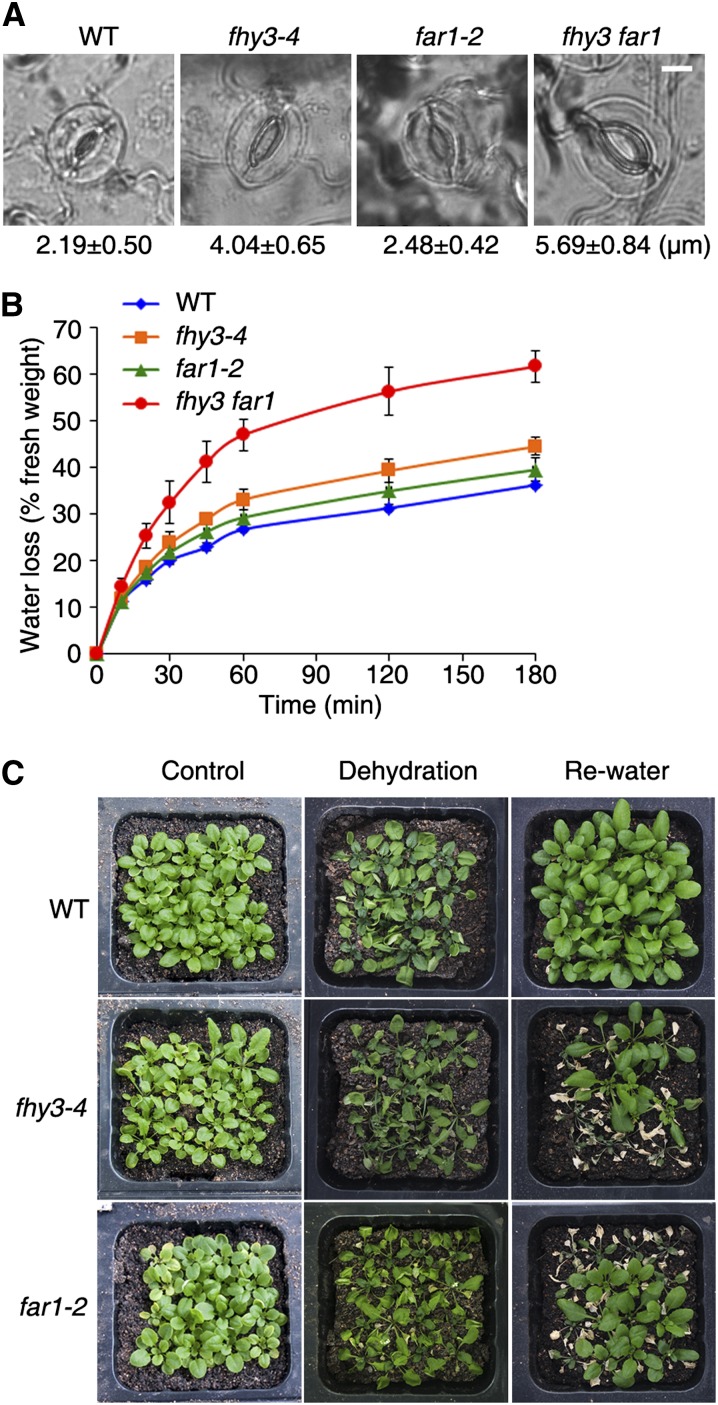
FHY3 and FAR1 regulate stomatal movement and confer drought tolerance. A, Representative images of stomata. Values below the images are quantification of the stomatal aperture. Values are means ± sd; n = 20. Bar = 10 μm. B, Water loss from detached plants. Three-week-old plants of various genotypes were measured at different periods of time. Values are means ± sd; n = 3. C, Reduced drought tolerance of fhy3 and far1 mutant plants. Three-week-old soil-grown seedlings were subjected to dehydration by withholding water for 2 weeks and then rewatered normally for 3 d. Three independent assays were performed with similar results, and representative images are shown. WT, Wild type.

References

    1. Allen T, Koustenis A, Theodorou G, Somers DE, Kay SA, Whitelam GC, Devlin PF. (2006) Arabidopsis FHY3 specifically gates phytochrome signaling to the circadian clock. Plant Cell 18: 2506–2516 - PMC - PubMed
    1. Carles C, Bies-Etheve N, Aspart L, Léon-Kloosterziel KM, Koornneef M, Echeverria M, Delseny M. (2002) Regulation of Arabidopsis thaliana Em genes: role of ABI5. Plant J 30: 373–383 - PubMed
    1. Chen D, Xu G, Tang W, Jing Y, Ji Q, Fei Z, Lin R. (2013) Antagonistic bHLH/bZIP transcription factors form transcriptional modules that integrate light and reactive oxygen species signaling in Arabidopsis. Plant Cell 25: 1657–1673 - PMC - PubMed
    1. Chen H, Zhang J, Neff MM, Hong SW, Zhang H, Deng XW, Xiong L. (2008) Integration of light and abscisic acid signaling during seed germination and early seedling development. Proc Natl Acad Sci USA 105: 4495–4500 - PMC - PubMed
    1. Chory J. (2010) Light signal transduction: an infinite spectrum of possibilities. Plant J 61: 982–991 - PMC - PubMed

Publication types

MeSH terms

LinkOut - more resources