


Design of a multiple drug delivery system directed at periodontitis
- PMID: 23948165
- PMCID: PMC3773615
- DOI: 10.1016/j.biomaterials.2013.07.093
Design of a multiple drug delivery system directed at periodontitis
Abstract
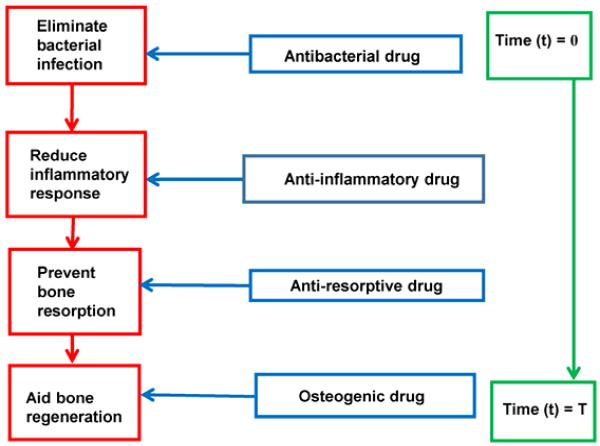
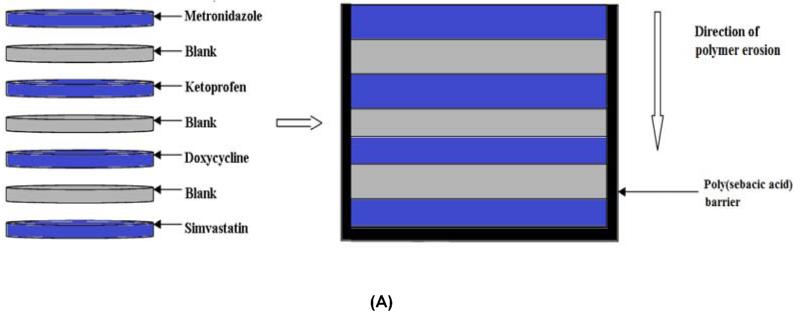
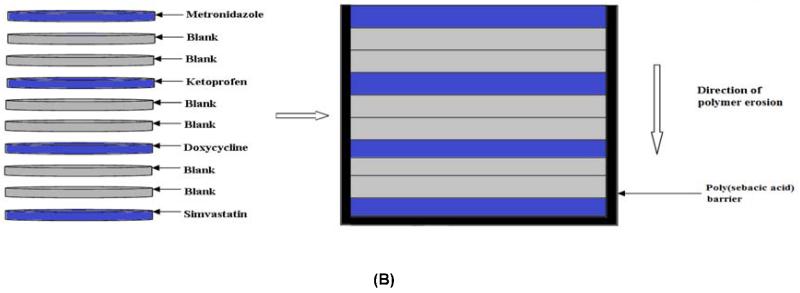
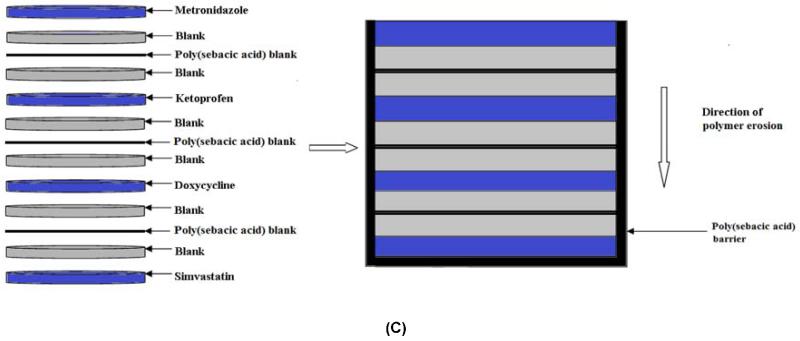
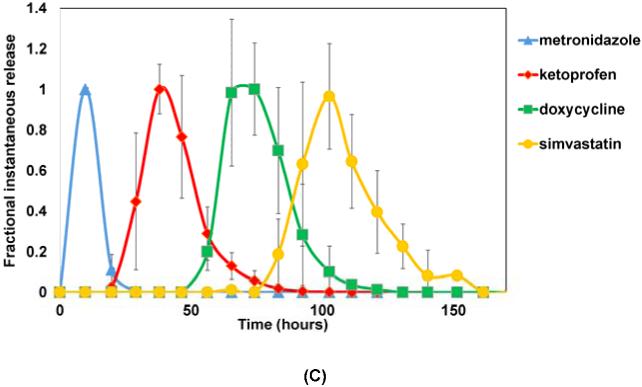
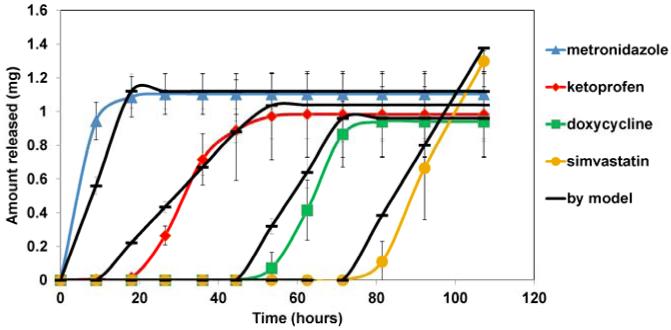
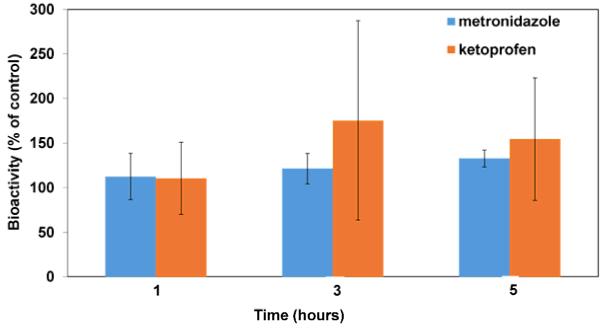
Periodontal disease is highly prevalent, with 90% of the world population affected by either periodontitis or its preceding condition, gingivitis. These conditions are caused by bacterial biofilms on teeth, which stimulate a chronic inflammatory response that leads to loss of alveolar bone and, ultimately, the tooth. Current treatment methods for periodontitis address specific parts of the disease, with no individual treatment serving as a complete therapy. The present research sought to demonstrate development of a multiple drug delivery system for stepwise treatment of different stages of periodontal disease. More specifically, multilayered films were fabricated from an association polymer comprising cellulose acetate phthalate and Pluronic F-127 to achieve sequential release of drugs. The four types of drugs used were metronidazole, ketoprofen, doxycycline, and simvastatin to eliminate infection, inhibit inflammation, prevent tissue destruction, and aid bone regeneration, respectively. Different erosion times and adjustable sequential release profiles were achieved by modifying the number of layers or by inclusion of a slower-eroding polymer layer. Analysis of antibiotic and anti-inflammatory bioactivity showed that drugs released from the devices retained 100% bioactivity. The multilayered CAPP delivery system offers a versatile approach for releasing different drugs based on the pathogenesis of periodontitis and other conditions.
Keywords: Controlled drug release; Drug delivery; Drug release; Periodontium; Sequential drug release.
© 2013 Elsevier Ltd. All rights reserved.
Figures
References
-
- Albandar JM, Kingman A. Gingival recession, gingival bleeding, and dental calculus in adults 30 years of age and older in the United States, 1988-1994. J Periodontol. 1999;70:30–43. - PubMed
-
- Brown LJ, Oliver RC, Loe H. Periodontal diseases in the U.S. in 1981: prevalence, severity, extent, and role in tooth mortality. J Periodontol. 1989;60:363–70. - PubMed
-
- Chen FM, Jin Y. Periodontal tissue engineering and regeneration: current approaches and expanding opportunities. Tissue Eng Part B Rev. 2010;16:219–55. - PubMed
-
- Soskolne WA, Klinger A. The relationship between periodontal diseases and diabetes: an overview. Ann Periodontol. 2001;6:91–8. - PubMed
-
- Rosen PS. Treatment of plaque-induced gingivitis, chronic periodontitis, and other clinical conditions. J Periodontol. 2001;72:1790–800. - PubMed
Publication types
MeSH terms
Substances
Grants and funding
LinkOut - more resources
Full Text Sources
Other Literature Sources
