


Effect of bariatric surgery on oncologic outcomes: a systematic review and meta-analysis
- PMID: 23949484
- PMCID: PMC4018832
- DOI: 10.1007/s00464-013-3127-9
Effect of bariatric surgery on oncologic outcomes: a systematic review and meta-analysis
Abstract
Background: Obesity is a major public health issue and is associated with increased risk of several cancers, currently a leading cause of mortality. Obese patients undergoing bariatric surgery may allow for evaluation of the effect of intentional excess weight loss on subsequent risk of cancer. We aimed to evaluate cancer risk, incidence, and mortality after bariatric surgery.
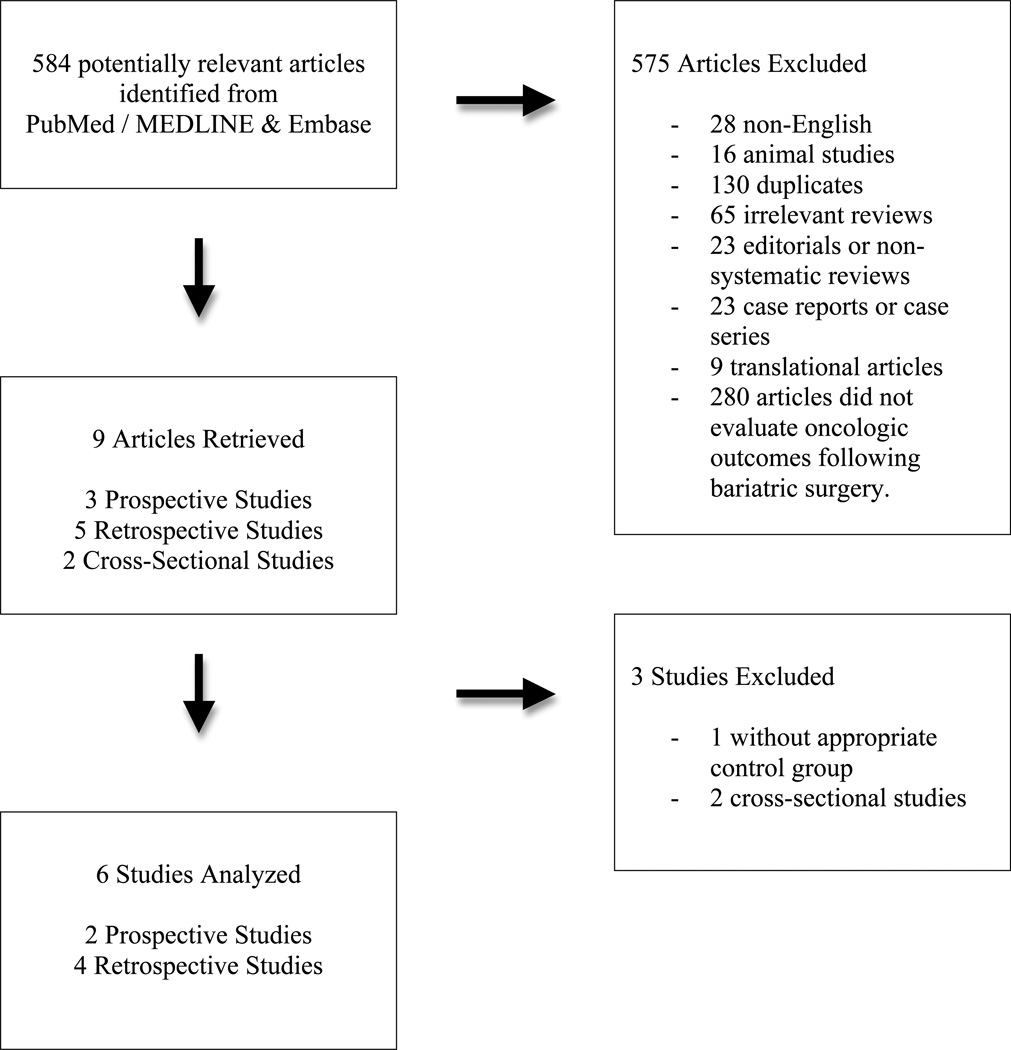
Methods: A comprehensive literature search was conducted using PubMed/MEDLINE and Embase with literature published from the inception of both databases to January 2012. Inclusion criteria incorporated all human studies examining oncologic outcomes after bariatric surgery. Two authors independently reviewed selected studies and relevant articles from their bibliographies for data extraction, quality appraisal, and meta-analysis.
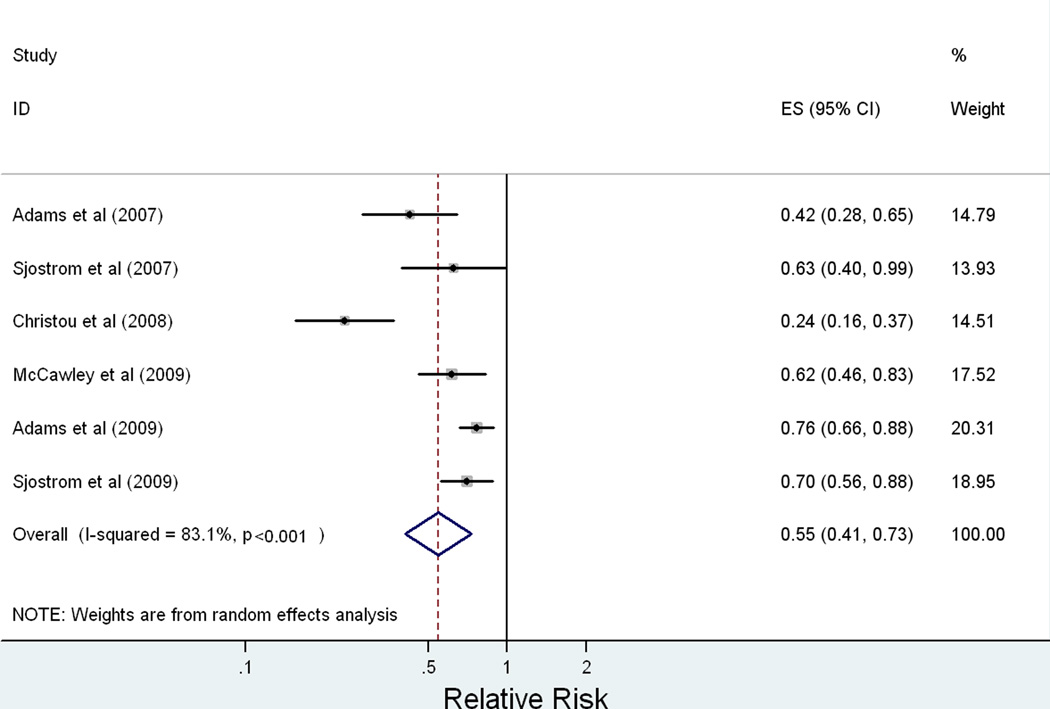
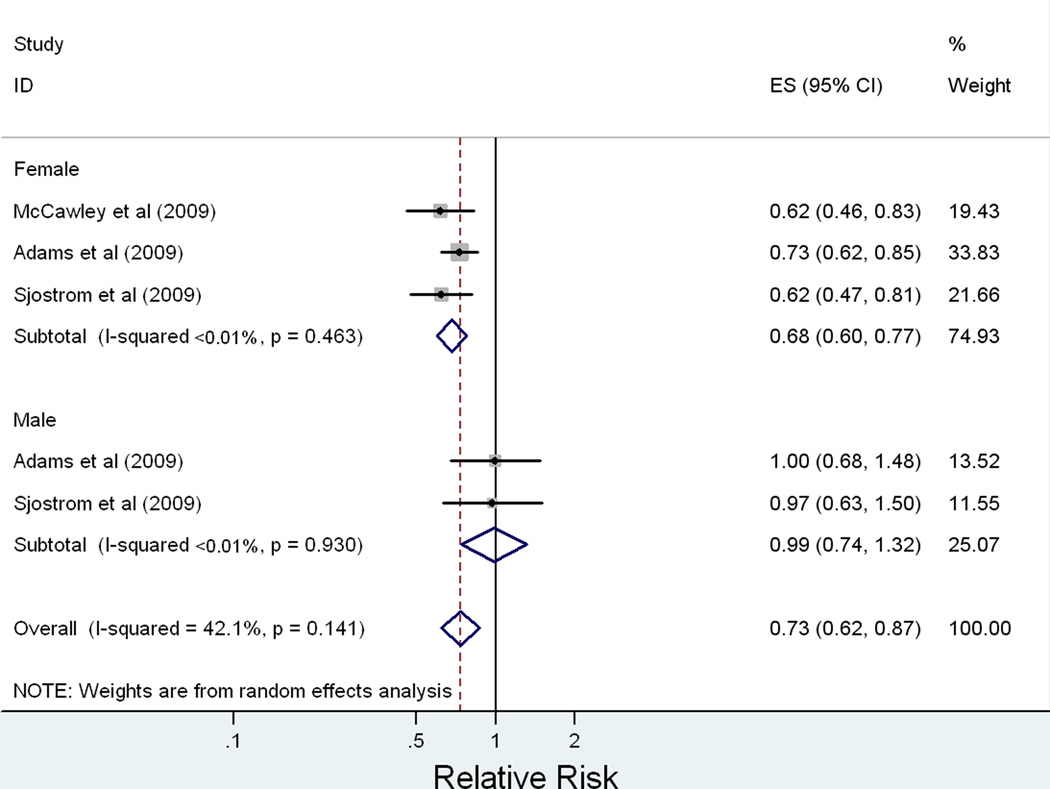
Results: Six observational studies (n = 51,740) comparing relative risk (RR) of cancer in obese patients undergoing bariatric surgery versus obese control subjects were analyzed. Overall, the RR of cancer in obese patients after undergoing bariatric surgery was 0.55 [95% confidence interval (CI) 0.41-0.73, p < 0.0001, I(2) = 83%]. The effect of bariatric surgery on cancer risk was modified by gender (p = 0.021). The pooled RR in women was 0.68 (95% CI 0.60-0.77, p < 0.0001, I(2) < 0.1%) and in men was 0.99 (95% CI 0.74-1.32, p = 0.937, I(2) < 0.1%).
Conclusions: Bariatric surgery reduces cancer risk and mortality in formerly obese patients. When stratifying the meta-analysis by gender, the effect of bariatric surgery on oncologic outcomes is protective in women but not in men.
Conflict of interest statement
Drs. Tee, Warnock, Hu, Chavarro and Ms. Cao (all authors) have no conflicts of interest or financial ties to disclose.
References
-
- Anderson AS, Caswell S. Obesity management--an opportunity for cancer prevention. Surgeon. 2009 Oct;7(5):282–285. - PubMed
-
- Haslam DW, James WP. Obesity. Lancet. 2005 Oct 1;366(9492):1197–1209. - PubMed
-
- Pender JR, Pories WJ. Epidemiology of obesity in the united states. Gastroenterol Clin North Am. 2005 Mar;34(1):1–7. - PubMed
-
- Bianchini F, Kaaks R, Vainio H. Overweight, obesity, and cancer risk. Lancet Oncol. 2002 Sep;3(9):565–574. - PubMed
-
- Calle EE, Rodriguez C, Walker-Thurmond K, Thun MJ. Overweight, obesity, and mortality from cancer in a prospectively studied cohort of U.S. adults. N Engl J Med. 2003 Apr 24;348(17):1625–1638. - PubMed
Publication types
MeSH terms
Grants and funding
LinkOut - more resources
Full Text Sources
Other Literature Sources
Medical
