


Accounting for variation in length of NICU stay for extremely low birth weight infants
- PMID: 23949836
- PMCID: PMC3815522
- DOI: 10.1038/jp.2013.92
Accounting for variation in length of NICU stay for extremely low birth weight infants
Abstract
Objective: To develop a length of stay (LOS) model for extremely low birth weight (ELBW) infants.
Study design: We included infants from the California Perinatal Quality Care Collaborative with birth weight 401 to 1000 g who were discharged to home. Exclusion criteria were congenital anomalies, surgery and death. LOS was defined as days from admission to discharge. As patients who died or were transferred to lower level of care were excluded, we assessed correlation of hospital mortality rates and transfers to risk-adjusted LOS.
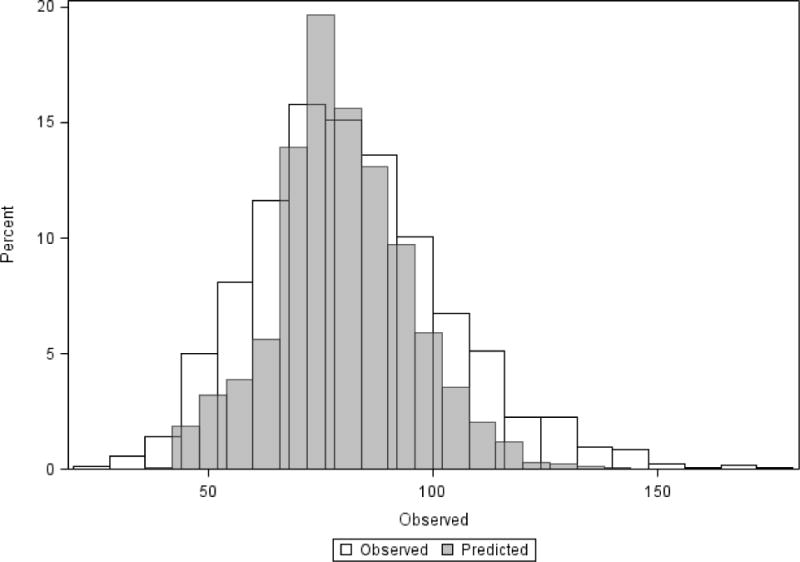
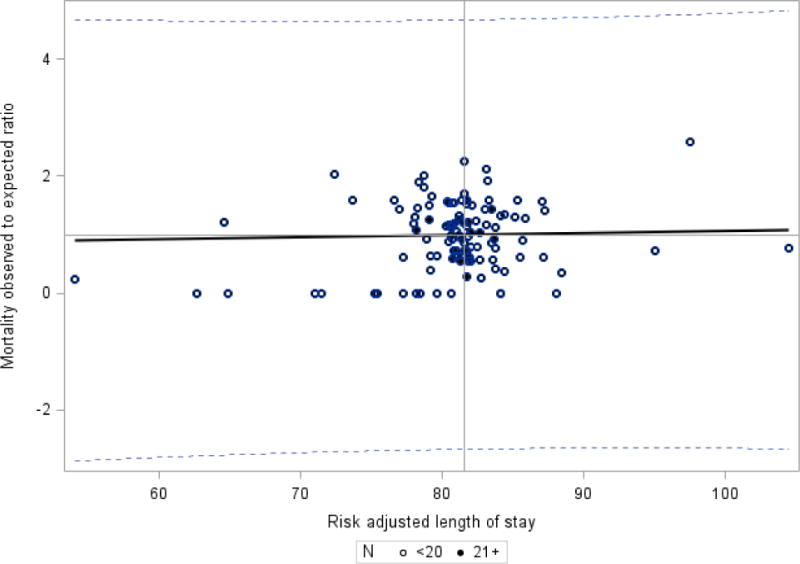
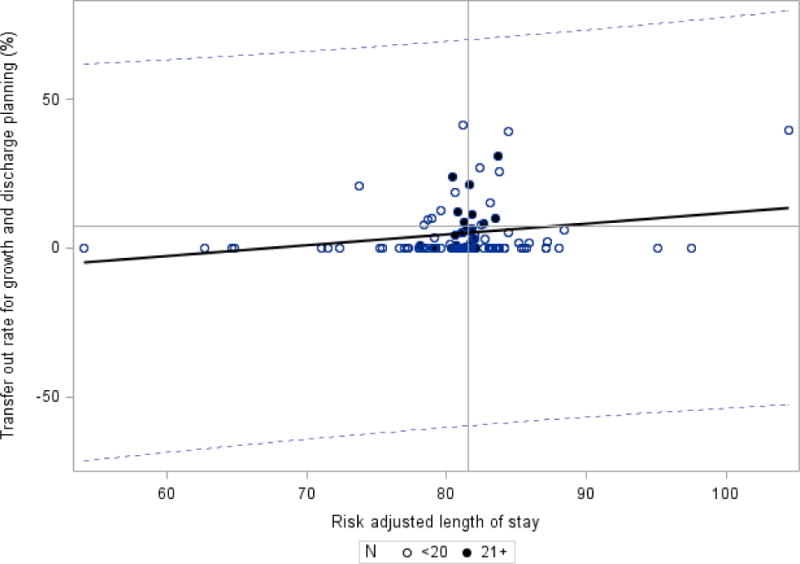
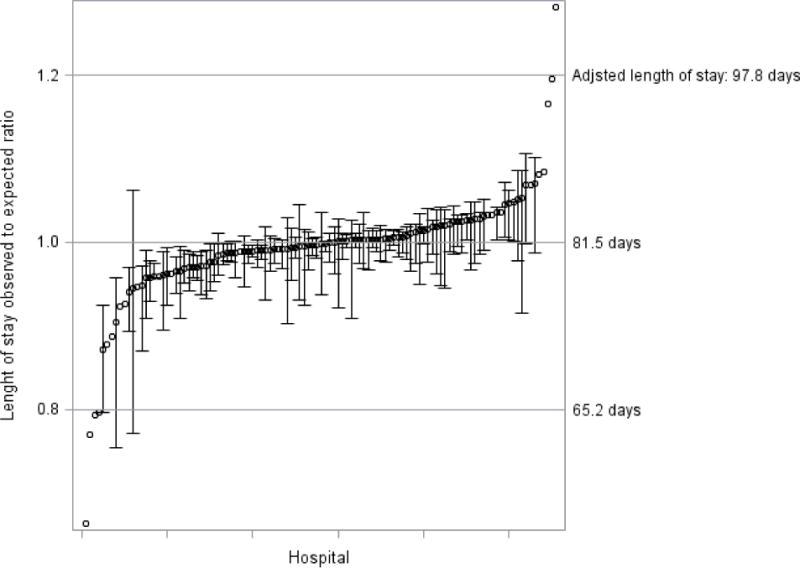
Results: There were 2012 infants with median LOS 79 days (range 23 to 219). Lower birth weight, lack of antenatal steroids and lower Apgar score were associated with longer LOS. There was negligible correlation between risk-adjusted LOS and hospital mortality rates (r=0.0207) and transfer-out rates (r=0.121).
Conclusion: Particularly because ELBW infants have extended hospital stays, identification of unbiased and informative risk-adjusted LOS for these infants is an important step in benchmarking best practice and improving efficiency in care.
Conflict of interest statement
Financial disclosure: No financial relationships relevant to this study.
Conflicts of interest: None
Figures
References
-
- Tyson JE, Younes N, Verter J, Wright LL. Viability, morbidity, and resource use among newborns of 501- to 800-g birth weight. National Institute of Child Health and Human Development Neonatal Research Network. JAMA : the journal of the American Medical Association. 1996;276(20):1645–1651. - PubMed
-
- Economic outcome for intensive care of infants of birthweight 500–999 g born in Victoria in the post surfactant era. The Victorian Infant Collaborative Study Group. Journal of paediatrics and child health. 1997;33(3):202–208. - PubMed
-
- Manktelow B, Draper ES, Field C, Field D. Estimates of length of neonatal stay for very premature babies in the UK. Archives of disease in childhood Fetal and neonatal edition. 2010;95(4):F288–292. - PubMed
-
- Altman M, Vanpee M, Cnattingius S, Norman M. Moderately preterm infants and determinants of length of hospital stay. Archives of disease in childhood Fetal and neonatal edition. 2009;94(6):F414–418. - PubMed
-
- Miller RH, Luft HS. Managed care plan performance since 1980. A literature analysis. JAMA : the journal of the American Medical Association. 1994;271(19):1512–1519. - PubMed
Publication types
MeSH terms
Substances
Grants and funding
LinkOut - more resources
Full Text Sources
Other Literature Sources
Research Materials
