. 2013;9(7):e1003620.
doi: 10.1371/journal.pgen.1003620. Epub 2013 Jul 11.

Female behaviour drives expression and evolution of gustatory receptors in butterflies

Affiliations

Female behaviour drives expression and evolution of gustatory receptors in butterflies

Adriana D Briscoe et al. PLoS Genet. 2013.

Abstract

Secondary plant compounds are strong deterrents of insect oviposition and feeding, but may also be attractants for specialist herbivores. These insect-plant interactions are mediated by insect gustatory receptors (Grs) and olfactory receptors (Ors). An analysis of the reference genome of the butterfly Heliconius melpomene, which feeds on passion-flower vines (Passiflora spp.), together with whole-genome sequencing within the species and across the Heliconius phylogeny has permitted an unprecedented opportunity to study the patterns of gene duplication and copy-number variation (CNV) among these key sensory genes. We report in silico gene predictions of 73 Gr genes in the H. melpomene reference genome, including putative CO2, sugar, sugar alcohol, fructose, and bitter receptors. The majority of these Grs are the result of gene duplications since Heliconius shared a common ancestor with the monarch butterfly or the silkmoth. Among Grs but not Ors, CNVs are more common within species in those gene lineages that have also duplicated over this evolutionary time-scale, suggesting ongoing rapid gene family evolution. Deep sequencing (∼1 billion reads) of transcriptomes from proboscis and labial palps, antennae, and legs of adult H. melpomene males and females indicates that 67 of the predicted 73 Gr genes and 67 of the 70 predicted Or genes are expressed in these three tissues. Intriguingly, we find that one-third of all Grs show female-biased gene expression (n = 26) and nearly all of these (n = 21) are Heliconius-specific Grs. In fact, a significant excess of Grs that are expressed in female legs but not male legs are the result of recent gene duplication. This difference in Gr gene expression diversity between the sexes is accompanied by a striking sexual dimorphism in the abundance of gustatory sensilla on the forelegs of H. melpomene, suggesting that female oviposition behaviour drives the evolution of new gustatory receptors in butterfly genomes.


Conflict of interest statement

The authors have declared that no competing interests exit.

Figures
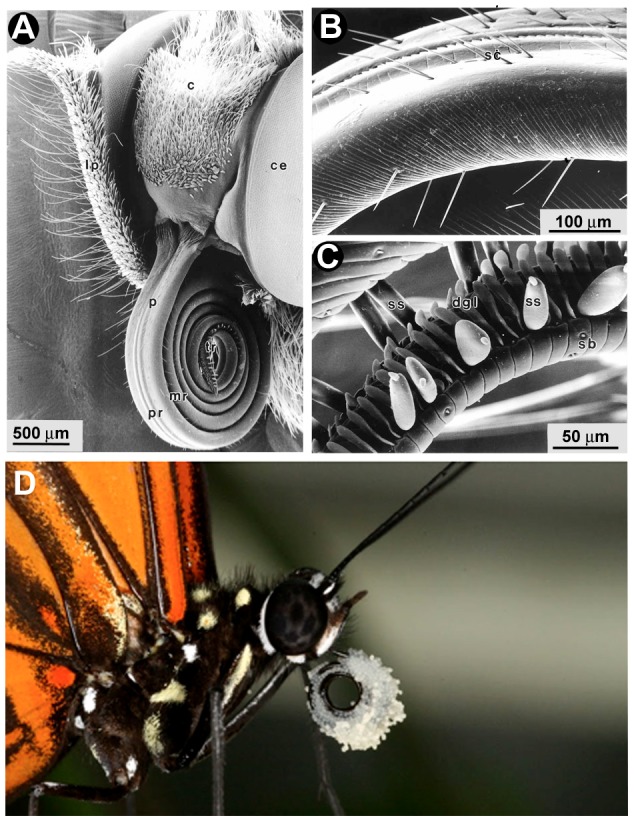
Figure 1
Figure 1. Scanning electron micrographs of the proboscis of Heliconius butterflies.
(A) The labial palps (lp) and proboscis (p) of the H. erato head contain gustatory sensilla. (B) The proximal portion of the H. melpomene proboscis has hair-like sensilla chaetica (sc). (C) The tip portion of the proboscis has specialized ridges for pollen collection along with sensilla styloconica (ss). Reproduced with permission . (D) H. melpomene with a pollen-load. c, clypeus, ce, compound eye; pr, proximal region; mr, mid region; tr, tip region; dgl, dorsal galeal linking structures; sb, blunt-tipped sensilla.
Figure 2
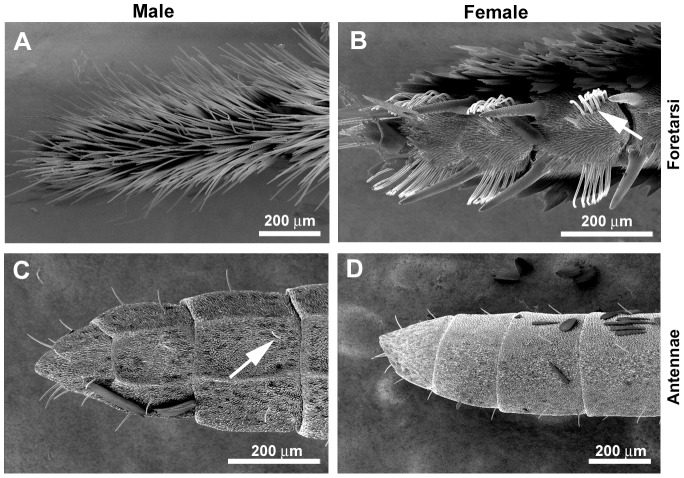
Figure 2. Sexual dimorphism in H. melpomene chemosensory tissues.
Scanning electron micrographs of adult legs showing a sexual dimorphism in gustatory (trichoid) sensilla. Foreleg foretarsi of a male (A) and a female (B). Four pairs of clumped taste sensilla are each found associated with a pair of cuticular spines on each female foot (only three are shown). Arrow indicates a clump of taste sensilla. Antennae of an adult male (C) and a female (D) showing individual gustatory sensilla (arrow).
Figure 3
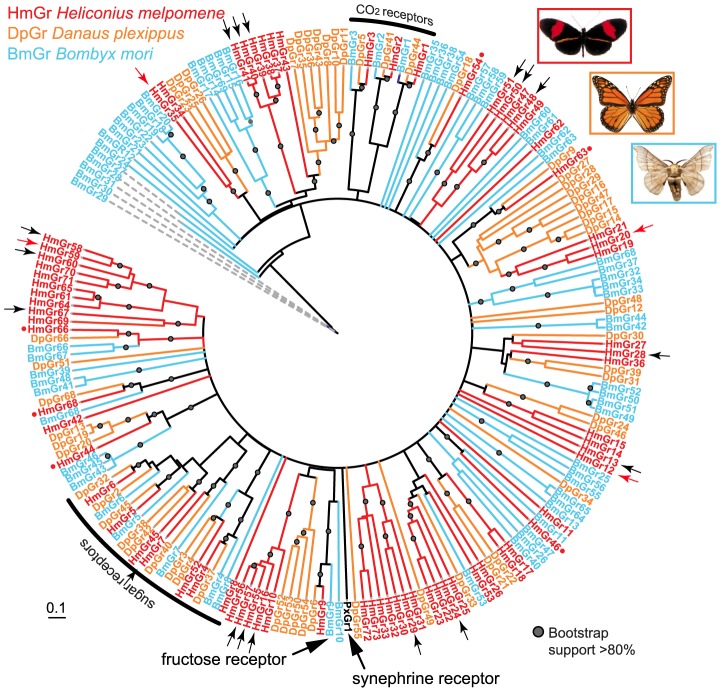
Figure 3. Phylogeny of the Grs identified in three lepidopteran genomes.
A maximum likelihood analysis of amino acid sequences was performed. Bootstrap support is out of 500 replicates. Putative CO2 and fructose receptors show a conserved 1-to-1 orthologous relationship in each of the three lepidopteran genomes, while putative sugar receptors of the monarch butterfly have duplicated twice. By contrast, numerous butterfly- or moth-specific gene duplications are evident among the remaining Grs, which are hypothesized to be bitter receptors. Small red dots indicate single-copy Heliconius Grs classified as conserved genes in the analyses shown in Table 1 and Table 2. Small black arrows indicate female-specific Grs expressed in adult H. melpomene legs. Small red arrows indicate Grs expressed in adult H. melpomene proboscis only. Bar indicates branch lengths in proportion to amino acid substitutions/site. Synephrine and fructose receptors are described in and . Bm = Bombyx mori, Hm = Heliconius melpomene, Dp = Danaus plexippus, Px = Papilio xuthus.
Figure 4
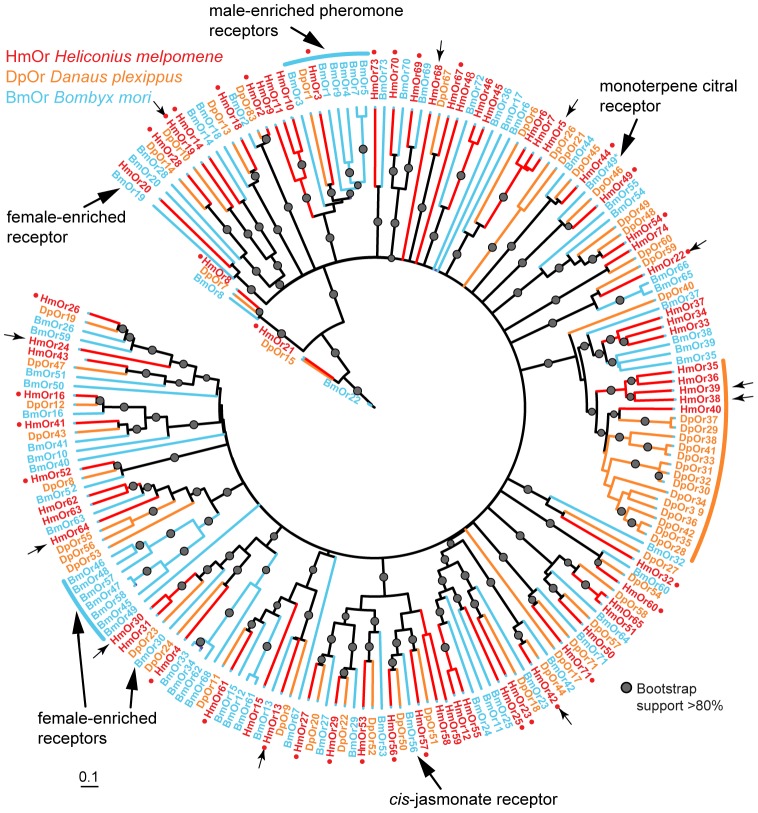
Figure 4. Phylogeny of the Ors identified in three lepidopteran genomes.
A maximum likelihood analysis of amino acid sequences was performed. Bootstrap support is out of 500 replicates. Fewer lineage-specific duplications are evident among the Ors compared to the Grs, with the exception of one large butterfly-specific expansion (orange arc). Small red dots indicate single-copy Heliconius Ors classified as conserved genes in the analyses shown in Table 1 and Table 2. Ors that are enriched in male or female adult B. mori antennae (blue and black arcs) are described in ; cis-jasmonate and monoterpene citral receptors are described in and . Phylogenetic tree reconstruction details are given in . Bar indicates branch lengths in proportion to amino acid substitutions/site. Small arrows indicate female-specific Ors expressed in adult H. melpomene legs. Bm = Bombyx mori, Hm = Heliconius melpomene, Dp = Danaus plexippus.
Figure 5
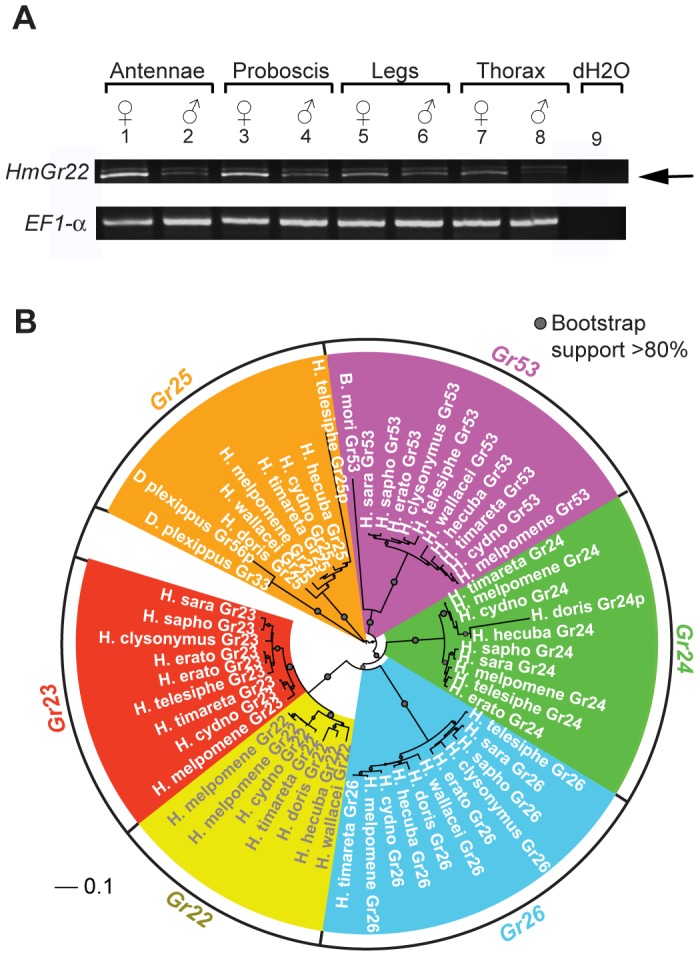
Figure 5. HmGr22 expression in adults and intronless Grs from whole-genome sequence data across the Heliconius phylogeny.
(A) Reverse-transcriptase PCR (RT-PCR) of adult H. melpomene tissues showing the expression of HmGr22 and elongation factor-1 alpha. Two products are evident from the Gr22 RT-PCR. The bottom RT-PCR product is HmGr22 (arrow) and the top RT-PCR product is 18 s rRNA, which was verified by Sanger sequencing. (B) Neighbor-joining tree showing the phylogenetic relationship between the forty-six intact Grs and four pseudogenes identified in the 13 lepidopteran genomes. Bootstrap support is out of 500 bootstrap replicates. Pseudogene sequences are indicated by a ‘p’ after the gene name.
Figure 6
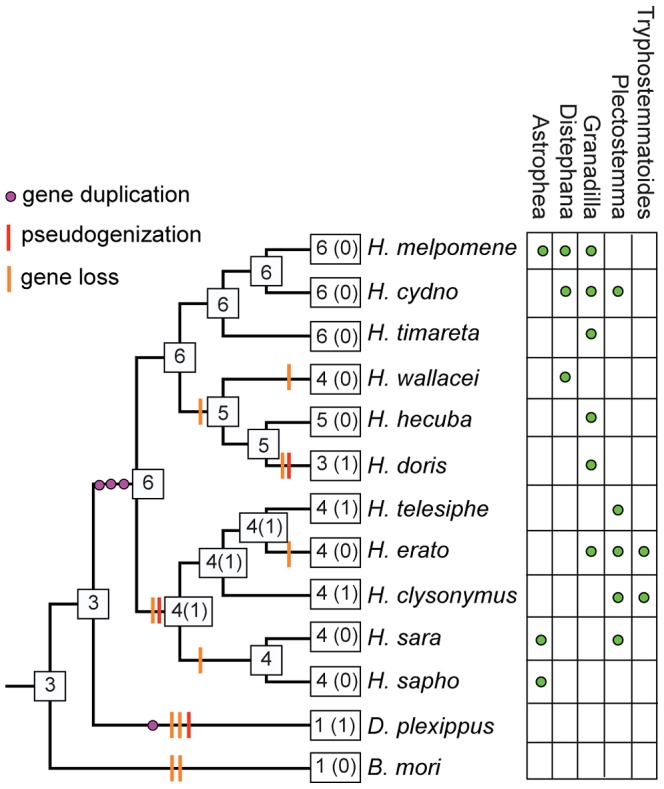
Figure 6. Inferred patterns of intronless Gr gene gain and loss across the genus Heliconius.
Estimates of the number of Gr loci (number of pseudogenes is indicated in parentheses) on internal nodes of the lepidopteran phylogeny and gene gain (purple dots), gene loss (orange slashes) and pseudogenisation events (red slashes) on each branch. Heliconius phylogeny is based on Beltran et al. (2007) . Reconciliation of gene trees onto the species tree was performed in Notung using maximum likelihood gene family trees. Primary Passiflora host plant subgenera (green dots) affiliated with each Heliconius species . No clear relationship exists between the number of known Passiflora subgenera used and the number of intronless Grs in a species, which are presumed to be putative bitter receptors, but whose ligands are not yet identified. The woody vine specialist, H. doris, with the smallest effective population size, has the fewest intact intronless Grs.
Figure 7
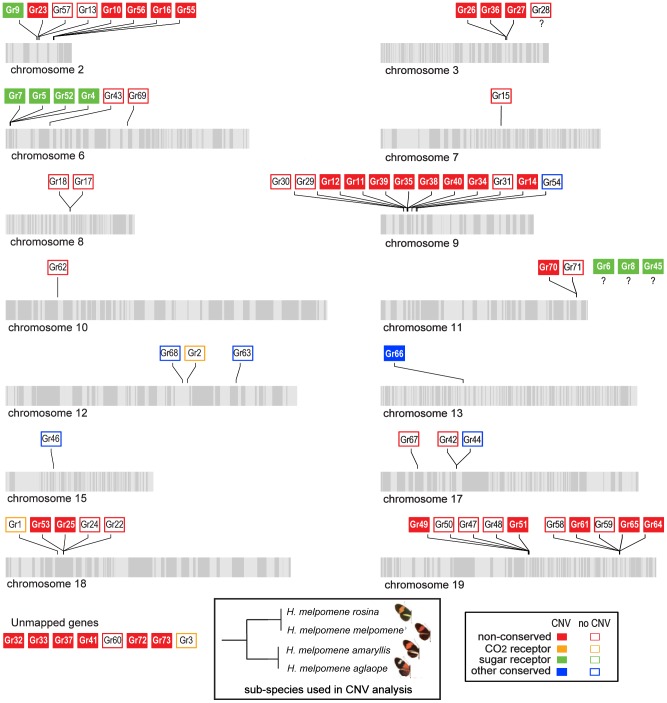
Figure 7. Copy-number variant (CNV) analysis of Grs in the H. melpomene genome.
Scaffolds comprising each chromosome are indicated by alternating light and grey stripes. Grs without CNVs are indicated by open boxes and Grs with CNVs are indicated by closed boxes. Grs are classified as conserved if, in the H. melpomene reference genome, they have a one-to-one orthologous relationship with either a gene in Danaus, Bombyx or both (red dots, Figure 3). Grs are classified as non-conserved if they are duplicated in the H. melpomene reference genome or have no orthologue in either Danaus, Bombyx or both. Genes mapped to chromosomes but without precise locations are indicated by question marks. Scaffold arrangement is based on the published linkage map .
Figure 8
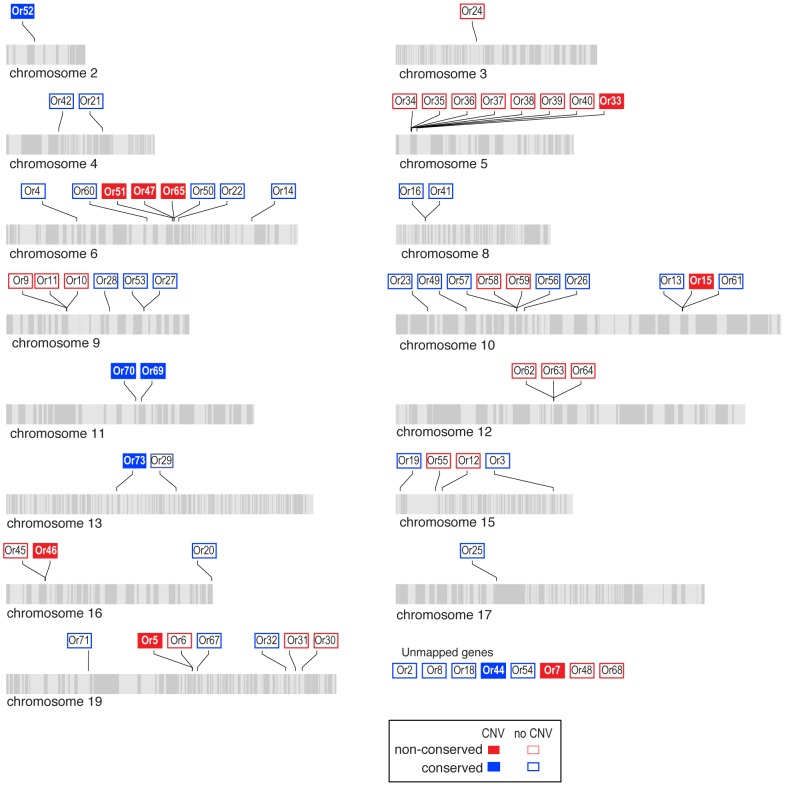
Figure 8. Copy-number variant (CNV) analysis of Ors in the H. melpomene genome.
Scaffolds comprising each chromosome are indicated by alternating light and grey stripes. Ors without CNVs are indicated by open boxes and Ors with CNVs are indicated by closed boxes. The classification of Ors as being either conserved or non-conserved follows the same criteria as for the Grs. The eight genes for which the chromosome locality is not known are shown at the bottom.
Figure 9
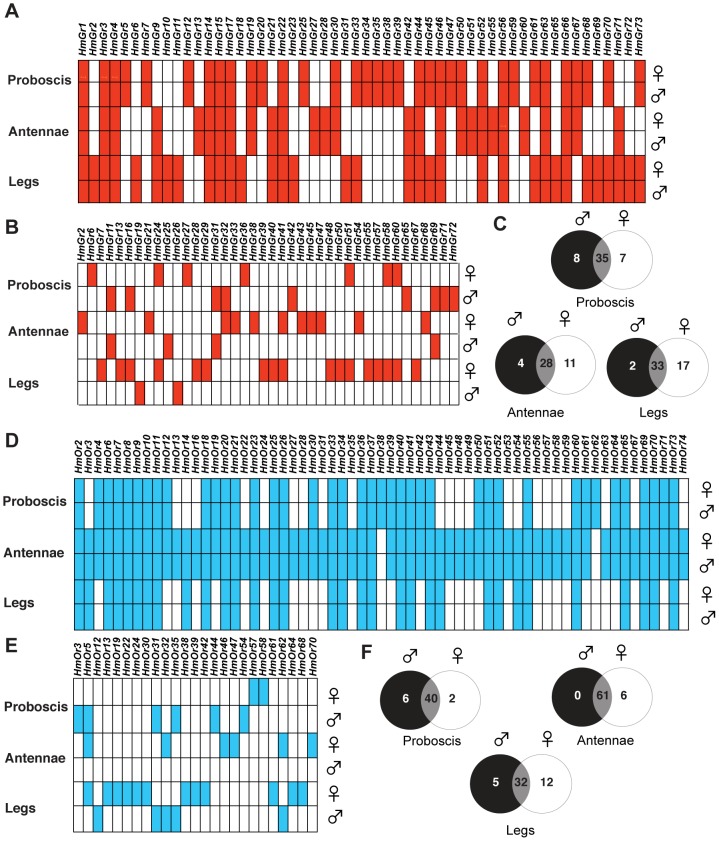
Figure 9. Comparison of Gr and Or expression in male and female adult H. melpomene chemosensory tissues.
(A) The common set of Grs expressed in each tissue in both males and females. Red box indicates the presence of reads uniquely mapping to the coding region of each Gr gene model. To facilitate the visualization of tissue-specific expression found in both males and females, only Grs where both sexes show expression are indicated. Where only one sex or neither sex shows expression, the box is empty. (B) Grs showing sex-specific expression. To facilitate the visualization of sex-specific Grs, only Grs where one sex shows expression are indicated by a filled box. Grs which are expressed in both sexes or no sex are indicated by an empty box. (C) Venn diagram showing the number of uniquely expressed gustatory receptors in each transcriptome. (D) The common set of Ors expressed in each tissue in both males and females. Blue box indicates the presence of reads uniquely mapping to the coding region of each Or gene model. As above, only Ors where both sexes show expression are indicated. Where only one sex or neither sex show expression, the box is empty. (E) Ors showing sex-specific expression are indicated by a filled box. Ors which are expressed in both sexes or no sex are indicated by an empty box. (F) Venn diagram showing the number of uniquely expressed gustatory receptors in each transcriptome. The proboscis libraries also included both labial palps, the antennal libraries included both antennae, and the leg libraries included all six legs.
Figure 10
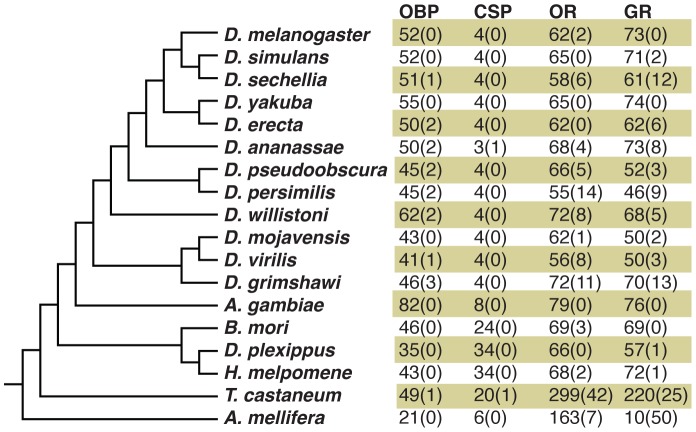
Figure 10. Insect chemosensory gene family repertoires.
Numbers indicate intact genes and numbers in parentheses indicate pseudogenes. References are given in , , . OBP = odorant binding protein; CSP = chemosensory protein; OR = olfactory receptor, GR = gustatory receptor.

References

    1. Ehrlich PR, Raven PH (1964) Butterflies and plants: A study in coevolution. Evolution 18: 586–608.
    1. Dethier VG (1937) Gustation and olfaction in lepidopterous larvæ. Biol Bull 72: 7–23.
    1. Schneider D (1964) Insect antennae. Annu Rev Entomol 9: 103–122.
    1. Schoonhoven LM, Dethier VM (1966) Sensory aspects of host-plant discrimination by lepidopterous larvae. Arch Neerl ZooI 16: 497–530.
    1. Anderson AL (1932) The sensitivity of the legs of common butterflies to sugars. J Exp Zool B Mol Dev Evol 63: 235–259.

Publication types

Substances