


A Temporal Model of Human IgE and IgG Antibody Function
- PMID: 23950757
- PMCID: PMC3738878
- DOI: 10.3389/fimmu.2013.00235
A Temporal Model of Human IgE and IgG Antibody Function
Abstract
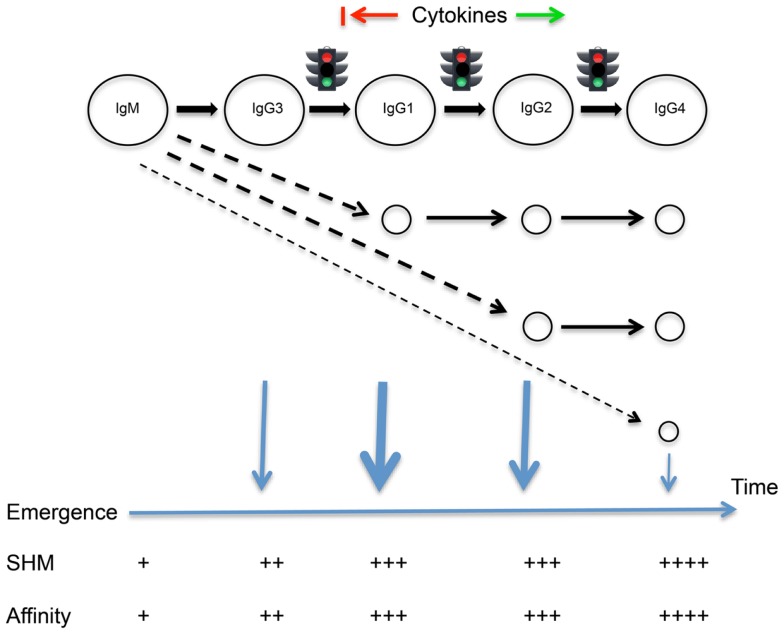
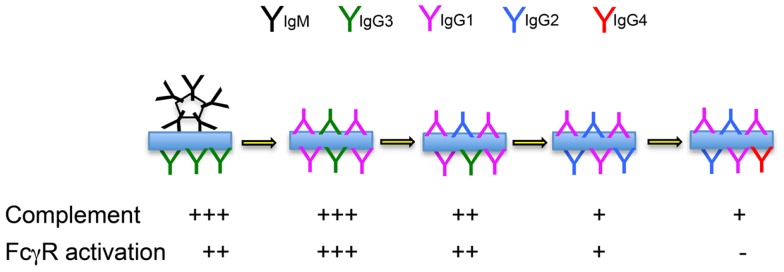
The diversity of the human antibody repertoire that is generated by V(D)J gene rearrangement is extended by nine constant region genes that give antibodies their complex array of effector functions. The application of high throughput sequencing to the study of V(D)J gene rearrangements has led to significant recent advances in our understanding of the antigen-binding repertoire. In contrast, our understanding of antibody function has changed little, and mystery still surrounds the existence of four distinctive IgG subclasses. Recent observations from murine models and from human studies of VDJ somatic point mutations suggest that the timing of emergence of cells from the germinal center may vary as a consequence of class switching. This should lead to predictable differences in affinity between isotypes. These differences, and varying abilities of the isotypes to fix complement and bind FcRs, could help coordinate the humoral defenses over the time course of a response. We therefore propose a Temporal Model of human IgE and IgG function in which early emergence of IgE sensitizes sentinel mast cells while switching to IgG3 recruits FcγR-mediated functions to the early response. IgG1 then emerges as the major effector of antigen clearance, and subsequently IgG2 competes with IgG1 to produce immune complexes that slow the inflammatory drive. Persisting antigen may finally stimulate high affinity IgG4 that outcompetes other isotypes and can terminate IgG1/FcγR-mediated activation via the inhibitory FcγRIIB. In this way, IgG antibodies of different subclasses, at different concentrations and with sometimes opposing functions deliver cohesive, protective immune function.
Keywords: B cell differentiation; IgE; IgG subclasses; affinity maturation; antibody function; class switching; humoral immunity.
Figures
References
LinkOut - more resources
Full Text Sources
Other Literature Sources
