


An exploratory study of the informational and psychosocial needs of patients with human papillomavirus-associated oropharyngeal cancer
- PMID: 23953777
- PMCID: PMC3964874
- DOI: 10.1016/j.oraloncology.2013.07.010
An exploratory study of the informational and psychosocial needs of patients with human papillomavirus-associated oropharyngeal cancer
Abstract
Objectives: Although the incidence of oropharyngeal squamous cell carcinoma (OPSCC) attributable to human papillomavirus (HPV) is rapidly increasing, patients' informational and psychosocial needs related to the sexual transmission of HPV remain unexplored. The goal of this exploratory study was to assess informational and psychosocial needs of HPV+ OPSCC patients and identify psychosocial challenges associated with having an HPV+ cancer.
Methods: Patients (N=62; 87% male; mean age=56years) with HPV+ OPSCC and in cohabitating relationships completed paper-pencil questionnaires assessing their HPV-related knowledge (e.g., cancer etiology), information needs (e.g., communicability), psychosocial concerns (e.g., relational consequences, self-blame) and measures of distress and health behaviors. Medical information was obtained from patients' electronic medical records.
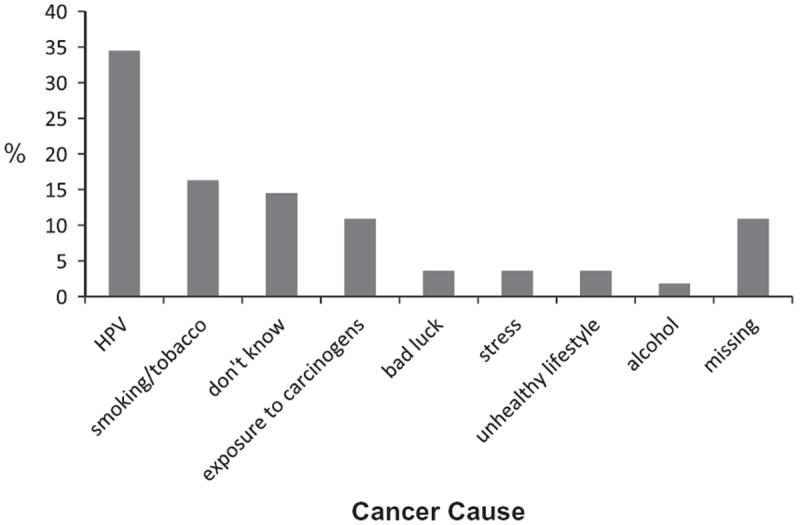
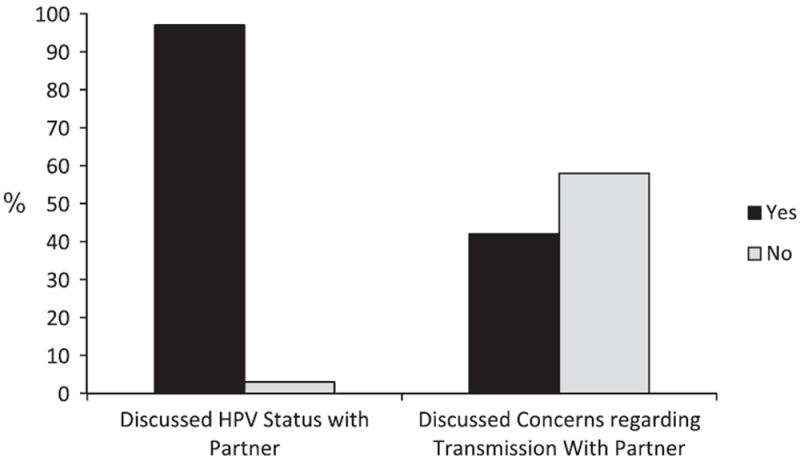
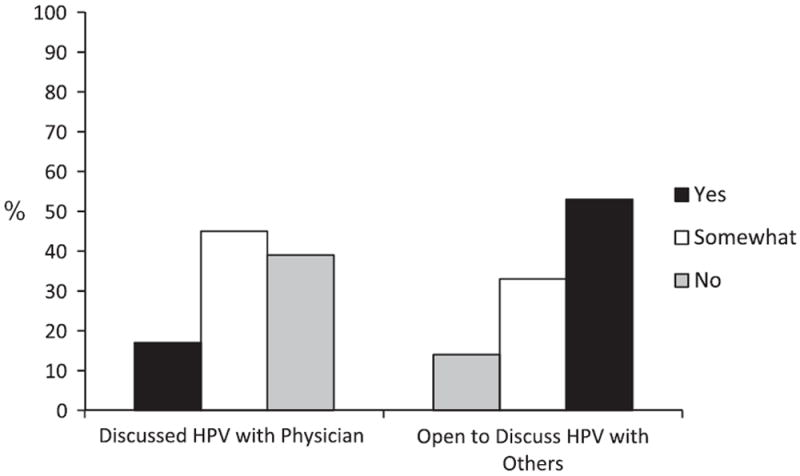
Results: Sixty-six percent of patients correctly identified their HPV status but only 35% of them recognized HPV as their putative cancer cause. The majority of patients disclosed their HPV status to their partner, 41% discussed transmission of the virus, and only 23% felt informed regarding potential transmission risks and precautions. Thirty-nine percent want their oncologist to discuss more about HPV-related issues and 58% sought this from other sources. Over one-third said they would be interested in more HPV-related information. Patients reported moderate levels of distress (mean=3.52, SD=2.54, possible range 0-10) and relatively low levels of self-blame (mean=2.27, SD=1.23, possible range 1-4) with distress and self-blame being significantly correlated (r=.38, p=.005).
Conclusion: Significant knowledge gaps exist regarding patients' understanding of the link between HPV and OPSCC and the implications of infectious etiology. Future research is encouraged to establish best practice guidelines.
Keywords: Human papillomavirus (HPV); Informational needs; Oropharyngeal squamous cell carcinoma (OPSCC); Patient–physician communication; Psychosocial needs.
Copyright © 2013 Elsevier Ltd. All rights reserved.
Conflict of interest statement
None declared.
Figures
References
-
- Chaturvedi AK, Engels EA, Anderson WF, et al. Incidence trends for human papillomavirus-related and -unrelated oral squamous cell carcinomas in the United States. J Clin Oncol. 2008;26:612–9. - PubMed
-
- Hammarstedt L, Lindquist D, Dahlstrand H, et al. Human papillomavirus as a risk factor for the increase in incidence of tonsillar cancer. Int J Cancer. 2006;119:2620–3. - PubMed
-
- Herrero R, Castellsague X, Pawlita M, et al. Human papillomavirus and oral cancer: the international agency for research on cancer multicenter study. J Natl Cancer Inst. 2003;95:1772–83. - PubMed
-
- Sturgis EM, Ang KK. The epidemic of HPV-associated oropharyngeal cancer is here: is it time to change our treatment paradigms? J Natl Compr Cancer Netw. 2011;9:665–73. - PubMed
Publication types
MeSH terms
Grants and funding
LinkOut - more resources
Full Text Sources
Other Literature Sources
Research Materials
